Department of Pathology and Laboratory Medicine, University of Pittsburgh, Pittsburgh, PA, USA.
Oncogene. 2010 Apr 15;29(15):2272-80. doi: 10.1038/onc.2009.502. Epub 2010 Jan 25.
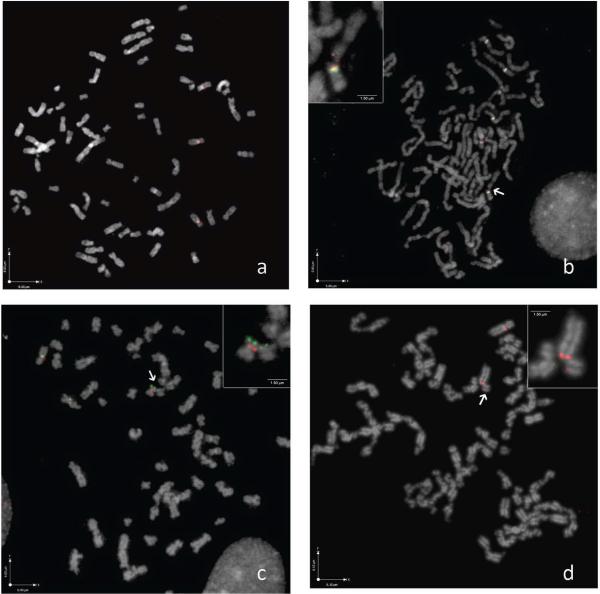
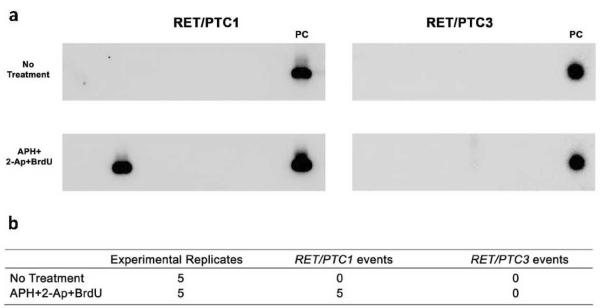
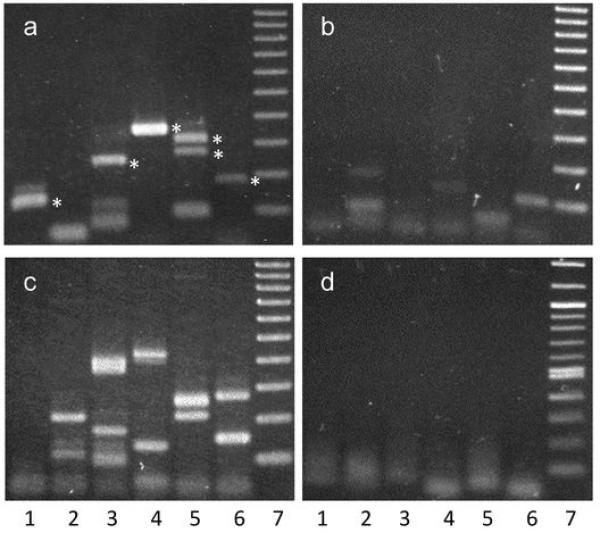
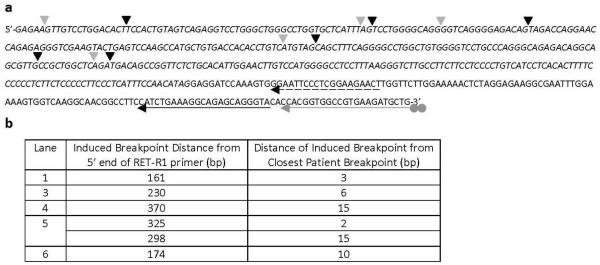
Human chromosomal fragile sites are regions of the genome that are prone to DNA breakage, and are classified as common or rare, depending on their frequency in the population. Common fragile sites frequently coincide with the location of genes involved in carcinogenic chromosomal translocations, suggesting their role in cancer formation. However, there has been no direct evidence linking breakage at fragile sites to the formation of a cancer-specific translocation. Here, we studied the involvement of fragile sites in the formation of RET/PTC rearrangements, which are frequently found in papillary thyroid carcinoma (PTC). These rearrangements are commonly associated with radiation exposure; however, most of the tumors found in adults are not linked to radiation. In this study, we provide structural and biochemical evidence that the RET, CCDC6 and NCOA4 genes participating in two major types of RET/PTC rearrangements, are located in common fragile sites FRA10C and FRA10G, and undergo DNA breakage after exposure to fragile site-inducing chemicals. Moreover, exposure of human thyroid cells to these chemicals results in the formation of cancer-specific RET/PTC rearrangements. These results provide the direct evidence for the involvement of chromosomal fragile sites in the generation of cancer-specific rearrangements in human cells.
人类染色体脆性位点是基因组中容易发生 DNA 断裂的区域,根据其在人群中的频率,可分为常见和罕见脆性位点。常见脆性位点经常与致癌染色体易位涉及的基因位置重合,这表明它们在癌症形成中起作用。然而,目前还没有直接证据表明脆性位点的断裂与特定癌症易位的形成有关。在这里,我们研究了脆性位点在 RET/PTC 重排形成中的作用,RET/PTC 重排常见于甲状腺乳头状癌(PTC)。这些重排通常与辐射暴露有关;然而,大多数在成人中发现的肿瘤与辐射无关。在这项研究中,我们提供了结构和生化证据,表明参与两种主要类型的 RET/PTC 重排的 RET、CCDC6 和 NCOA4 基因位于常见脆性位点 FRA10C 和 FRA10G 中,并在暴露于脆性位点诱导化学物质后发生 DNA 断裂。此外,这些化学物质暴露于人类甲状腺细胞会导致特定的 RET/PTC 重排。这些结果为染色体脆性位点参与人类细胞中特定癌症重排的产生提供了直接证据。