Department of Neurosciences, Faculty of Medicine and Dentistry, Basque Country University, Bilbao, Spain.
PLoS One. 2010 Jan 25;5(1):e8869. doi: 10.1371/journal.pone.0008869.
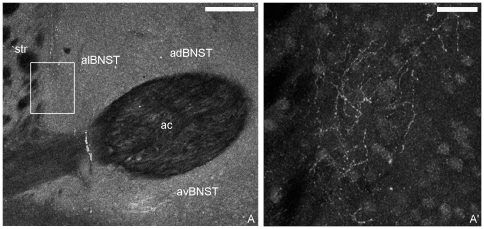
The bed nucleus of the stria terminalis (BNST) is involved in behaviors related to natural reward, drug addiction and stress. In spite of the emerging role of the endogenous cannabinoid (eCB) system in these behaviors, little is known about the anatomy and function of this system in the anterolateral BNST (alBNST). The aim of this study was to provide a detailed morphological characterization of the localization of the cannabinoid 1 (CB1) receptor a necessary step toward a better understanding of the physiological roles of the eCB system in this region of the brain.
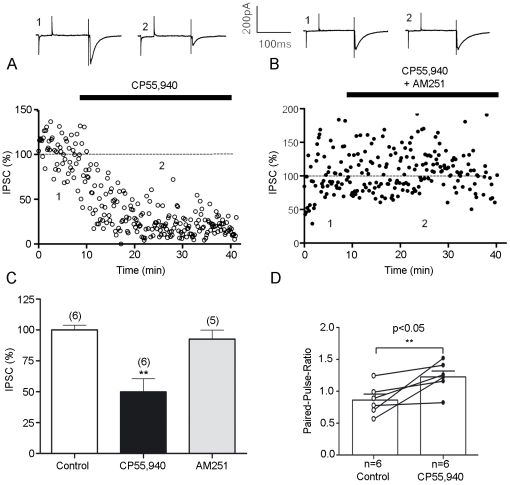
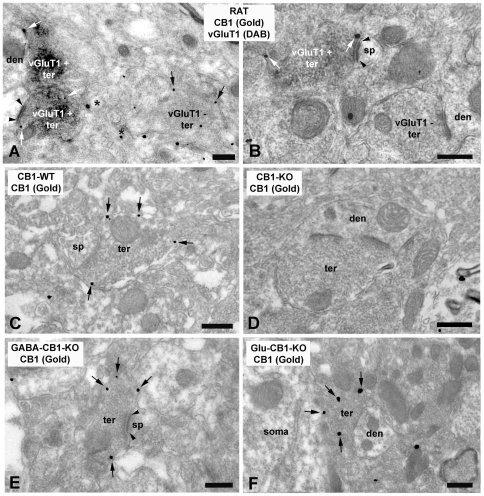
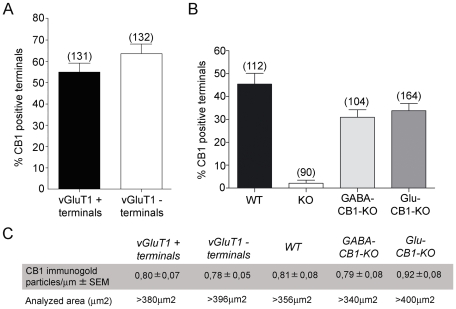
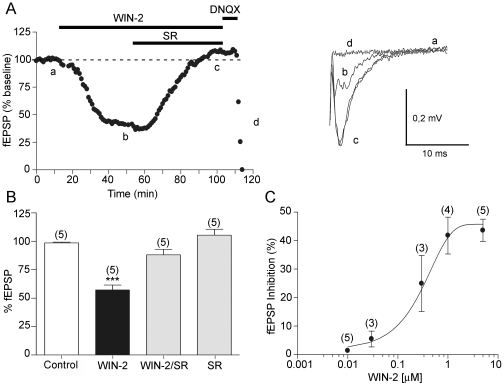
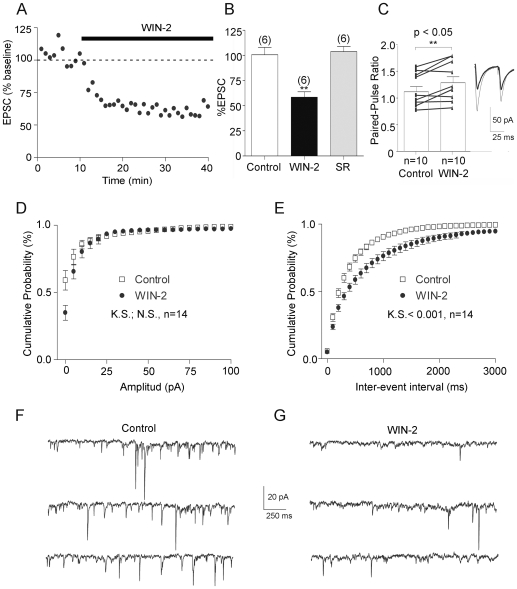
METHODOLOGY/PRINCIPAL FINDINGS: We have combined anatomical approaches at the confocal and electron microscopy level to ex-vivo electrophysiological techniques. Here, we report that CB1 is localized on presynaptic membranes of about 55% of immunopositive synaptic terminals for the vesicular glutamate transporter 1 (vGluT1), which contain abundant spherical, clear synaptic vesicles and make asymmetrical synapses with alBNST neurons. About 64% of vGluT1 immunonegative synaptic terminals show CB1 immunolabeling. Furthermore, 30% and 35% of presynaptic boutons localize CB1 in alBNST of conditional mutant mice lacking CB1 mainly from GABAergic neurons (GABA-CB1-KO mice) and mainly from cortical glutamatergic neurons (Glu-CB1-KO mice), respectively. Extracellular field recordings and whole cell patch clamp in the alBNST rat brain slice preparation revealed that activation of CB1 strongly inhibits excitatory and inhibitory synaptic transmission.
CONCLUSIONS/SIGNIFICANCE: This study supports the anterolateral BNST as a potential neuronal substrate of the effects of cannabinoids on stress-related behaviors.
终纹床核(BNST)参与与自然奖赏、药物成瘾和应激相关的行为。尽管内源性大麻素(eCB)系统在这些行为中起着新兴作用,但对于该系统在外侧 BNST(alBNST)中的解剖结构和功能知之甚少。本研究的目的是提供大麻素 1(CB1)受体定位的详细形态学特征,这是更好地理解 eCB 系统在大脑这一区域的生理作用的必要步骤。
方法/主要发现:我们结合了共聚焦和电子显微镜水平的解剖方法以及离体电生理学技术。在这里,我们报告 CB1 定位于约 55%的囊泡谷氨酸转运体 1(vGluT1)免疫阳性突触末端的突触前膜上,这些突触末端含有丰富的球形透明突触小泡,并与 alBNST 神经元形成不对称突触。约 64%的 vGluT1 免疫阴性突触末端显示 CB1 免疫标记。此外,在条件性突变小鼠(缺乏主要来自 GABA 能神经元的 CB1 的 GABA-CB1-KO 小鼠和主要来自皮质谷氨酸能神经元的 CB1 的 Glu-CB1-KO 小鼠)的 alBNST 中,30%和 35%的突触前末梢定位于 CB1。在 alBNST 大鼠脑片制备的细胞外场记录和全细胞膜片钳记录中,发现 CB1 的激活强烈抑制兴奋性和抑制性突触传递。
结论/意义:本研究支持外侧 BNST 作为大麻素对与应激相关行为影响的潜在神经元基础。