Yunnan Institute of Microbiology, Yunnan University, 52 Cui Hu Bei Lu, Kunming, Yunnan 650091, PR China.
BMC Microbiol. 2010 Feb 4;10:35. doi: 10.1186/1471-2180-10-35.
The continuing emergence of antimicrobial resistance requires the development of new compounds and/or enhancers of existing compounds. Genes that protect against the lethal effects of antibiotic stress are potential targets of enhancers. To distinguish such genes from those involved in drug uptake and efflux, a new susceptibility screen is required.
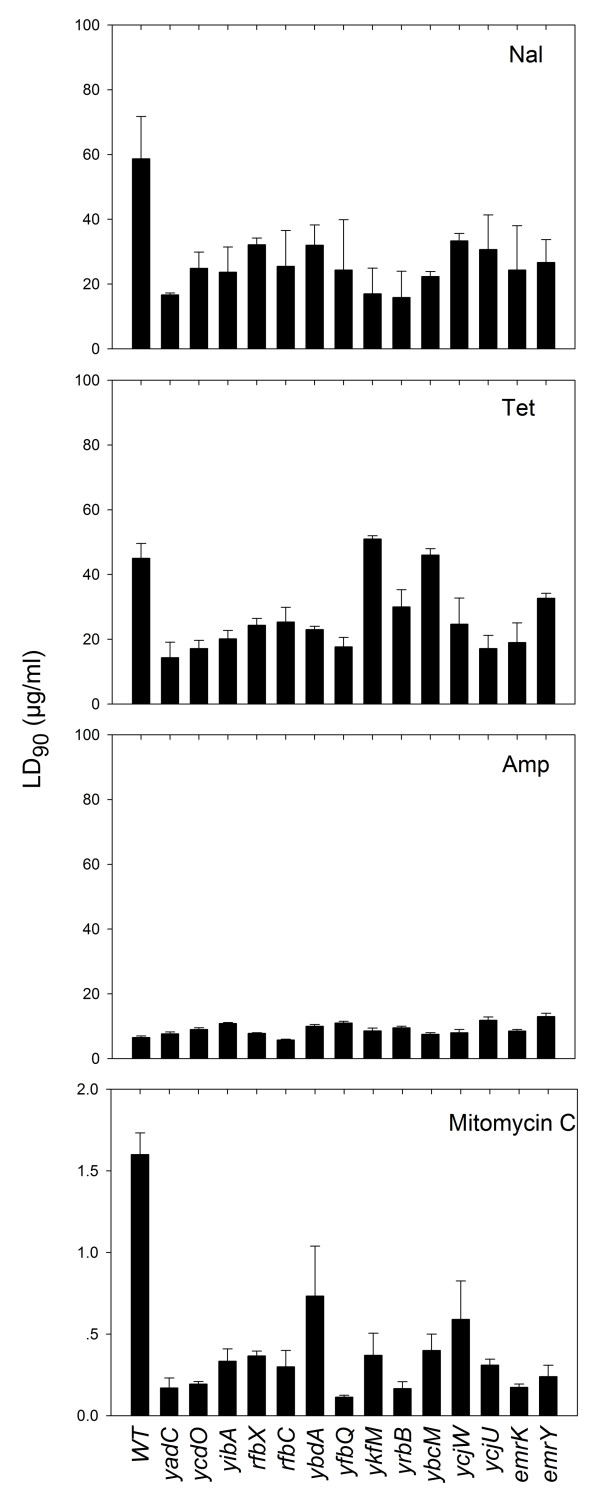
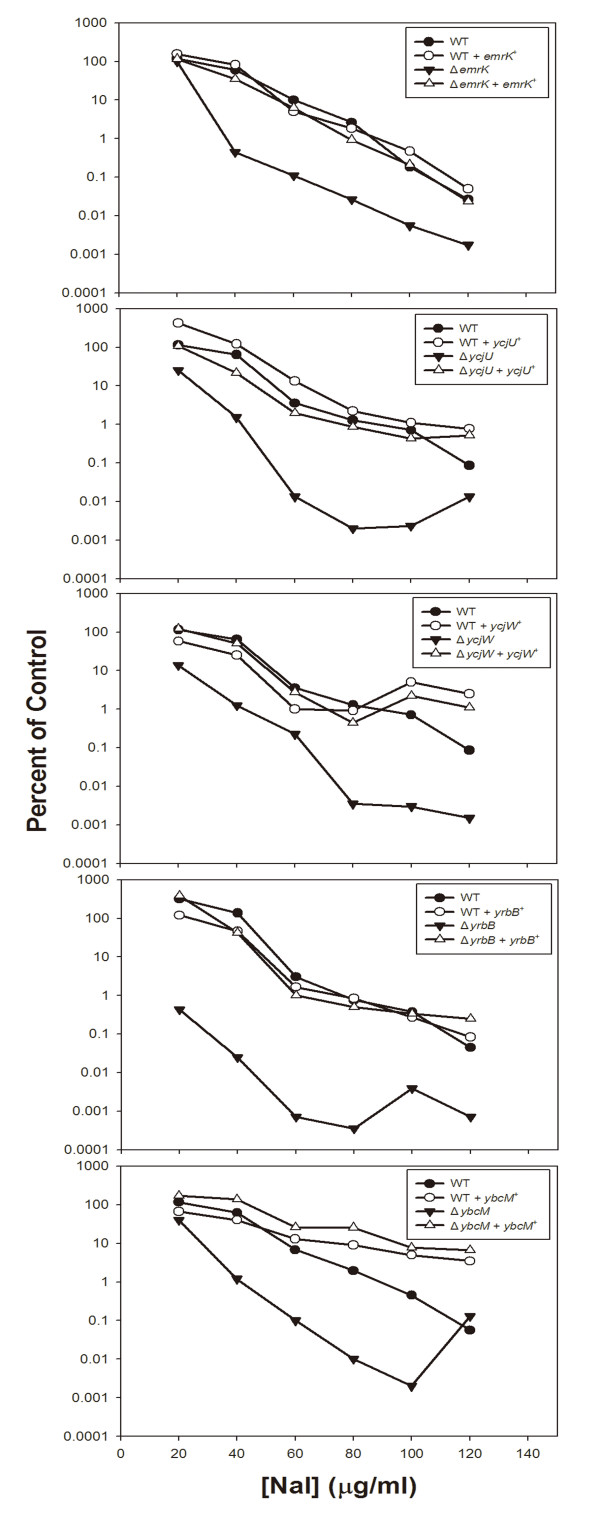
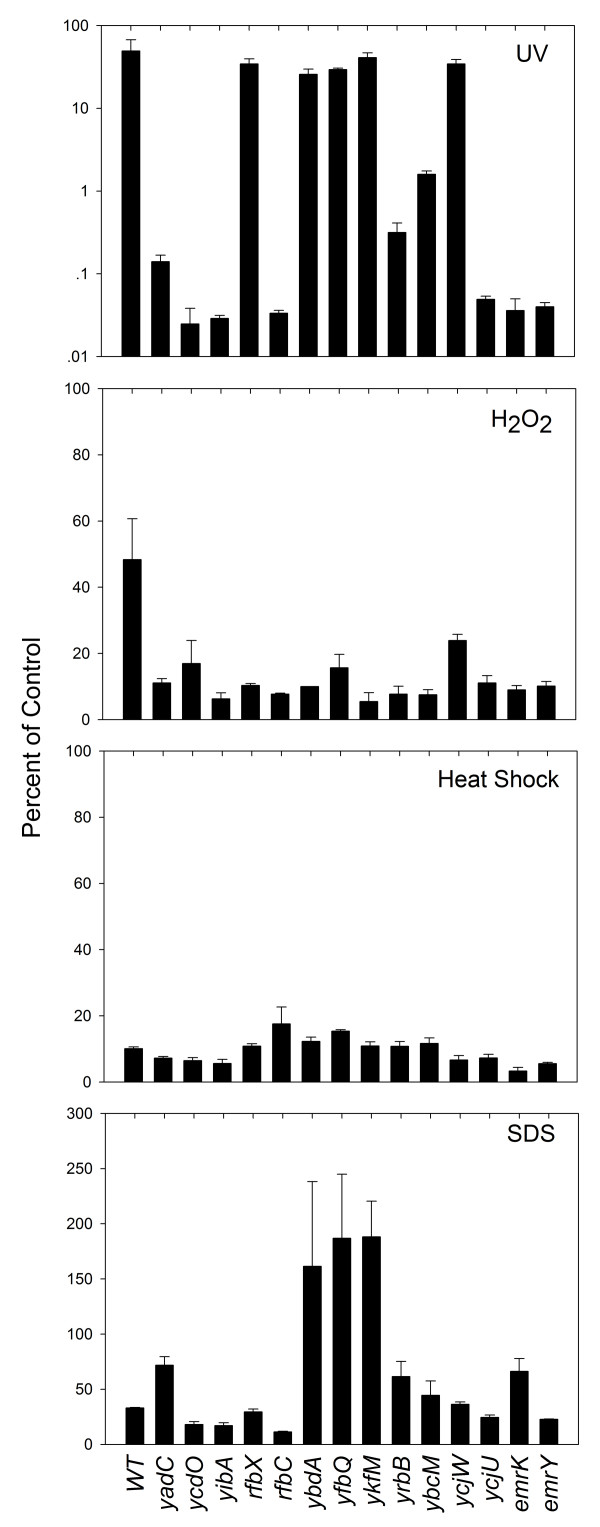
Transposon (Tn5)-mediated mutagenesis was used to create a library of Escherichia coli mutants that was screened for hypersensitivity to the lethal action of quinolones and counter-screened to have wild-type bacteriostatic susceptibility. Mutants with this novel "hyperlethal" phenotype were found. The phenotype was transferable to other E. coli strains by P1-mediated transduction, and for a subset of the mutants the phenotype was complemented by the corresponding wild-type gene cloned into a plasmid. Thus, the inactivation of these genes was responsible for hyperlethality. Nucleotide sequence analysis identified 14 genes, mostly of unknown function, as potential factors protecting from lethal effects of stress. The 14 mutants were killed more readily than wild-type cells by mitomycin C and hydrogen peroxide; nine were also more readily killed by UV irradiation, and several exhibited increased susceptibility to killing by sodium dodecyl sulfate. No mutant was more readily killed by high temperature.
A new screening strategy identified a diverse set of E. coli genes involved in the response to lethal antimicrobial and environmental stress, with some genes being involved in the response to multiple stressors. The gene set, which differed from sets previously identified with bacteriostatic assays, provides an entry point for obtaining small-molecule enhancers that will affect multiple antimicrobial agents.
抗菌药物耐药性的持续出现要求开发新的化合物和/或现有化合物的增效剂。能够抵抗抗生素应激致死效应的基因可能是增效剂的潜在靶标。为了将这些基因与参与药物摄取和外排的基因区分开来,需要一种新的敏感性筛选方法。
利用转座子(Tn5)介导的诱变技术,构建了大肠杆菌突变体文库,并用该文库进行了对喹诺酮类药物的致死作用敏感的筛选,并对野生型抑菌敏感性进行了反向筛选。发现了具有这种新型“超致死”表型的突变体。该表型可通过 P1 介导的转导转移到其他大肠杆菌菌株中,并且对于亚组突变体,该表型可通过相应的野生型基因克隆到质粒中得到互补。因此,这些基因的失活导致了超致死性。核苷酸序列分析确定了 14 个基因,这些基因大多功能未知,可能是保护其免受应激致死效应的因素。与野生型细胞相比,这 14 个突变体更容易被丝裂霉素 C 和过氧化氢杀死;9 个突变体也更容易被紫外线照射杀死,几个突变体对十二烷基硫酸钠的杀伤作用更为敏感。没有突变体更容易被高温杀死。
一种新的筛选策略鉴定了一组多样化的大肠杆菌基因,这些基因参与了对抗致死性抗菌药物和环境应激的反应,其中一些基因参与了对多种应激源的反应。该基因集与以前用抑菌测定法鉴定的基因集不同,为获得影响多种抗菌药物的小分子增效剂提供了切入点。