Hegde Mithra N, Hegde Priyadarshini, Malhan Babita
Department of Conservative Dentistry and Endodontics, A. B. Shetty Memorial Institute of Dental Sciences, Deralakatte, Mangalore, Karnataka, India.
J Conserv Dent. 2008 Apr;11(2):76-81. doi: 10.4103/0972-0707.44055.
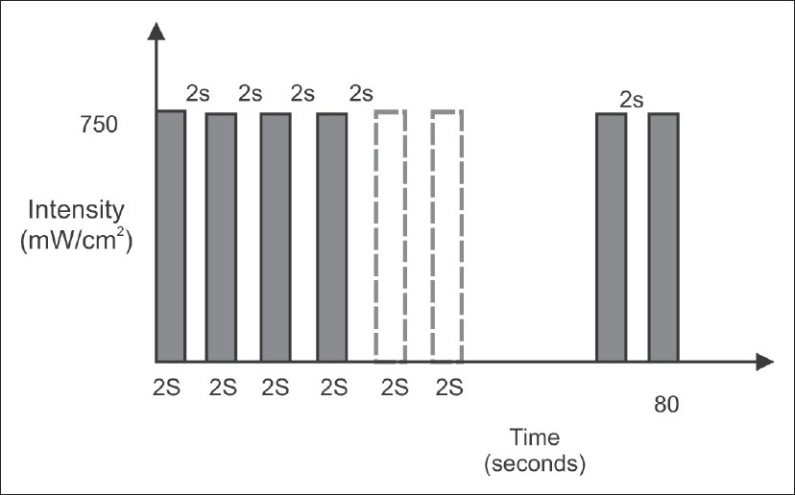
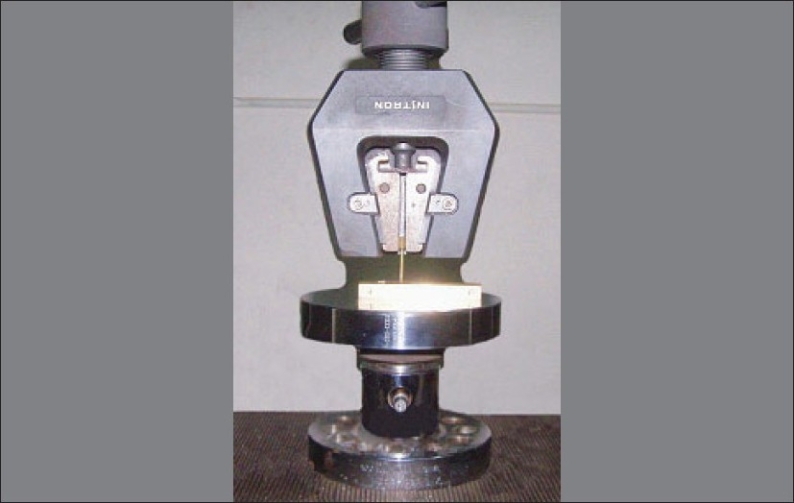
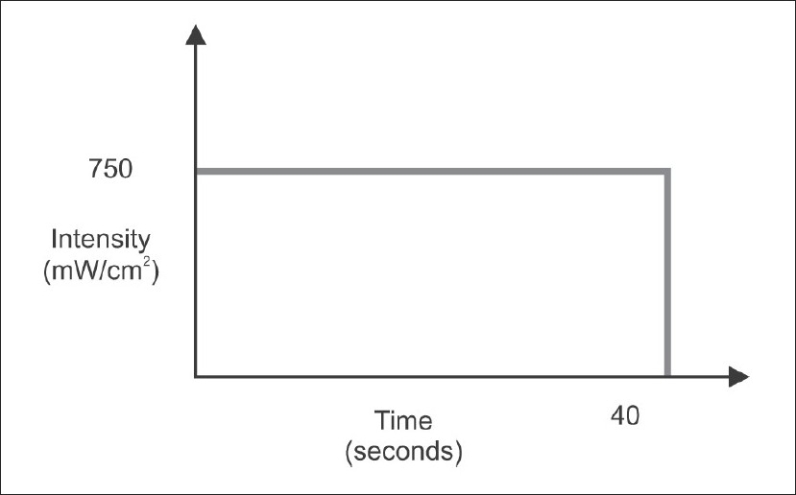
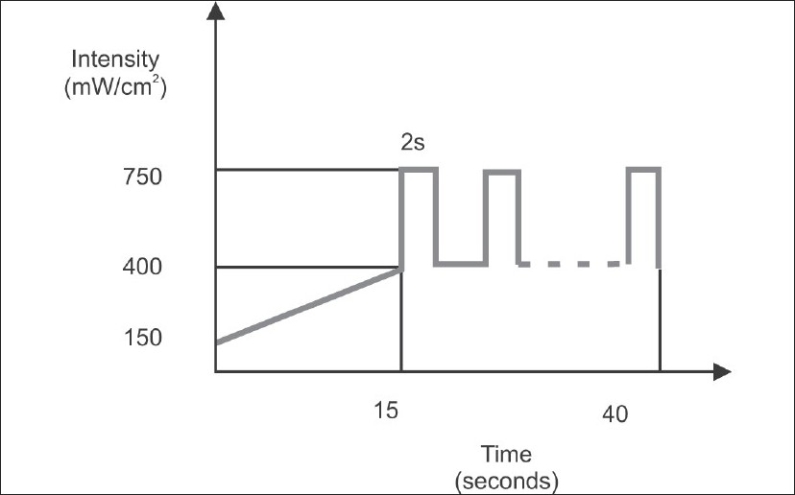
The study aimed at evaluating the depth of cure and knoop hardness of a microfine-hybrid composite resin that was photo-activated using different methods. A bipartite brass mold was filled with composite resin and photo-activation was performed using four methods: (1) Intermittent method using quartz tungsten halogen (QTH) light curing unit (LCU) (2) Continuous method (QTH) (3) Exponential method (QTH) (4) Continuous method using light-emitting diode (LED). Depth of cure was measured at the unexposed bottom surface of the specimen using microtester as a penetrometer. The surfaces exposed to light were subjected to knoop hardness testing, using a digital microhardness tester. Knoop hardness measurements were obtained at the top surface and at depths of 1, 2, 3, 4 and 5 mm. The data was analyzed using anova and Tukey's test (5%). Results showed that the depth of cure was higher with the intermittent method (QTH), followed by the continuous method (QTH), the exponential method and the continuous method (LED). At the top surface and up to 1 mm, continuous method (LED) demonstrated the highest knoop hardness number (KHN). At 2 mm and up to 5 mm, intermittent method (QTH) presented the highest KHN and continuous method (LED) showed the lowest KHN. At all depths, continuous method (QTH) showed higher KHN, as compared to the exponential method (QTH), except at 2 mm where both showed no significant difference.
该研究旨在评估一种使用不同方法进行光活化的微细化混合复合树脂的固化深度和努氏硬度。用复合树脂填充一个两部分的黄铜模具,并使用四种方法进行光活化:(1) 使用石英钨卤素 (QTH) 光固化单元 (LCU) 的间歇法;(2) 连续法 (QTH);(3) 指数法 (QTH);(4) 使用发光二极管 (LED) 的连续法。使用作为针入度计的微测试仪在试样未曝光的底面测量固化深度。对暴露于光的表面使用数字显微硬度计进行努氏硬度测试。在顶面以及 1、2、3、4 和 5 毫米深度处获得努氏硬度测量值。使用方差分析和 Tukey 检验 (5%) 对数据进行分析。结果表明,间歇法 (QTH) 的固化深度更高,其次是连续法 (QTH)、指数法和连续法 (LED)。在顶面和 1 毫米以内,连续法 (LED) 显示出最高的努氏硬度值 (KHN)。在 2 毫米至 5 毫米处,间歇法 (QTH) 呈现出最高的 KHN,而连续法 (LED) 显示出最低的 KHN。在所有深度处,与指数法 (QTH) 相比,连续法 (QTH) 显示出更高的 KHN,但在 2 毫米处两者无显著差异。