Department of Neuroscience, Physiology, and Pharmacology, University College London, Gower Street, London, WC1E 6BT, UK.
Neuron. 2010 Jan 14;65(1):53-65. doi: 10.1016/j.neuron.2009.12.007.
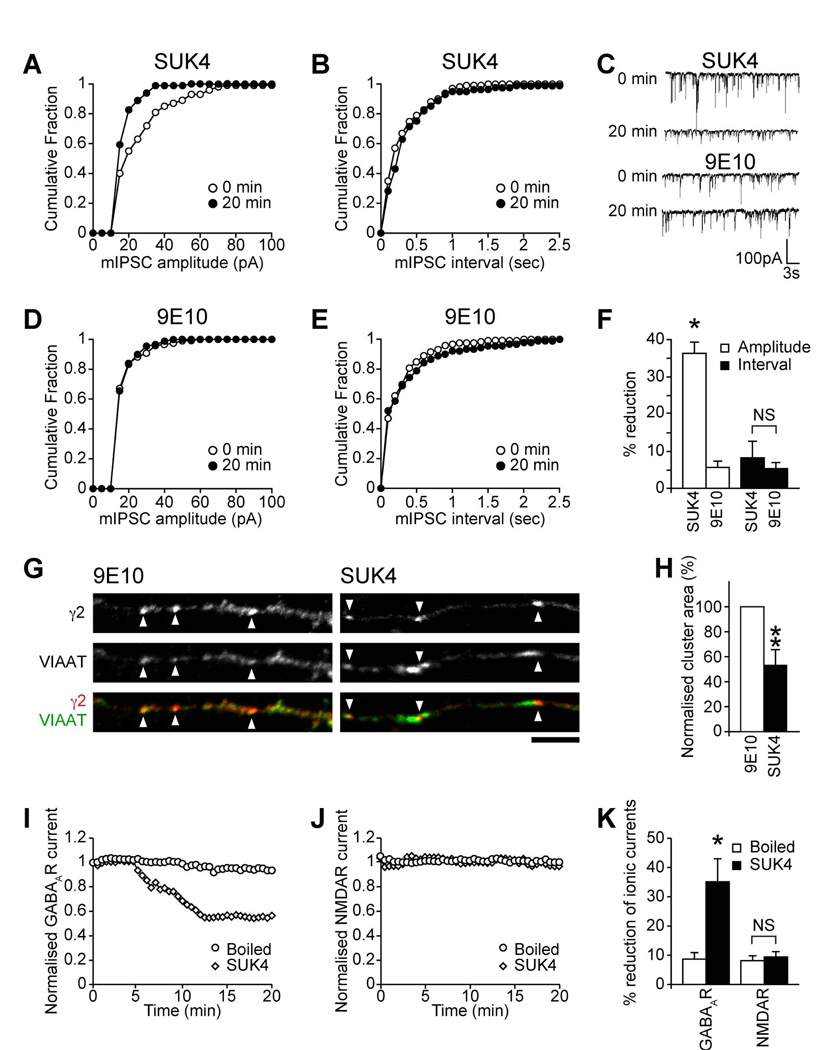
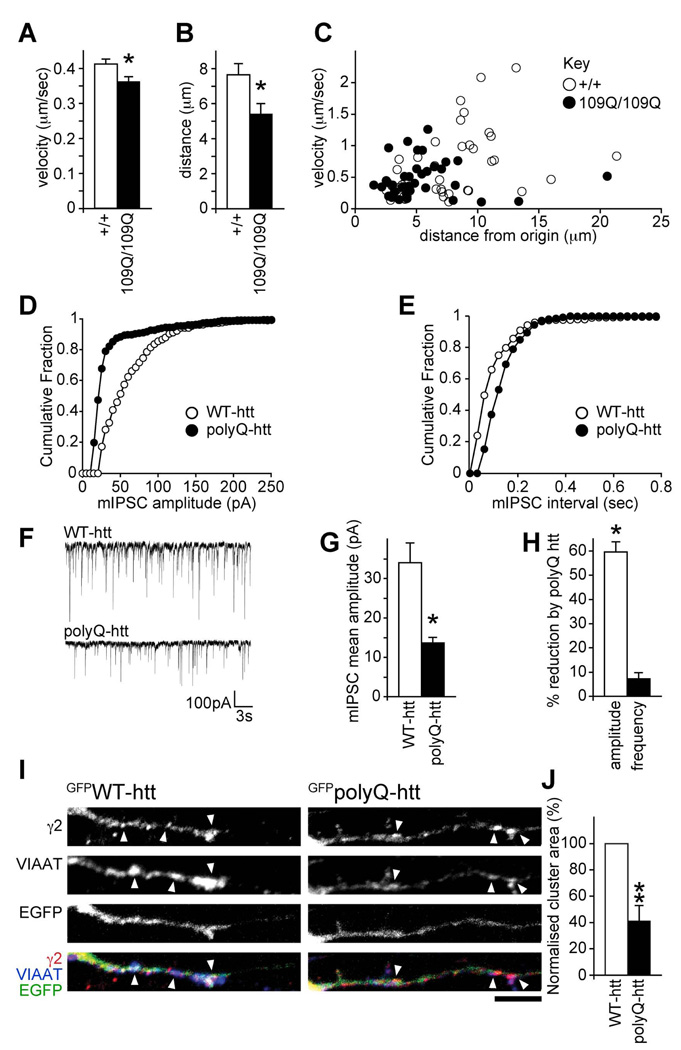
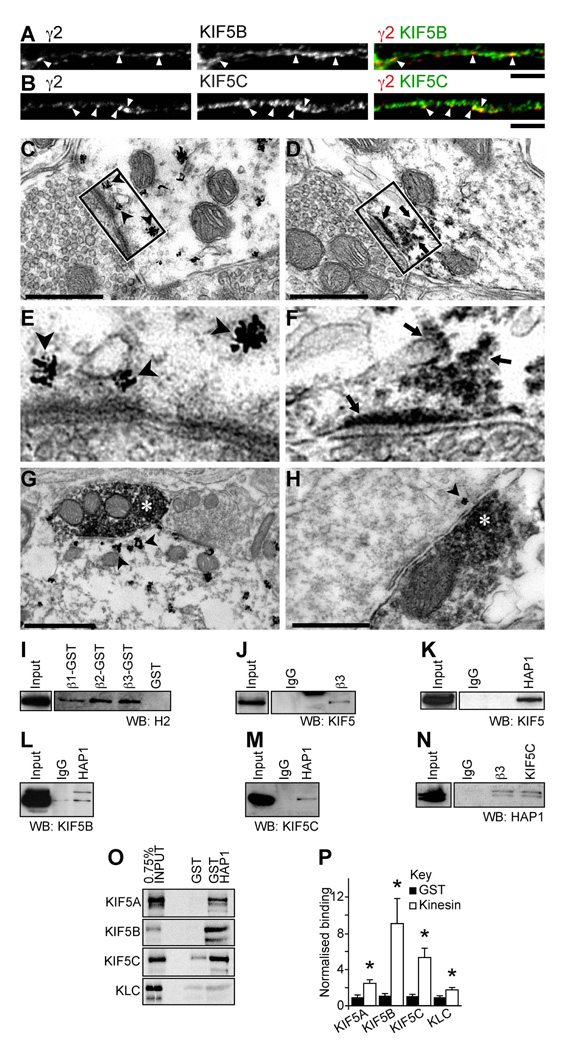
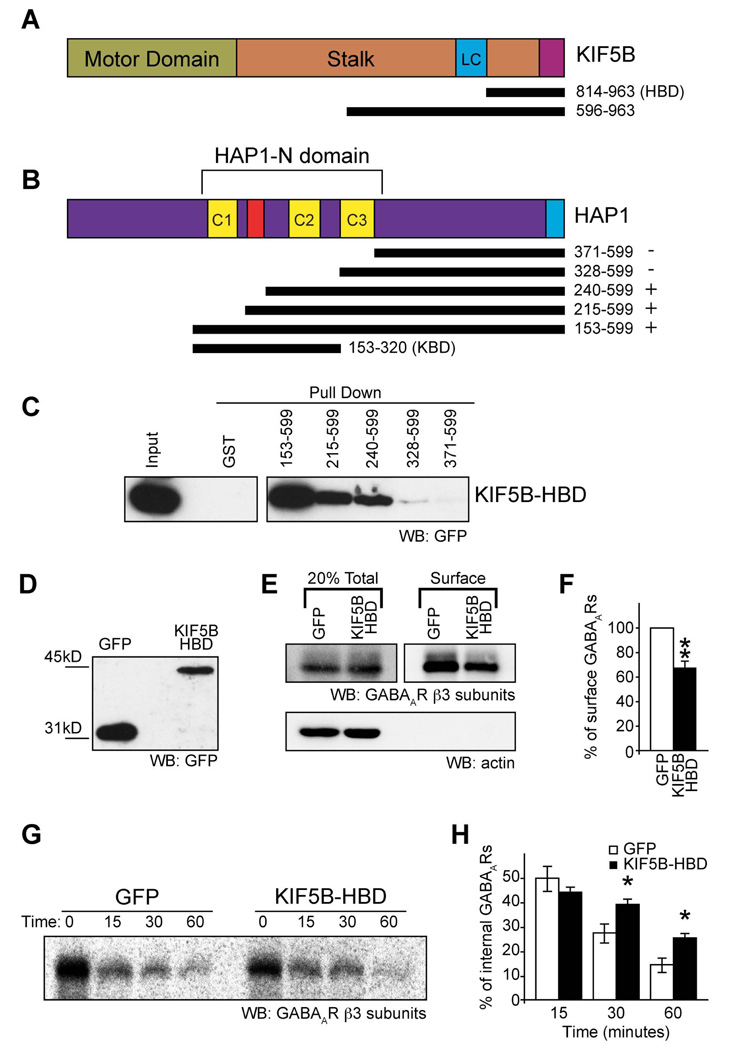
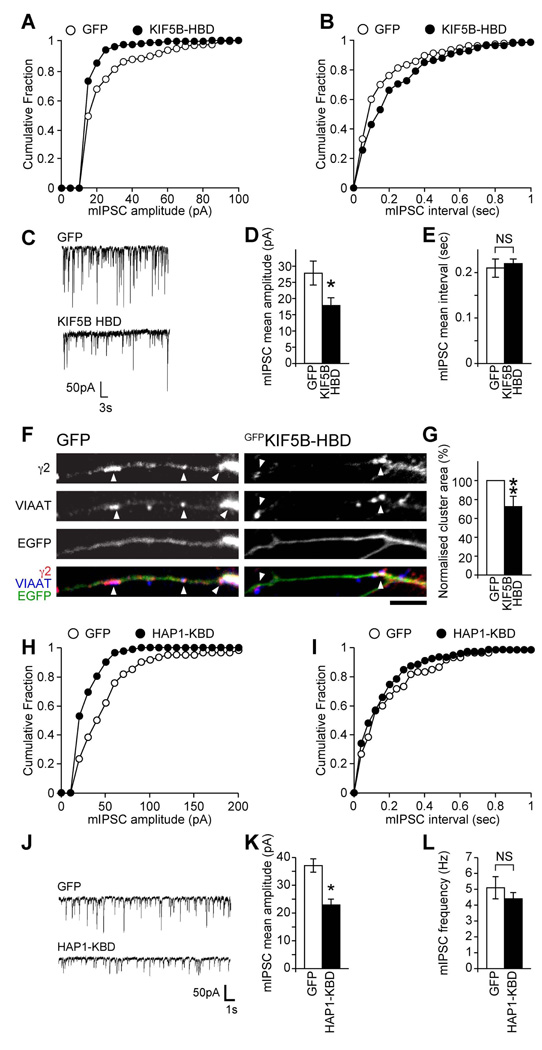
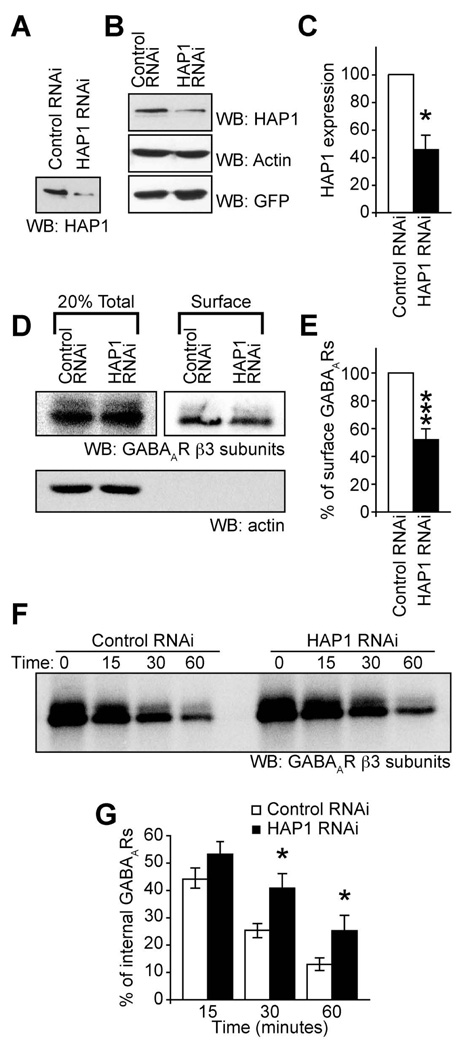
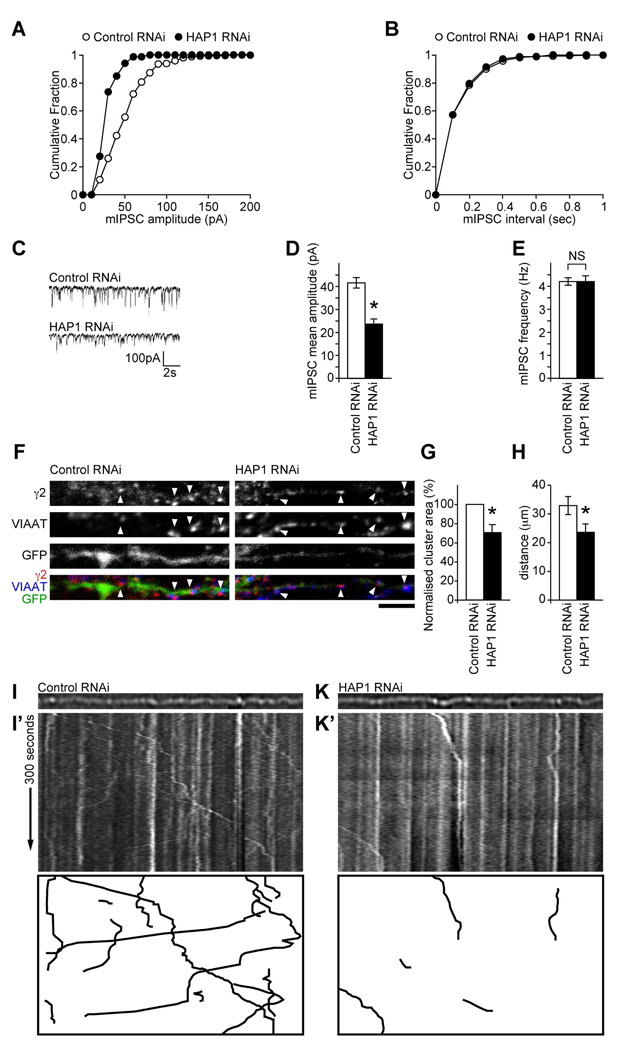
The density of GABA(A) receptors (GABA(A)Rs) at synapses regulates brain excitability, and altered inhibition may contribute to Huntington's disease, which is caused by a polyglutamine repeat in the protein huntingtin. However, the machinery that delivers GABA(A)Rs to synapses is unknown. We demonstrate that GABA(A)Rs are trafficked to synapses by the kinesin family motor protein 5 (KIF5). We identify the adaptor linking the receptors to KIF5 as the huntingtin-associated protein 1 (HAP1). Disrupting the HAP1-KIF5 complex decreases synaptic GABA(A)R number and reduces the amplitude of inhibitory postsynaptic currents. When huntingtin is mutated, as in Huntington's disease, GABA(A)R transport and inhibitory synaptic currents are reduced. Thus, HAP1-KIF5-dependent GABA(A)R trafficking is a fundamental mechanism controlling the strength of synaptic inhibition in the brain. Its disruption by mutant huntingtin may explain some of the defects in brain information processing occurring in Huntington's disease and provides a molecular target for therapeutic approaches.
GABA(A) 受体(GABA(A)Rs)在突触处的密度调节大脑的兴奋性,而抑制功能的改变可能与亨廷顿病有关,该疾病是由亨廷顿蛋白中的多聚谷氨酰胺重复序列引起的。然而,将 GABA(A)Rs 递送到突触的机制尚不清楚。我们证明,GABA(A)Rs 通过驱动蛋白家族的马达蛋白 5(KIF5)被运输到突触。我们确定了将受体与 KIF5 连接的衔接蛋白为亨廷顿相关蛋白 1(HAP1)。破坏 HAP1-KIF5 复合物会减少突触 GABA(A)R 的数量,并降低抑制性突触后电流的幅度。当亨廷顿蛋白发生突变时,就像在亨廷顿病中一样,GABA(A)R 的运输和抑制性突触电流会减少。因此,HAP1-KIF5 依赖性 GABA(A)R 转运是控制大脑中突触抑制强度的基本机制。其突变亨廷顿蛋白的破坏可能解释了亨廷顿病中发生的一些大脑信息处理缺陷,并为治疗方法提供了一个分子靶点。