Department of Biology and Center for Biological Clocks Research, Texas A&M University, College Station, TX 77843-3258, USA.
Curr Biol. 2010 Feb 23;20(4):300-9. doi: 10.1016/j.cub.2009.12.055. Epub 2010 Feb 11.
Circadian regulation of chemosensory processes is common in animals, but little is known about how circadian clocks control chemosensory systems or the consequences of rhythms in chemosensory system function. Taste is a major chemosensory gate used to decide whether or not an animal will eat, and the main taste organ in Drosophila, the proboscis, harbors autonomous circadian oscillators. Here we examine gustatory physiology, tastant-evoked appetitive behavior, and food ingestion to understand clock-dependent regulation of the Drosophila gustatory system.
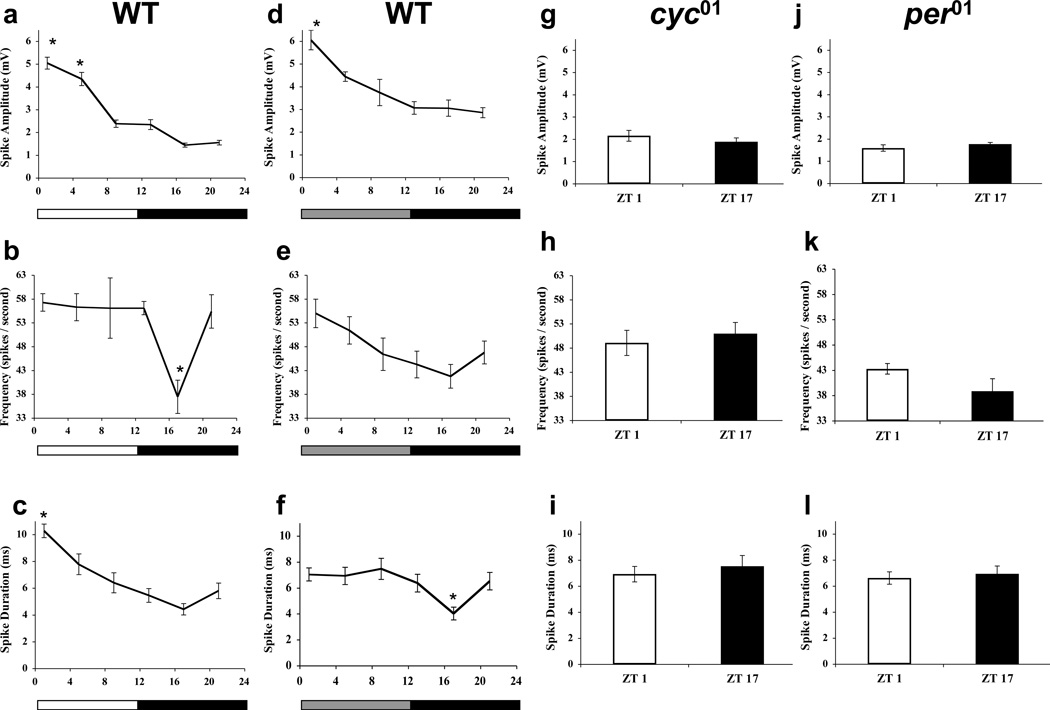
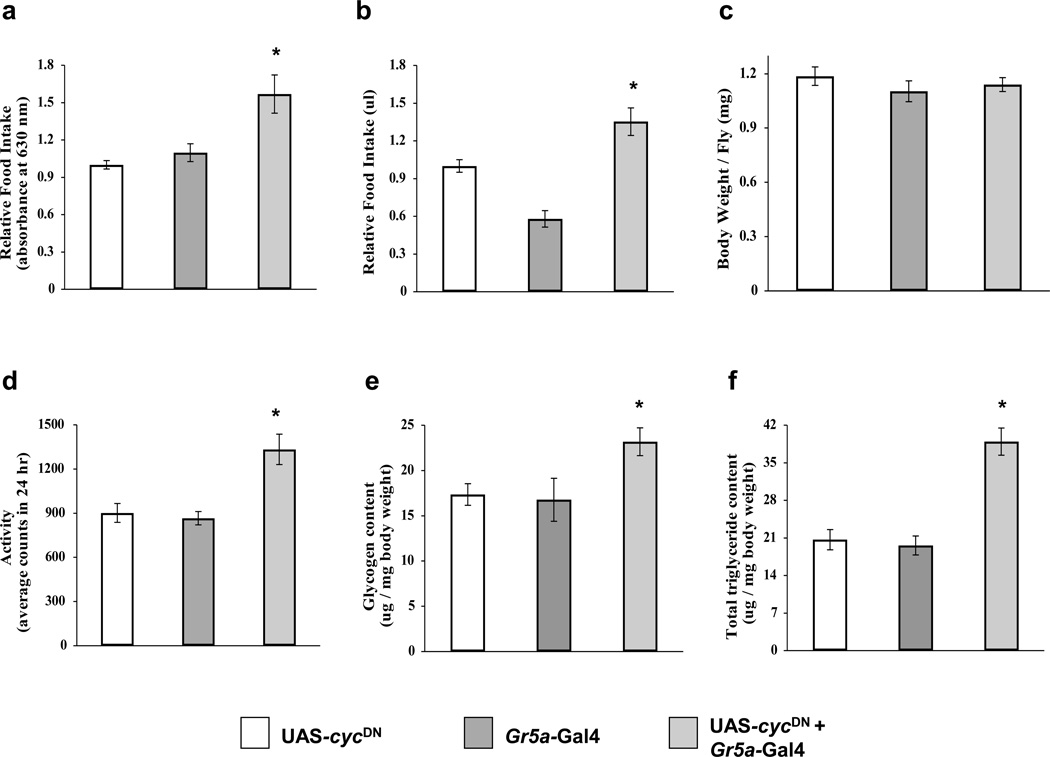
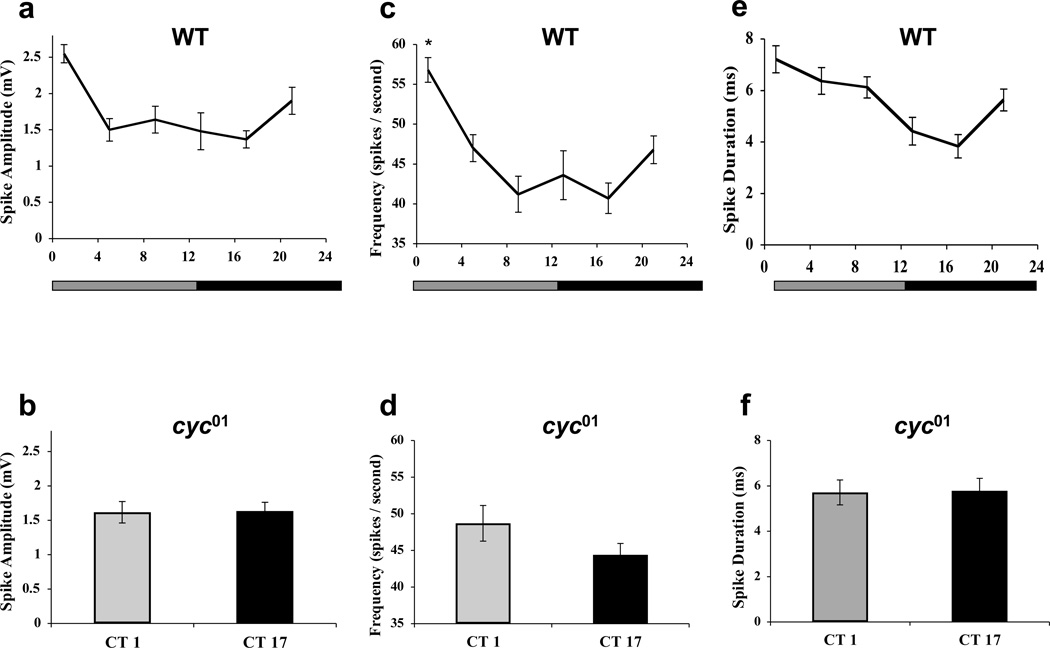
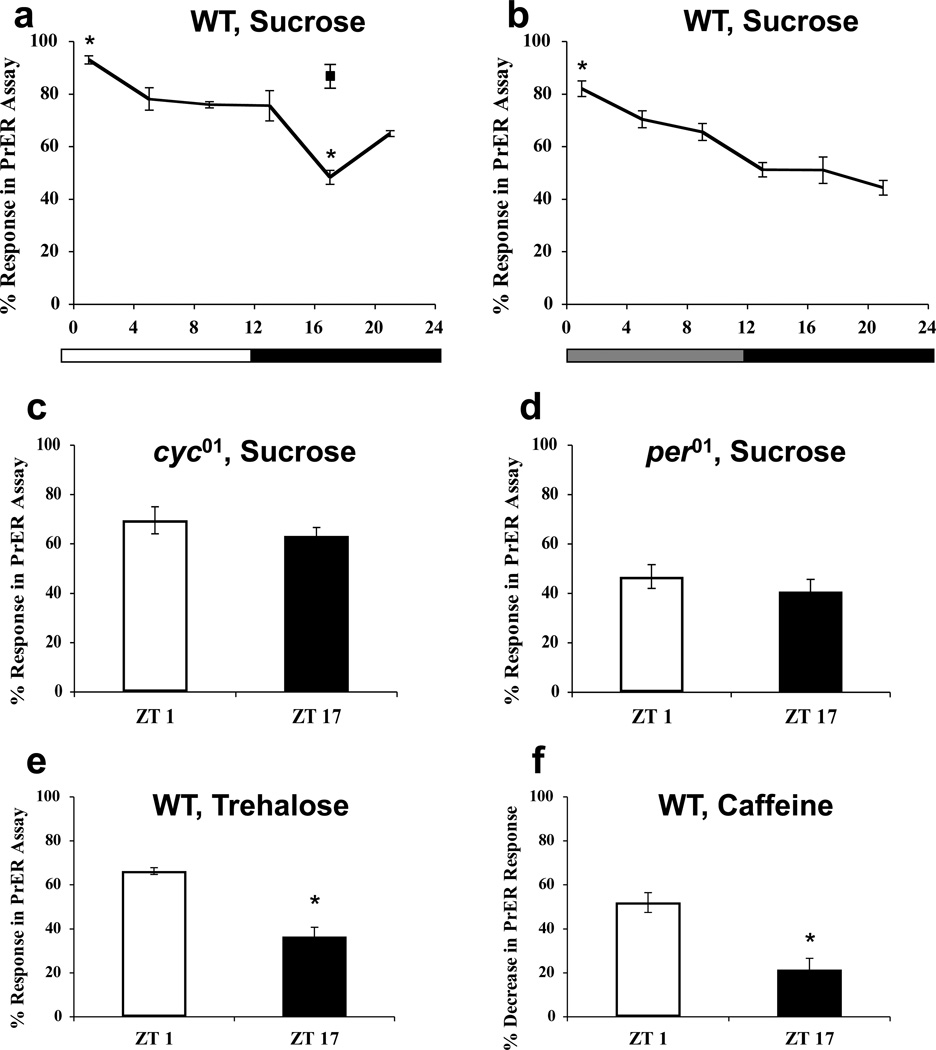
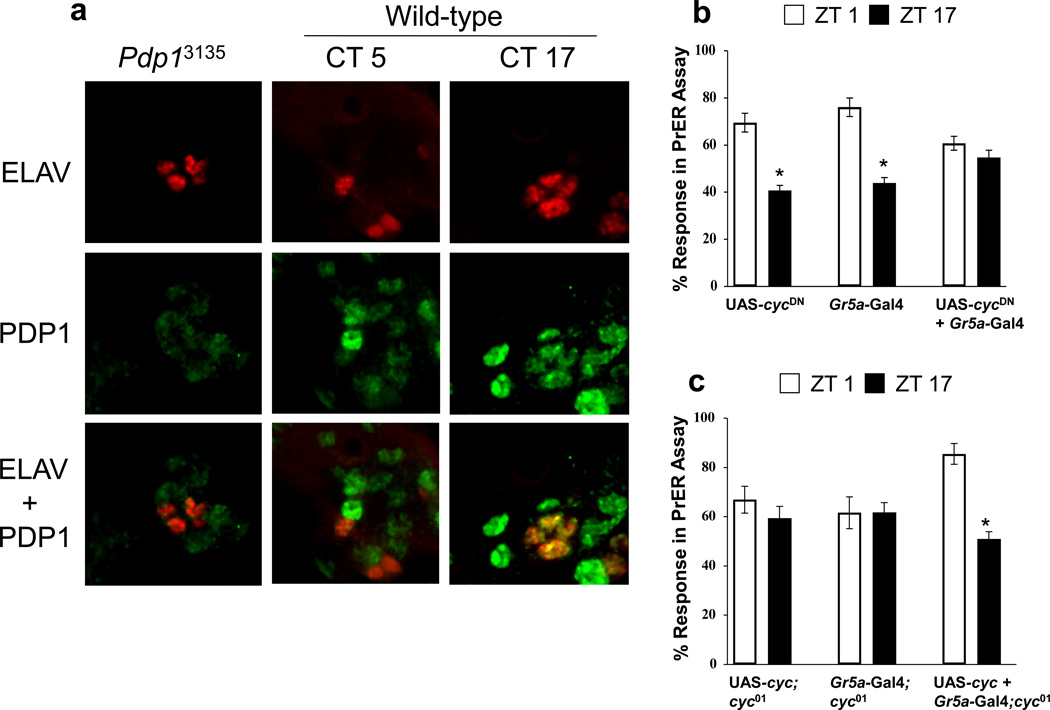
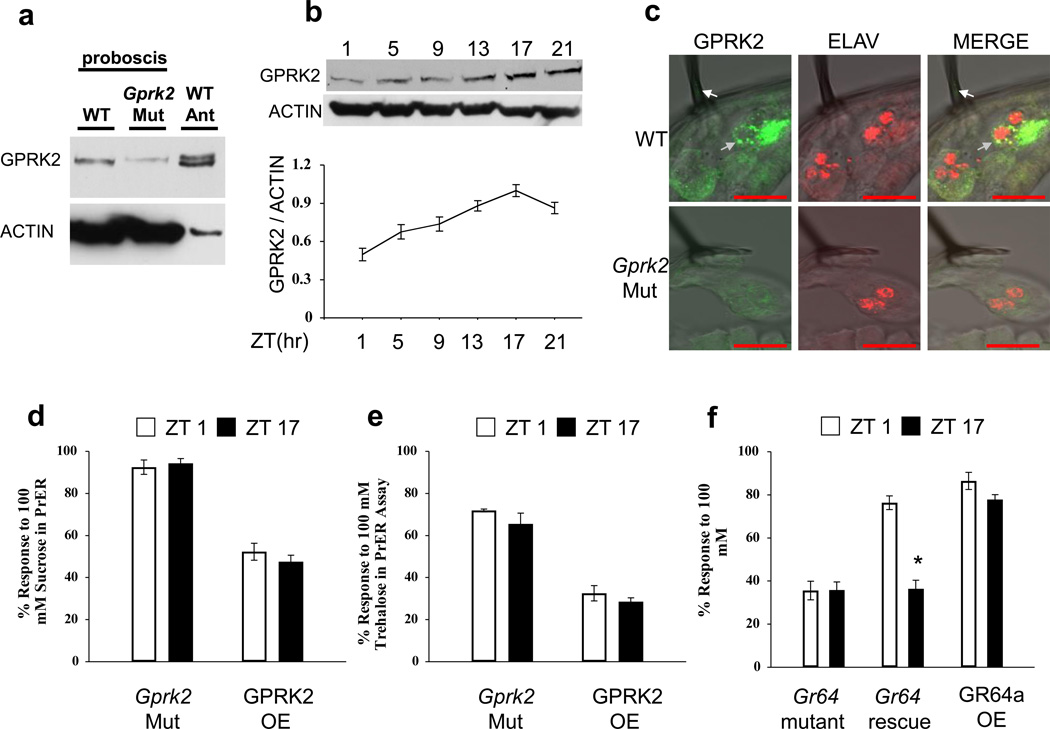
Here we report that single-unit responses from labellar gustatory receptor neurons (GRNs) to attractive and aversive tastants show diurnal and circadian rhythms in spike amplitude, frequency, and duration across different classes of gustatory sensilla. Rhythms in electrophysiological responses parallel behavioral rhythms in proboscis extension reflex. Molecular oscillators in GRNs are necessary and sufficient for rhythms in gustatory responses and drive rhythms in G protein-coupled receptor kinase 2 (GPRK2) expression that mediate rhythms in taste sensitivity. Eliminating clock function in certain GRNs increases feeding and locomotor activity, mimicking a starvation response.
Circadian clocks in GRNs control neuronal output and drive behavioral rhythms in taste responses that peak at a time of day when feeding is maximal in flies. Our results argue that oscillations in GPRK2 levels drive rhythms in gustatory physiology and behavior and that GRN clocks repress feeding. The similarity in gustatory system organization and feeding behavior in flies and mammals, as well as diurnal changes in taste sensitivity in humans, suggest that our results are relevant to the situation in humans.
动物的化学感觉过程受昼夜节律调节,但人们对昼夜节律如何控制化学感觉系统或化学感觉系统功能节律的后果知之甚少。味觉是动物用来决定是否进食的主要化学感觉门控,果蝇的主要味觉器官——喙,就拥有自主的昼夜节律振荡器。在这里,我们研究了味觉生理学、味觉诱发的食欲行为和食物摄入,以了解果蝇味觉系统中时钟依赖性调节。
我们报告说,来自唇瓣味觉感受神经元(GRN)的对有吸引力和厌恶的味觉刺激的单细胞反应在不同类型的味觉感受器中表现出昼夜和昼夜节律的尖峰幅度、频率和持续时间。电生理反应的节律与伸喙反射的行为节律平行。GRNs 中的分子振荡器是味觉反应节律所必需的,并且驱动 G 蛋白偶联受体激酶 2(GPRK2)表达的节律,从而介导味觉敏感性的节律。在某些 GRNs 中消除时钟功能会增加摄食和运动活性,模拟饥饿反应。
GRNs 中的生物钟控制神经元输出,并驱动味觉反应的行为节律,这些节律在一天中摄食最旺盛的时候达到峰值。我们的结果表明,GPRK2 水平的波动驱动味觉生理学和行为的节律,而 GRN 时钟抑制摄食。在果蝇和哺乳动物中味觉系统组织和摄食行为的相似性,以及人类味觉敏感性的昼夜变化,表明我们的结果与人类的情况有关。