Research Institute for Bioresources, Okayama University, Chuo 2-20-1, Kurashiki, Okayama, 710-0046 Japan.
Plant Cell Physiol. 2010 Mar;51(3):354-65. doi: 10.1093/pcp/pcq016. Epub 2010 Feb 11.
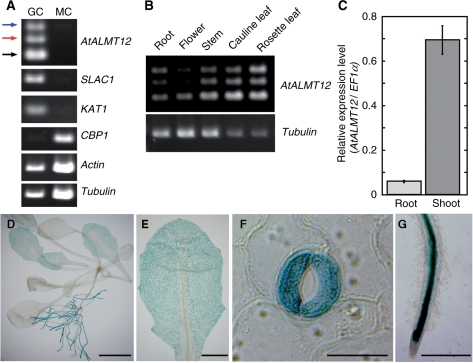
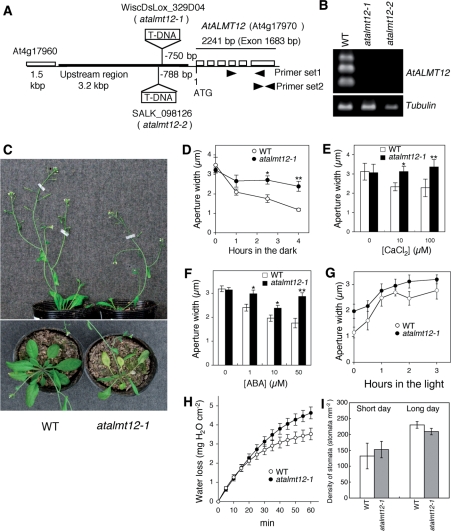
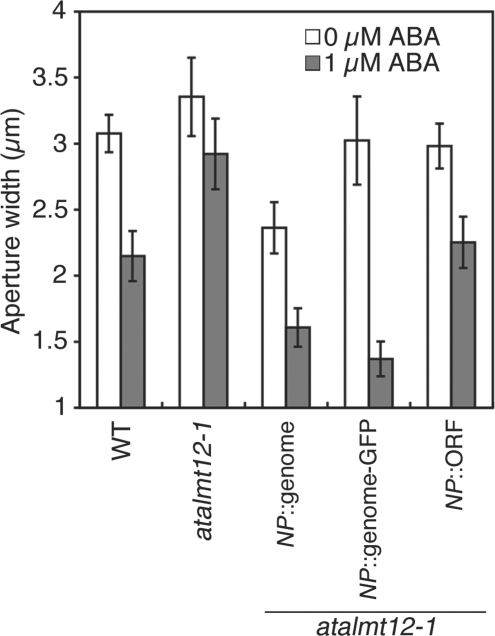
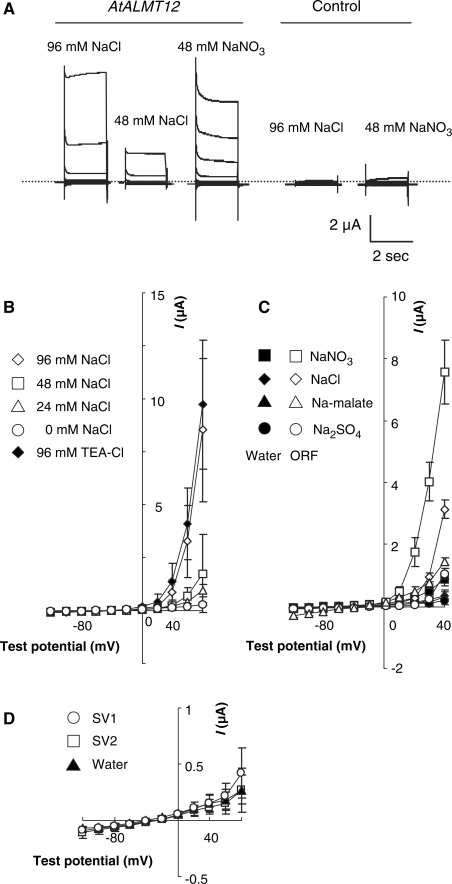
Plant stomata limit both carbon dioxide uptake and water loss; hence, stomatal aperture is carefully set as the environment fluctuates. Aperture area is known to be regulated in part by ion transport, but few of the transporters have been characterized. Here we report that AtALMT12 (At4g17970), a homolog of the aluminum-activated malate transporter (ALMT) of wheat, is expressed in guard cells of Arabidopsis thaliana. Loss-of-function mutations in AtALMT12 impair stomatal closure induced by ABA, calcium and darkness, but do not abolish either the rapidly activated or the slowly activated anion currents previously identified as being important for stomatal closure. Expressed in Xenopus oocytes, AtALMT12 facilitates chloride and nitrate currents, but not those of organic solutes. Therefore, we conclude that AtALMT12 is a novel class of anion transporter involved in stomatal closure.
植物气孔限制二氧化碳的吸收和水分的损失;因此,气孔开度会随着环境的波动而被仔细调节。已知孔径部分受离子运输调节,但很少有转运蛋白被描述。在这里,我们报告 AtALMT12(At4g17970),一种小麦铝激活苹果酸转运蛋白(ALMT)的同源物,在拟南芥保卫细胞中表达。AtALMT12 功能丧失突变会损害 ABA、钙和黑暗诱导的气孔关闭,但不会消除先前被认为对气孔关闭很重要的快速激活或缓慢激活的阴离子电流。在非洲爪蟾卵母细胞中表达时,AtALMT12 促进氯离子和硝酸盐电流,但不促进有机溶质的电流。因此,我们得出结论,AtALMT12 是一种新型的阴离子转运蛋白,参与气孔关闭。