Graduate School of Human Development and Environment, Kobe University, Kobe, Japan.
Proc Jpn Acad Ser B Phys Biol Sci. 2010;86(2):103-16. doi: 10.2183/pjab.86.103.
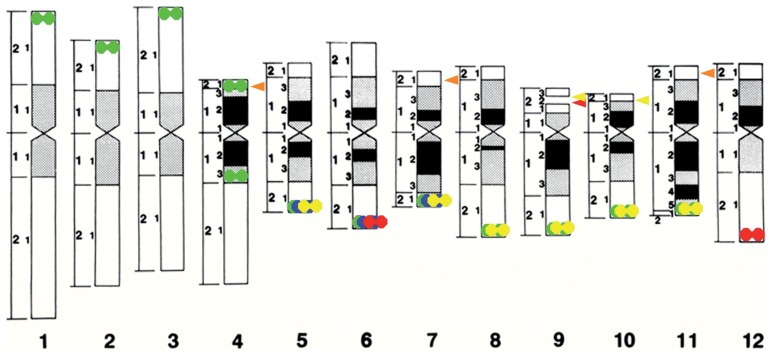
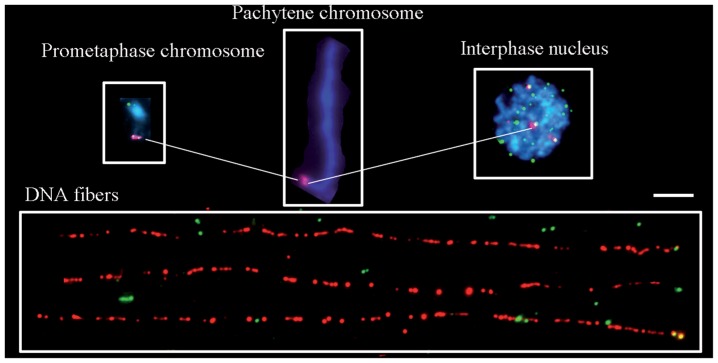
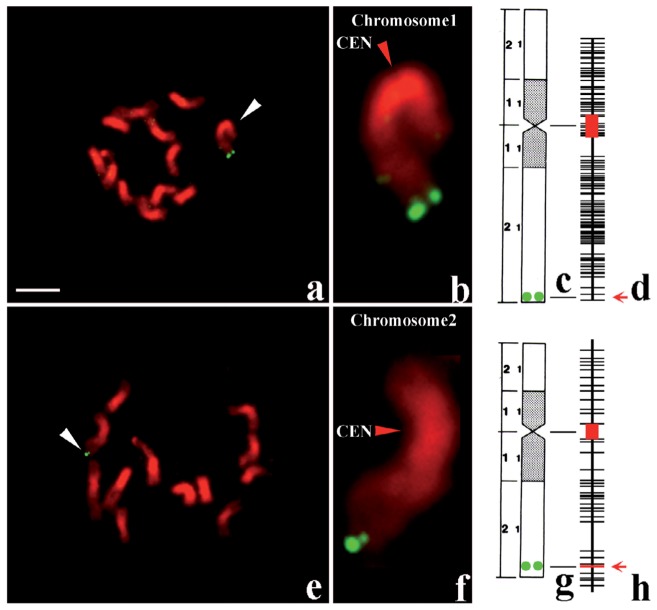
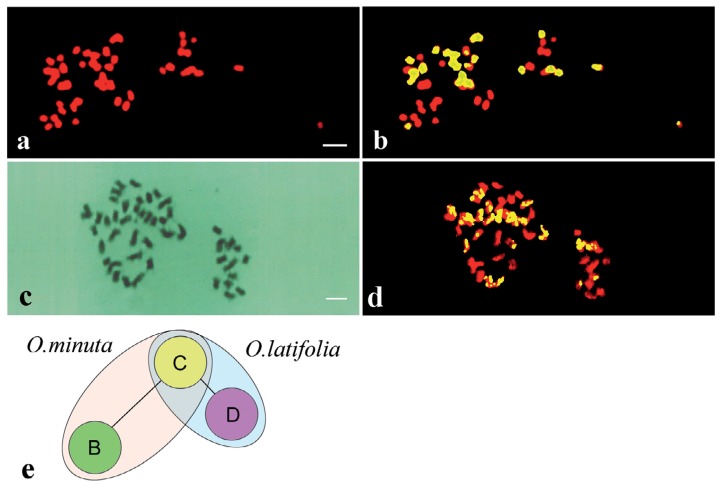
Fluorescence in situ hybridization (FISH) is an effective method for the physical mapping of genes and repetitive DNA sequences on chromosomes. Physical mapping of unique nucleotide sequences on specific rice chromosome regions was performed using a combination of chromosome identification and highly sensitive FISH. Increases in the detection sensitivity of smaller DNA sequences and improvements in spatial resolution have ushered in a new phase in FISH technology. Thus, it is now possible to perform in situ hybridization on somatic chromosomes, pachytene chromosomes, and even on extended DNA fibers (EDFs). Pachytene-FISH allows the integration of genetic linkage maps and quantitative chromosome maps. Visualization methods using FISH can reveal the spatial organization of the centromere, heterochromatin/euchromatin, and the terminal structures of rice chromosomes. Furthermore, EDF-FISH and the DNA combing technique can resolve a spatial distance of 1 kb between adjacent DNA sequences, and the detection of even a 300-bp target is now feasible. The copy numbers of various repetitive sequences and the sizes of various DNA molecules were quantitatively measured using the molecular combing technique. This review describes the significance of these advances in molecular cytology in rice and discusses future applications in plant studies using visualization techniques.
荧光原位杂交(FISH)是一种有效的方法,用于对染色体上的基因和重复 DNA 序列进行物理作图。通过结合染色体鉴定和高灵敏度 FISH,对特定水稻染色体区域上的独特核苷酸序列进行物理作图。较小 DNA 序列的检测灵敏度的提高和空间分辨率的改善,为 FISH 技术带来了一个新的阶段。因此,现在可以在体细胞染色体、粗线期染色体甚至伸展 DNA 纤维(EDF)上进行原位杂交。粗线期 FISH 允许遗传连锁图谱和定量染色体图谱的整合。使用 FISH 的可视化方法可以揭示着丝粒、异染色质/常染色质和水稻染色体末端结构的空间组织。此外,EDF-FISH 和 DNA 梳理技术可以解析相邻 DNA 序列之间 1kb 的空间距离,现在甚至可以检测到 300bp 的靶标。使用分子梳理技术可以定量测量各种重复序列的拷贝数和各种 DNA 分子的大小。本文综述了这些在水稻分子细胞学方面的进展的意义,并讨论了使用可视化技术在植物研究中的未来应用。