Department of Psychology, University of Connecticut, 406 Babbidge Road, Unit 1020, Storrs, CT 06269-1020, United States.
Cogn Psychol. 2010 Jun;60(4):241-66. doi: 10.1016/j.cogpsych.2010.01.002. Epub 2010 Feb 16.
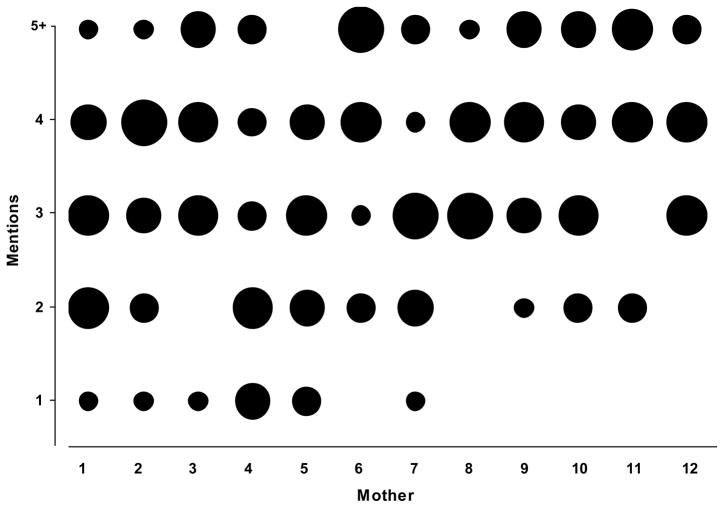
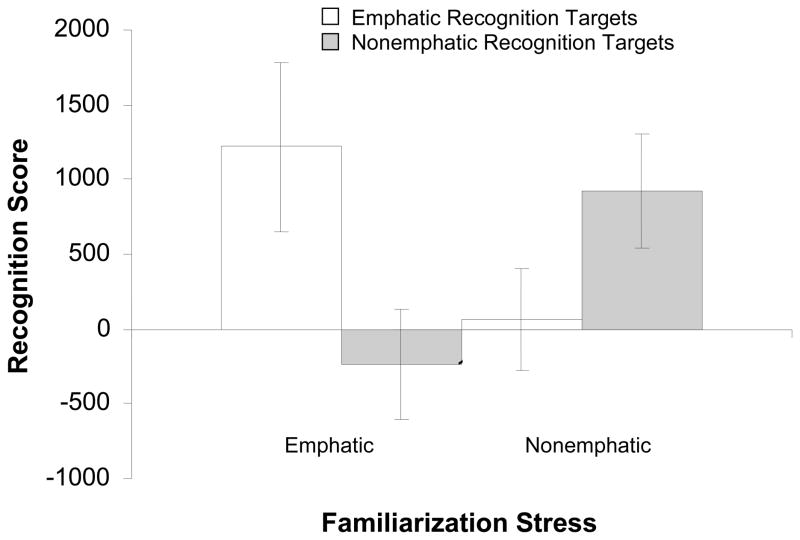
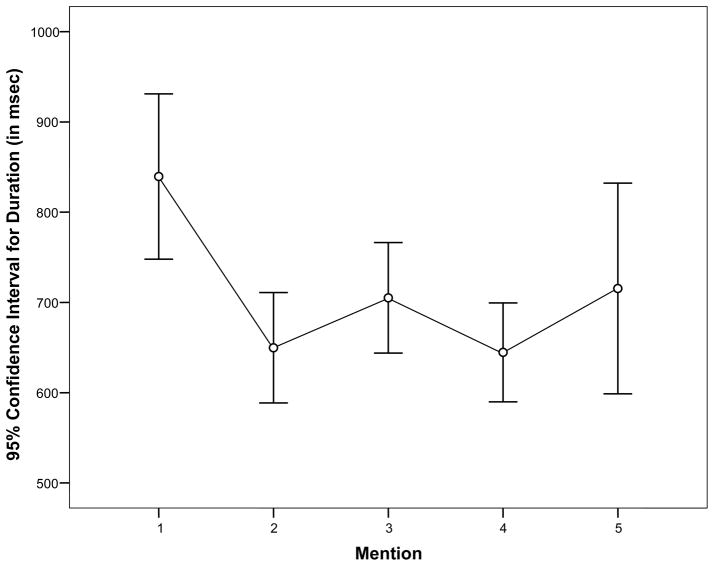
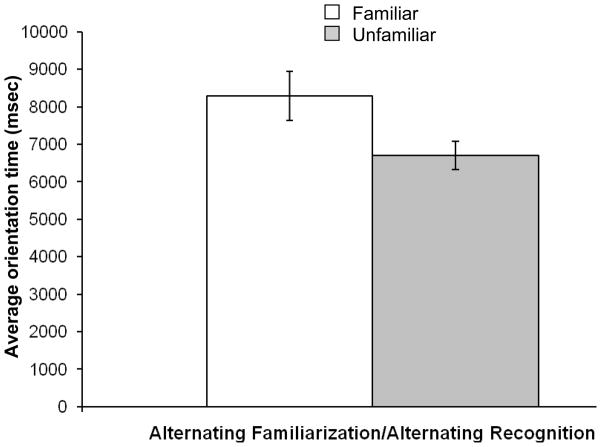
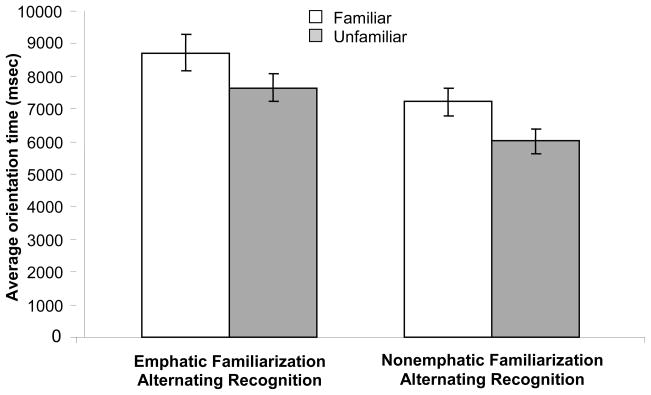
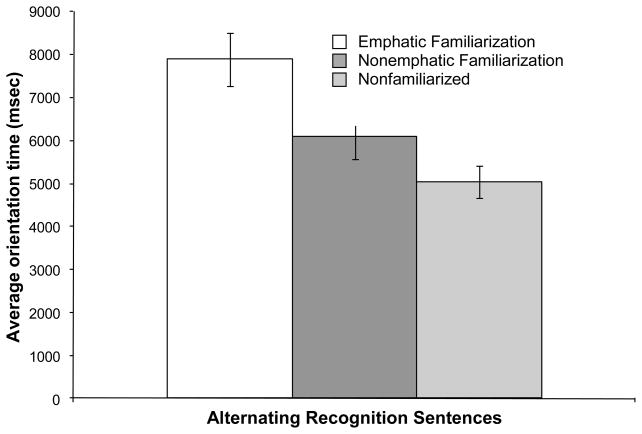
In a series of studies, we examined how mothers naturally stress words across multiple mentions in speech to their infants and how this marking influences infants' recognition of words in fluent speech. We first collected samples of mothers' infant-directed speech using a technique that induced multiple repetitions of target words. Acoustic analyses revealed that mothers systematically alternated between emphatic and nonemphatic stress when talking to their infants. Using the headturn preference procedure, we then tested 7.5-month-old infants on their ability to detect familiarized bisyllabic words in fluent speech. Stress of target words (emphatic and nonemphatic) was systematically varied across familiarization and recognition phases of four experiments. Results indicated that, although infants generally prefer listening to words produced with emphatic stress, recognition was enhanced when the degree of emphatic stress at familiarization matched the degree of emphatic stress at recognition.
在一系列研究中,我们研究了母亲在与婴儿交谈时如何自然地在多个提及中强调单词,以及这种标记如何影响婴儿对流畅语音中单词的识别。我们首先使用一种诱导目标词多次重复的技术收集了母亲对婴儿说话的样本。声学分析显示,母亲在与婴儿交谈时会系统地在强调和非强调之间交替。然后,我们使用转头偏好程序测试了 7.5 个月大的婴儿在流畅的语音中检测熟悉的双音节词的能力。在四个实验的熟悉和识别阶段,目标词(强调和非强调)的重音被系统地改变。结果表明,尽管婴儿通常更喜欢听强调重音的词,但当熟悉阶段的强调重音程度与识别阶段的强调重音程度相匹配时,识别能力会增强。