Department of Comparative Medicine, University of Washington, Seattle, Washington, United States of America.
PLoS One. 2010 Feb 9;5(2):e9135. doi: 10.1371/journal.pone.0009135.
The familial and sporadic forms of Alzheimer's disease (AD) have an identical pathology with a severe disparity in the time of onset [1]. The pathological similarity suggests that epigenetic processes may phenocopy the Familial Alzheimer's disease (FAD) mutations within sporadic AD. Numerous groups have demonstrated that FAD mutations in presenilin result in 'loss of function' of gamma-secretase mediated APP cleavage [2], [3], [4], [5]. Accordingly, ER stress is prominent within the pathologically impacted brain regions in AD patients [6] and is reported to inhibit APP trafficking through the secretory pathway [7], [8]. As the maturation of APP and the cleaving secretases requires trafficking through the secretory pathway [9], [10], [11], we hypothesized that ER stress may block trafficking requisite for normal levels of APP cleavage and that the small molecular chaperone 4-phenylbutyrate (PBA) may rescue the proteolytic deficit.
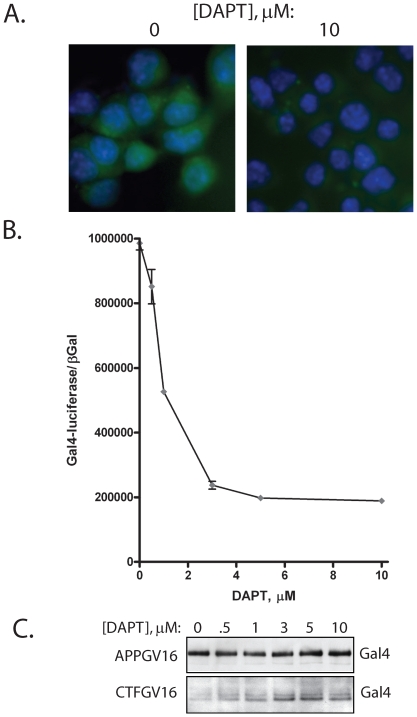
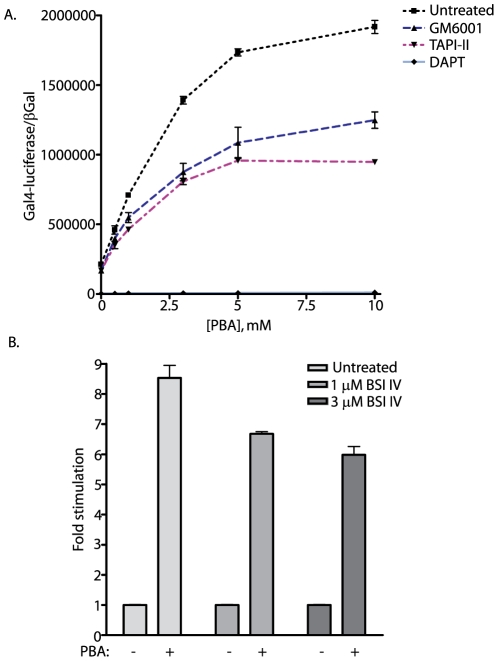
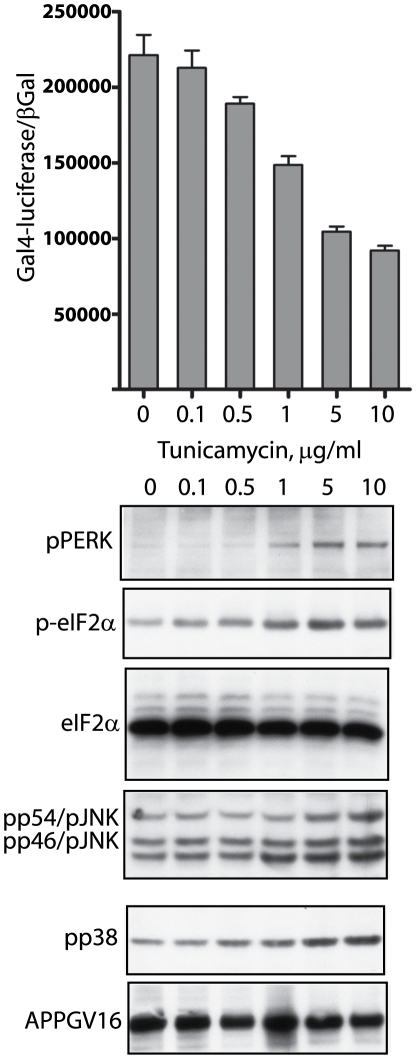
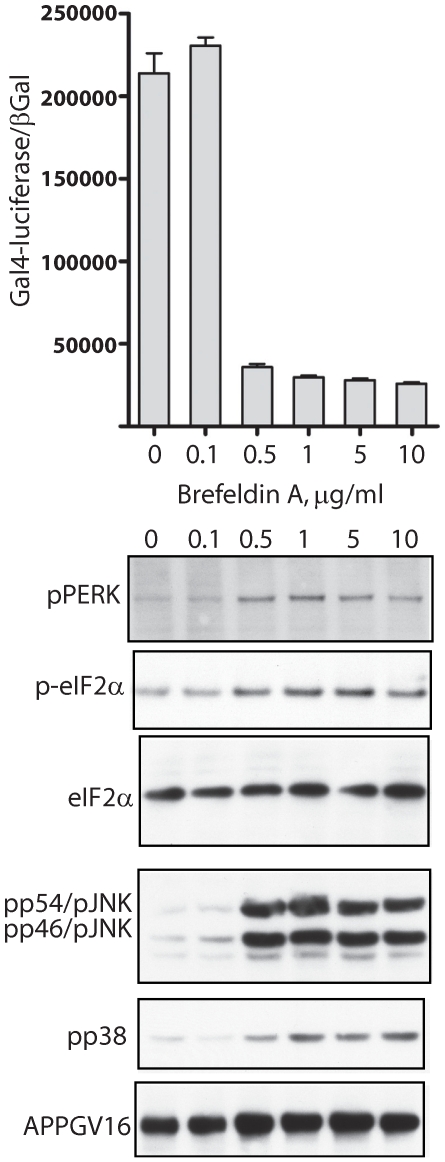
METHODOLOGY/PRINCIPAL FINDINGS: The APP-Gal4VP16/Gal4-reporter screen was stably incorporated into neuroblastoma cells in order to assay gamma-secretase mediated APP proteolysis under normal and pharmacologically induced ER stress conditions. Three unrelated pharmacological agents (tunicamycin, thapsigargin and brefeldin A) all repressed APP proteolysis in parallel with activation of unfolded protein response (UPR) signaling-a biochemical marker of ER stress. Co-treatment of the gamma-secretase reporter cells with PBA blocked the repressive effects of tunicamycin and thapsigargin upon APP proteolysis, UPR activation, and apoptosis. In unstressed cells, PBA stimulated gamma-secretase mediated cleavage of APP by 8-10 fold, in the absence of any significant effects upon amyloid production, by promoting APP trafficking through the secretory pathway and the stimulation of the non-pathogenic alpha/gamma-cleavage.
CONCLUSIONS/SIGNIFICANCE: ER stress represses gamma-secretase mediated APP proteolysis, which replicates some of the proteolytic deficits associated with the FAD mutations. The small molecular chaperone PBA can reverse ER stress induced effects upon APP proteolysis, trafficking and cellular viability. Pharmaceutical agents, such as PBA, that stimulate alpha/gamma-cleavage of APP by modifying intracellular trafficking should be explored as AD therapeutics.
家族性和散发性阿尔茨海默病(AD)具有相同的病理学,但其发病时间存在严重差异[1]。这种病理学的相似性表明,表观遗传过程可能在散发性 AD 中模拟家族性 AD(FAD)突变。许多研究小组已经证明,早老素中的 FAD 突变导致γ-分泌酶介导的 APP 切割的“功能丧失”[2],[3],[4],[5]。因此,AD 患者的病理性受影响脑区中内质网应激明显[6],并据报道,它通过分泌途径抑制 APP 运输[7],[8]。由于 APP 的成熟和切割蛋白酶的成熟需要通过分泌途径运输[9],[10],[11],我们假设内质网应激可能阻断正常水平的 APP 切割所需的运输,小分子伴侣 4-苯丁酸(PBA)可能挽救蛋白水解缺陷。
方法/主要发现:APP-Gal4VP16/Gal4-报告基因筛选被稳定地整合到神经母细胞瘤细胞中,以在正常和药理学诱导的内质网应激条件下测定 γ-分泌酶介导的 APP 蛋白水解。三种不相关的药理学药物(衣霉素、他普西庚和布雷菲德菌素 A)都抑制了 APP 蛋白水解,同时激活未折叠蛋白反应(UPR)信号-内质网应激的生化标志物。在用 PBA 共同处理 γ-分泌酶报告细胞时,衣霉素和他普西庚对 APP 蛋白水解、UPR 激活和细胞凋亡的抑制作用被阻断。在未应激的细胞中,PBA 通过促进 APP 通过分泌途径运输并刺激非致病性α/γ切割,将 γ-分泌酶介导的 APP 切割增加 8-10 倍,而对淀粉样蛋白产生没有任何显著影响。
结论/意义:内质网应激抑制 γ-分泌酶介导的 APP 蛋白水解,这复制了一些与 FAD 突变相关的蛋白水解缺陷。小分子伴侣 PBA 可以逆转内质网应激对内质网应激诱导的 APP 蛋白水解、运输和细胞活力的影响。通过修饰细胞内运输来刺激 APP 的α/γ切割的药物,如 PBA,应作为 AD 治疗药物进行探索。