Taraballi Francesca, Natalello Antonino, Campione Marcello, Villa Omar, Doglia Silvia M, Paleari Alberto, Gelain Fabrizio
Center for Nanomedicine and Tissue Engineering, A.O. Ospedale Niguarda Ca' Granda Milan, Italy.
Front Neuroeng. 2010 Feb 8;3:1. doi: 10.3389/neuro.16.001.2010. eCollection 2010.
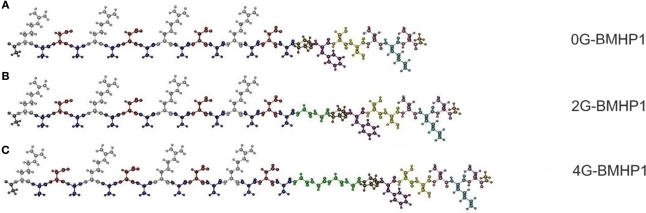
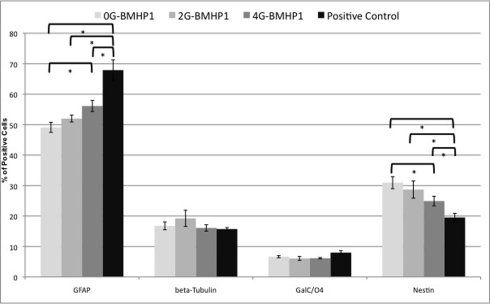
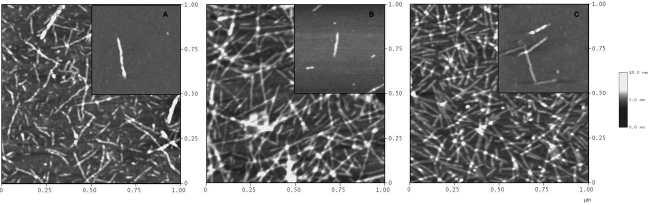
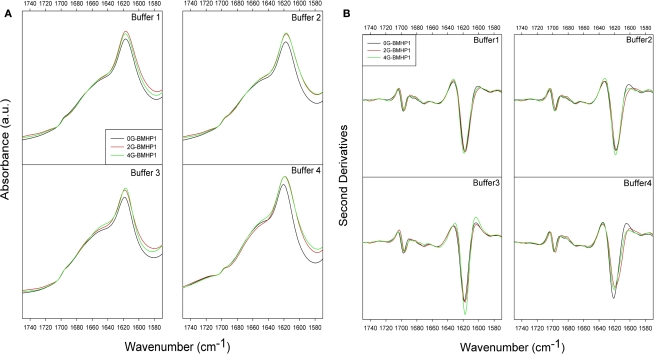
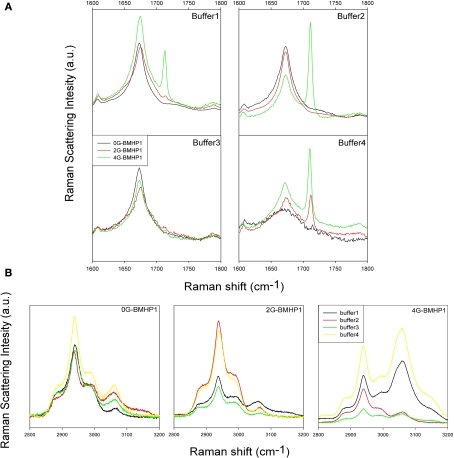
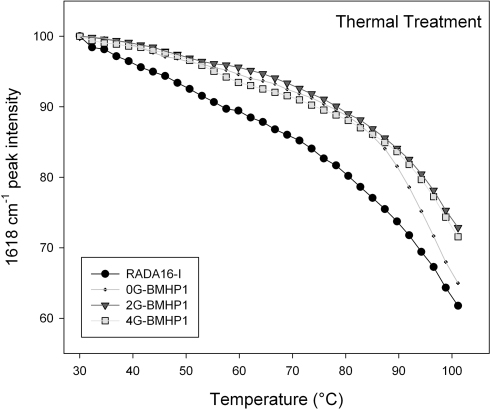
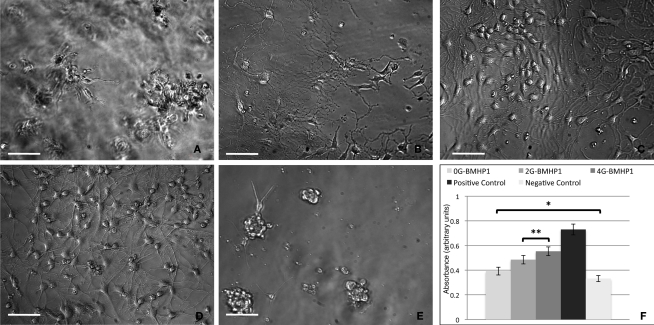
The understanding of phenomena involved in the self-assembling of bio-inspired biomaterials acting as three-dimensional scaffolds for regenerative medicine applications is a necessary step to develop effective therapies in neural tissue engineering. We investigated the self-assembled nanostructures of functionalized peptides featuring four, two or no glycine-spacers between the self-assembly sequence RADA16-I and the functional biological motif PFSSTKT. The effectiveness of their biological functionalization was assessed via in vitro experiments with neural stem cells (NSCs) and their molecular assembly was elucidated via atomic force microscopy, Raman and Fourier Transform Infrared spectroscopy. We demonstrated that glycine-spacers play a crucial role in the scaffold stability and in the exposure of the functional motifs. In particular, a glycine-spacer of four residues leads to a more stable nanostructure and to an improved exposure of the functional motif. Accordingly, the longer spacer of glycines, the more effective is the functional motif in both eliciting NSCs adhesion, improving their viability and increasing their differentiation. Therefore, optimized designing strategies of functionalized biomaterials may open, in the near future, new therapies in tissue engineering and regenerative medicine.
理解作为再生医学应用三维支架的生物启发式生物材料自组装过程中涉及的现象,是在神经组织工程中开发有效疗法的必要步骤。我们研究了在自组装序列RADA16-I与功能性生物基序PFSSTKT之间具有四个、两个或没有甘氨酸间隔区的功能化肽的自组装纳米结构。通过与神经干细胞(NSCs)进行体外实验评估了它们生物功能化的有效性,并通过原子力显微镜、拉曼光谱和傅里叶变换红外光谱阐明了它们的分子组装。我们证明甘氨酸间隔区在支架稳定性和功能基序的暴露方面起着关键作用。特别是,四个残基的甘氨酸间隔区会导致更稳定的纳米结构,并改善功能基序的暴露。因此,甘氨酸间隔区越长,功能基序在引发NSCs粘附、提高其活力和增加其分化方面就越有效。所以,功能化生物材料的优化设计策略可能在不久的将来为组织工程和再生医学带来新的疗法。