Department of Bioengineering, Rice University, MS-142, PO Box 1892, Houston, Texas 77251-1892, USA.
Biomacromolecules. 2010 Mar 8;11(3):600-9. doi: 10.1021/bm901147k.
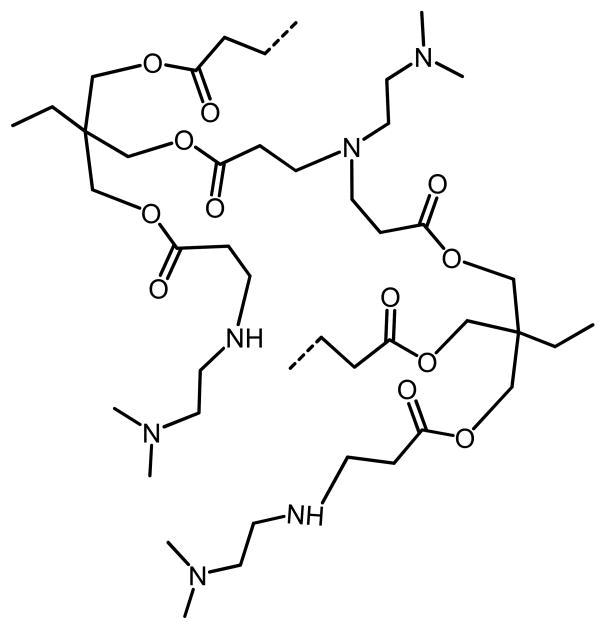
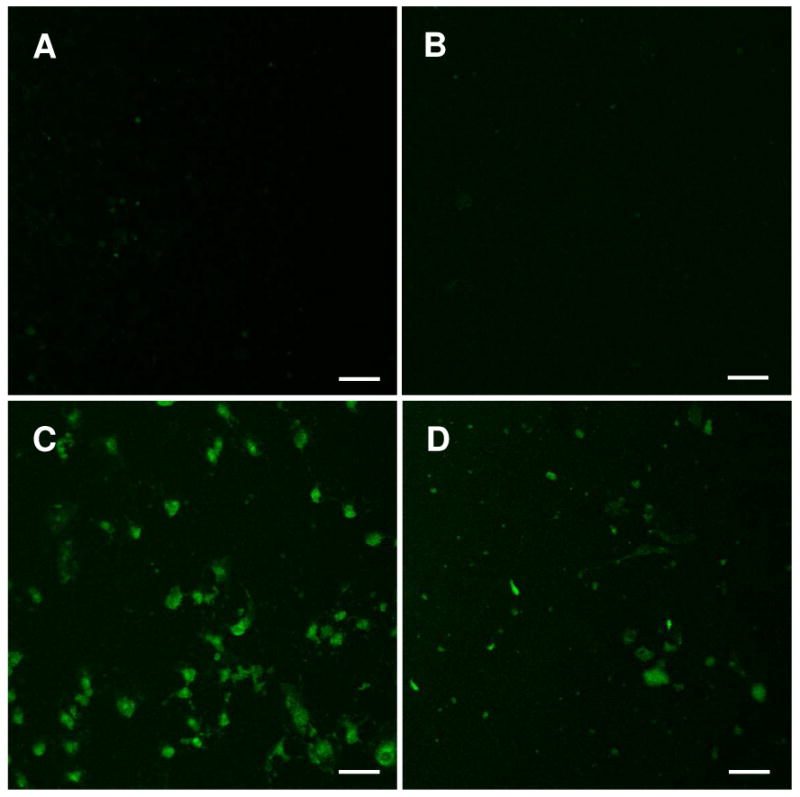
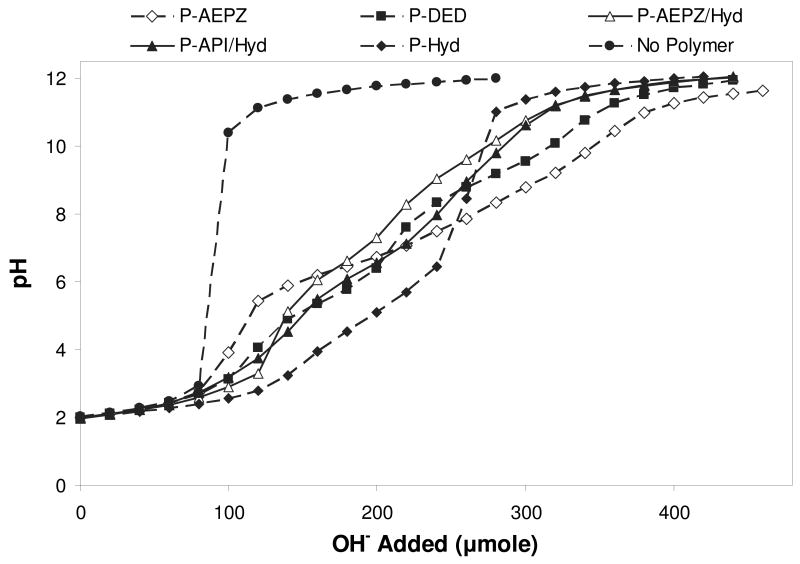
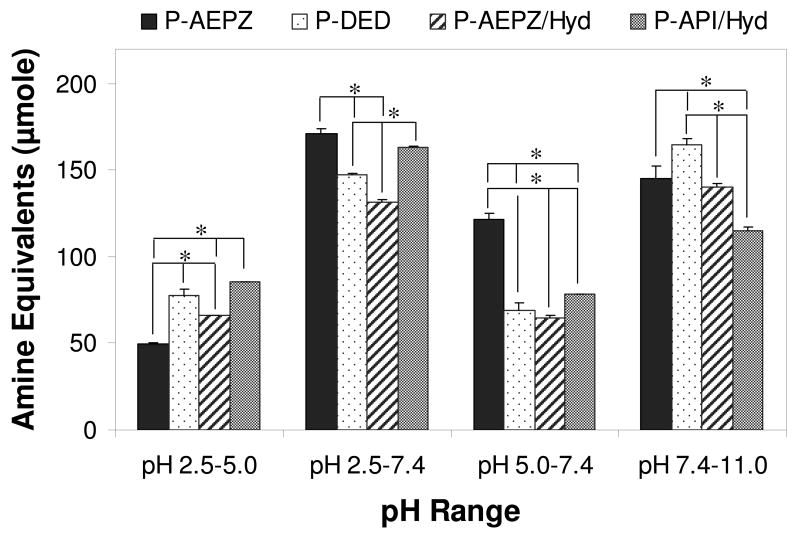
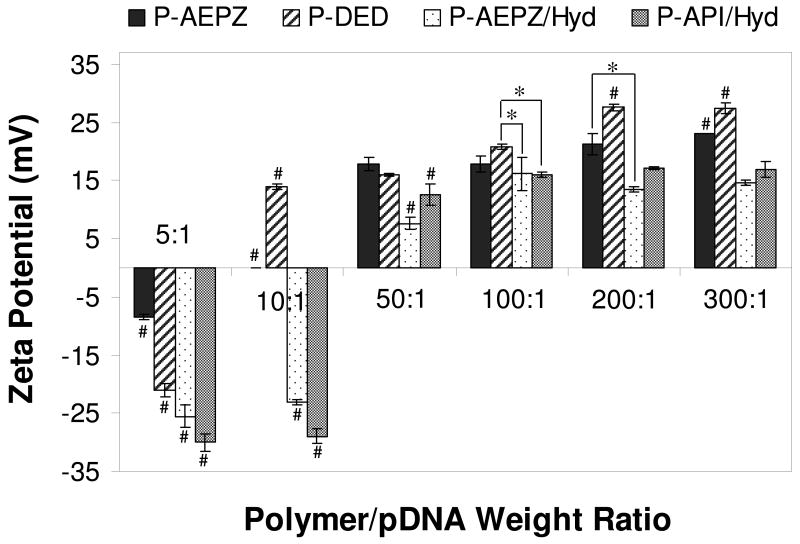
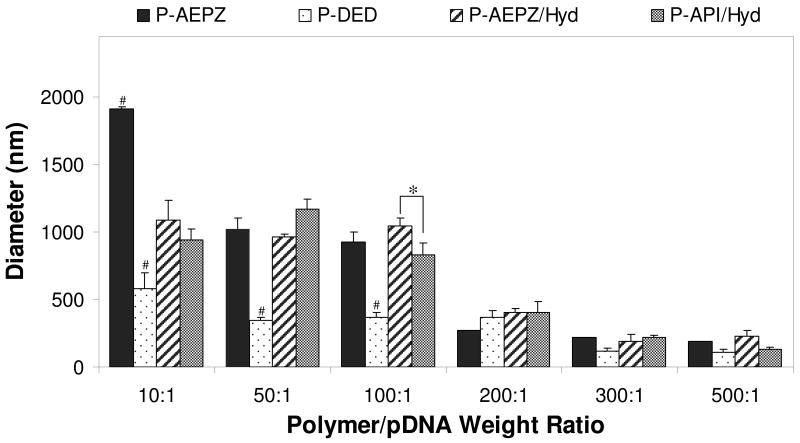
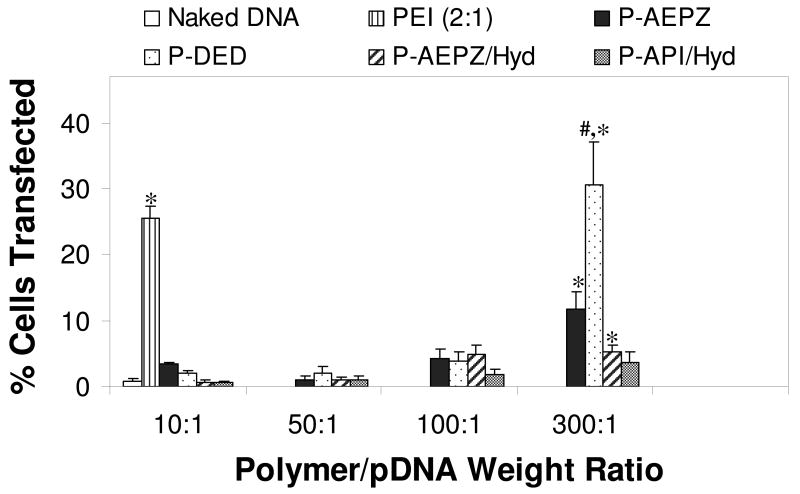
In this work, biodegradable branched polycationic polymers were synthesized by Michael addition polymerization from different amine monomers and the triacrylate monomer trimethylolpropane triacrylate. The polymers varied in the number of amines that dissociate in different pH ranges, which are considered to be beneficial to different parts of the gene delivery process. P-DED, a polymer synthesized from trimethylolpropane triacrylate and dimethylethylenediamine, had the highest number of protonated amines that are available for plasmid DNA (pDNA) complexation at pH 7.4 of all polymers synthesized. P-DED formed a positive polyplex (13.9 +/- 0.5 mV) at a polymer/pDNA weight ratio of 10:1 in contrast with the other polymers synthesized, which formed positive polyplexes only at higher weight ratios. Polyplexes formed with the synthesized polymers at the highest polymer/pDNA weight ratio tested (300:1) resulted in higher transfection with enhanced green fluorescent protein reporter gene (5.3 +/- 1.0 to 30.6 +/- 6.6%) compared with naked pDNA (0.8 +/- 0.4%), as quantified by flow cytometry. Polyplexes formed with P-DED (weight ratio of 300:1) also showed higher transfection (30.6 +/- 6.6%) as compared with polyplexes formed with branched polyethylenimine (weight ratio of 2:1, 25.5 +/- 2.7%). The results from this study demonstrated that polymers with amines that dissociate above pH 7.4, which are available as positively charged groups for pDNA complexation at pH 7.4, can be synthesized to produce stable polyplexes with increased zeta potential and decreased hydrodynamic size that efficiently transfect cells. This work indicated that polymers containing varying amine functionalities with different buffering capabilities can be synthesized by using different amine monomers and used as effective gene delivery vectors.
在这项工作中,通过迈克尔加成聚合反应,从不同的胺单体和三丙烯酸酯单体三羟甲基丙烷三丙烯酸合成了可生物降解的支化聚阳离子聚合物。这些聚合物的特点是在不同的 pH 值范围内解离的胺的数量不同,这被认为对基因传递过程的不同部分有益。由三羟甲基丙烷三丙烯酸和二甲乙基乙二胺合成的 P-DED 聚合物在所有合成聚合物中,在 pH 7.4 时具有最多的质子化胺,可用于与质粒 DNA(pDNA)复合。与其他合成的聚合物相比,P-DED 在聚合物/pDNA 重量比为 10:1 时形成正电的多聚物(13.9 +/- 0.5 mV),而其他合成的聚合物仅在更高的重量比下形成正电的多聚物。与裸 pDNA(0.8 +/- 0.4%)相比,在测试的最高聚合物/pDNA 重量比(300:1)下形成的与合成聚合物形成的多聚物的转染率更高,具有增强型绿色荧光蛋白报告基因(5.3 +/- 1.0 至 30.6 +/- 6.6%),这通过流式细胞术进行了定量。与支化聚乙烯亚胺(重量比为 2:1,25.5 +/- 2.7%)形成的多聚物相比,与 P-DED(重量比为 300:1)形成的多聚物也显示出更高的转染率(30.6 +/- 6.6%)。这项研究的结果表明,在 pH 7.4 以上解离的胺的聚合物,可作为在 pH 7.4 时与 pDNA 复合的正电荷基团,可用作合成具有增加的 ζ 电位和减小的流体动力学尺寸的稳定多聚物,这些多聚物能有效地转染细胞。这项工作表明,可以通过使用不同的胺单体合成含有不同缓冲能力的胺功能的聚合物,并将其用作有效的基因传递载体。