Department of Psychology, Stirling University, Stirling, UK.
BMC Neurol. 2010 Feb 24;10:15. doi: 10.1186/1471-2377-10-15.
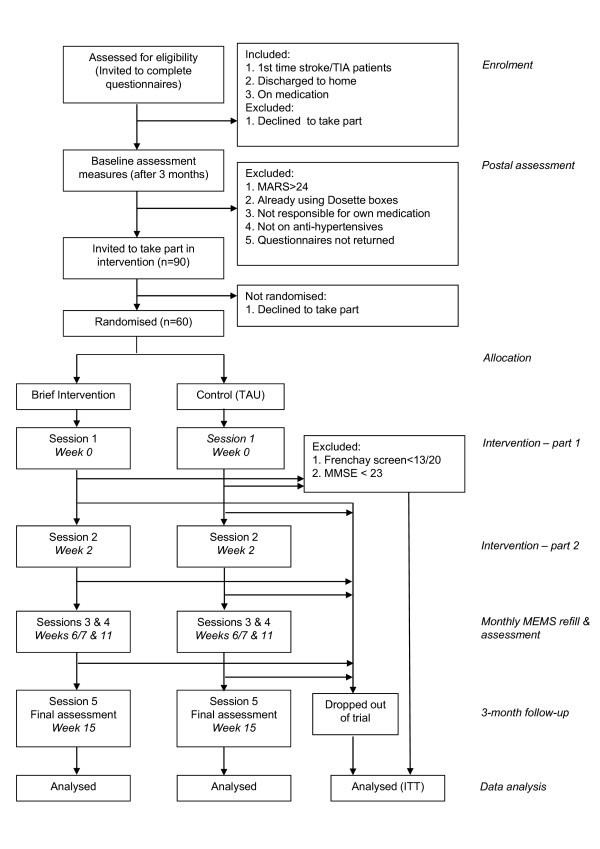
Adherence to therapies is a primary determinant of treatment success, yet the World Health Organisation estimate that only 50% of patients who suffer from chronic diseases adhere to treatment recommendations. In a previous project, we found that 30% of stroke patients reported sub-optimal medication adherence, and this was associated with younger age, greater cognitive impairment, lower perceptions of medication benefits and higher specific concerns about medication. We now wish to pilot a brief intervention aimed at (a) helping patients establish a better medication-taking routine, and (b) eliciting and modifying any erroneous beliefs regarding their medication and their stroke.
METHODS/DESIGN: Thirty patients will be allocated to a brief intervention (2 sessions) and 30 to treatment as usual. The primary outcome will be adherence measured over 3 months using Medication Event Monitoring System (MEMS) pill containers which electronically record openings. Secondary outcomes will include self reported adherence and blood pressure.
This study shall also assess uptake/attrition, feasibility, ease of understanding and acceptability of this complex intervention.
Current Controlled Trials ISRCTN38274953.
治疗依从性是治疗成功的主要决定因素,但世界卫生组织估计,只有 50%的慢性病患者遵循治疗建议。在之前的一个项目中,我们发现 30%的中风患者报告说药物服用依从性差,这与年龄较小、认知障碍更严重、对药物益处的认知较低以及对药物的具体担忧较高有关。我们现在希望试行一项简短的干预措施,旨在 (a) 帮助患者建立更好的服药习惯,以及 (b) 了解和纠正任何关于药物和中风的错误信念。
方法/设计:将 30 名患者分配到简短干预组(2 个疗程),30 名患者分配到常规治疗组。主要结局将是使用电子记录开启次数的 Medication Event Monitoring System (MEMS) 药瓶在 3 个月内测量的药物依从性。次要结局将包括自我报告的药物依从性和血压。
本研究还将评估该复杂干预措施的参与/脱落率、可行性、易于理解性和可接受性。
当前对照试验 ISRCTN38274953。