Sheffield Centre for Sports Medicine, University of Sheffield, UK.
J Orthop Surg Res. 2010 Feb 25;5:12. doi: 10.1186/1749-799X-5-12.
The study objective was to assess the influence of a SLAP lesion on onset of EMG activity in shoulder muscles during a front on rugby football tackle within professional rugby players.
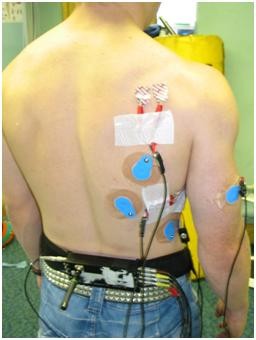
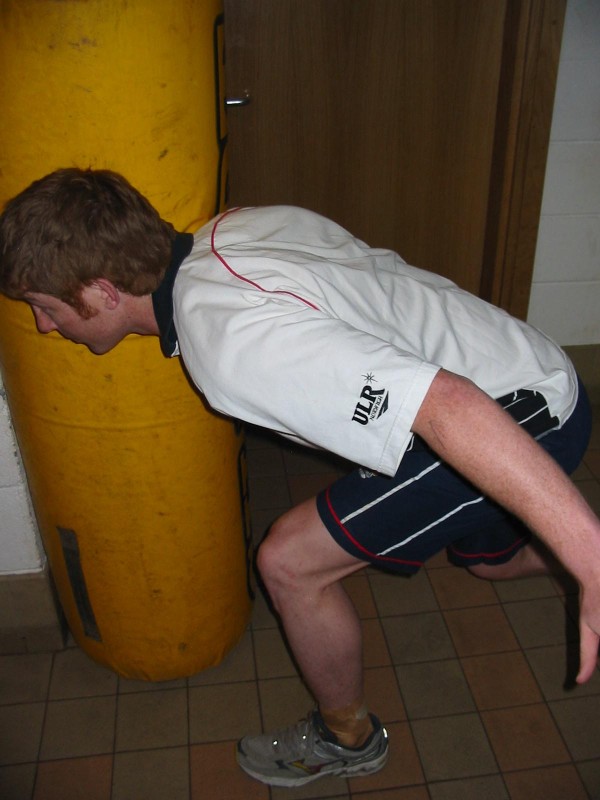
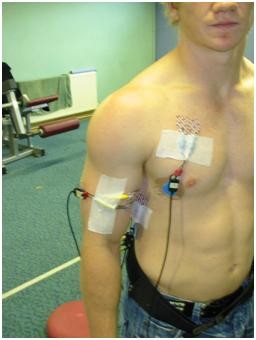
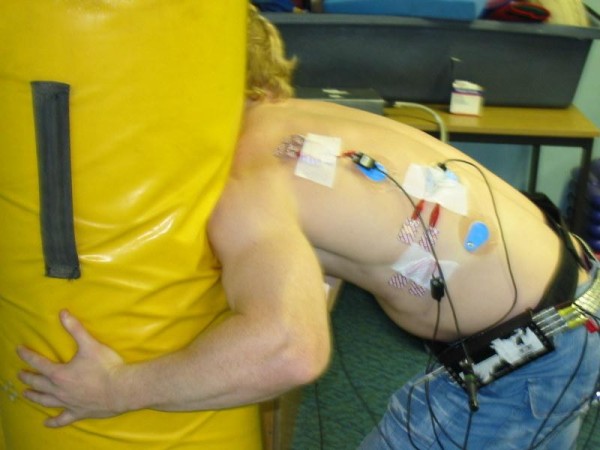
Mixed cross-sectional study evaluating between and within group differences in EMG onset times. Testing was carried out within the physiotherapy department of a university sports medicine clinic. The test group consisted of 7 players with clinically diagnosed SLAP lesions, later verified on arthroscopy. The reference group consisted of 15 uninjured and full time professional rugby players from within the same playing squad. Controlled tackles were performed against a tackle dummy. Onset of EMG activity was assessed from surface EMG of Pectorialis Major, Biceps Brachii, Latissimus Dorsi, Serratus Anterior and Infraspinatus muscles relative to time of impact. Analysis of differences in activation timing between muscles and limbs (injured versus non-injured side and non injured side versus matched reference group).
Serratus Anterior was activated prior to all other muscles in all (P = 0.001-0.03) subjects. In the SLAP injured shoulder Biceps was activated later than in the non-injured side. Onset times of all muscles of the non-injured shoulder in the injured player were consistently earlier compared with the reference group. Whereas, within the injured shoulder, all muscle activation timings were later than in the reference group.
This study shows that in shoulders with a SLAP lesion there is a trend towards delay in activation time of Biceps and other muscles with the exception of an associated earlier onset of activation of Serratus anterior, possibly due to a coping strategy to protect glenohumeral stability and thoraco-scapular stability. This trend was not statistically significant in all cases.
本研究旨在评估 SLAP 损伤对专业橄榄球运动员正面橄榄球铲球中肩部肌肉肌电图(EMG)活动起始时间的影响。
采用混合横截面研究评估 EMG 起始时间的组间和组内差异。测试在大学运动医学诊所的物理治疗部门进行。实验组由 7 名临床诊断为 SLAP 损伤的运动员组成,随后在关节镜下证实。对照组由来自同一参赛队伍的 15 名未受伤的全职专业橄榄球运动员组成。对对抗假人进行控制铲球。从胸大肌、肱二头肌、背阔肌、前锯肌和肩胛下肌的表面肌电图评估 EMG 活动的起始时间,相对于撞击时间。分析肌肉和肢体(受伤侧与未受伤侧以及未受伤侧与匹配对照组)之间激活时间的差异。
所有受试者的前锯肌均先于其他所有肌肉激活(P = 0.001-0.03)。在 SLAP 损伤侧肩部,肱二头肌的激活时间晚于未损伤侧。受伤运动员未受伤侧的所有肌肉的起始时间均早于对照组。然而,在受伤侧,所有肌肉的激活时间均晚于对照组。
本研究表明,在 SLAP 损伤的肩部,肱二头肌和其他肌肉的激活时间有延迟的趋势,但前锯肌的激活时间较早,这可能是一种应对策略,以保护盂肱关节稳定性和胸肩胛稳定性。在所有情况下,这种趋势均不具有统计学意义。