Ontario Agency for Health Protection and Promotion, Toronto, Ontario, Canada.
Emerg Infect Dis. 2010 Mar;16(3):447-54. doi: 10.3201/eid1603.081689.
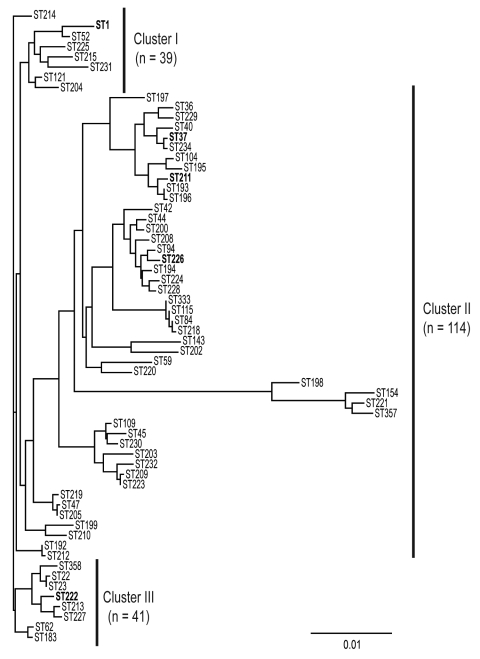
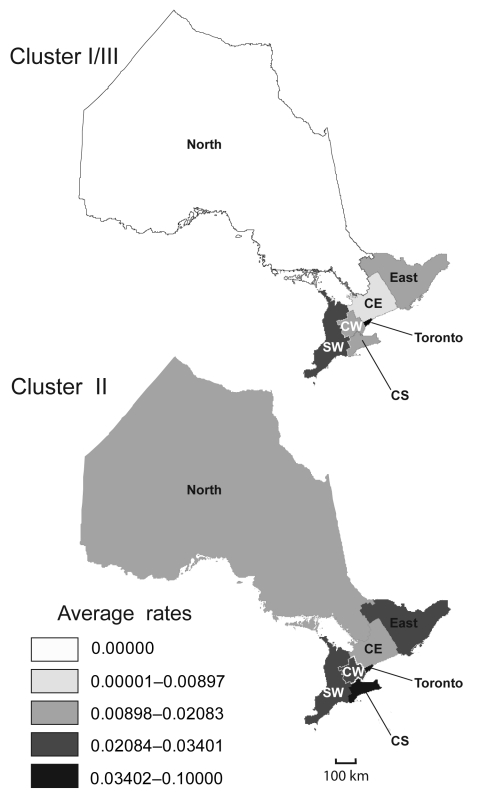
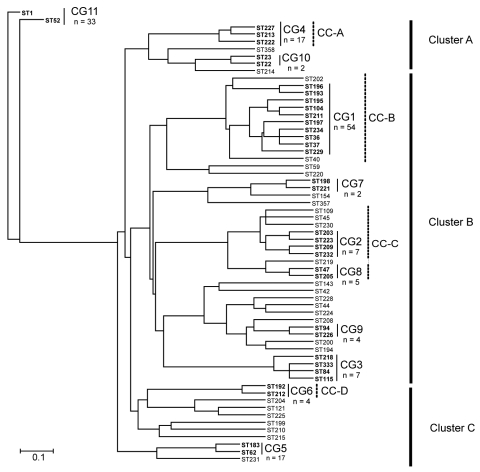
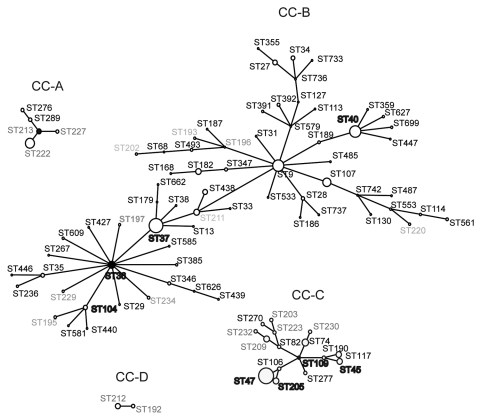
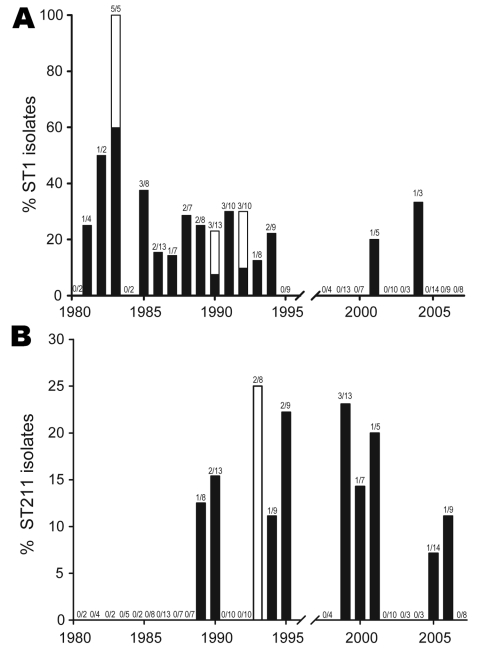
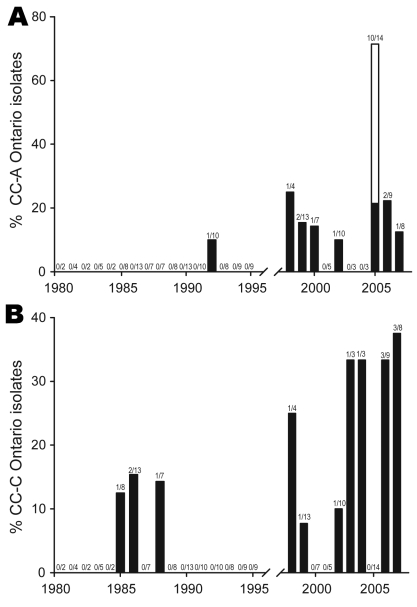
The water-borne pathogen Legionella pneumophila serogroup 1 (Lp1) is the most commonly reported etiologic agent of legionellosis. To examine the genetic diversity, the long-term epidemiology, and the molecular evolution of Lp1 clinical isolates, we conducted sequence-based typing on a collection of clinical isolates representing 3 decades of culture-confirmed legionellosis in Ontario, Canada. Analysis showed that the population of Lp1 in Ontario is highly diverse and combines lineages identified worldwide with local strains. Identical types were identified in sporadic and outbreak-associated strains. In the past 15 years, the incidence of some lineages distributed worldwide has tended to decrease, and local endemic clones and lineages have emerged. Comparative geographic distribution analysis suggests that some lineages are specific to eastern North America. These findings have general clinical implications for the study of Lp1 molecular evolution and for the identification of Lp1 circulating strains in North America.
水生病原体嗜肺军团菌血清群 1(Lp1)是军团病最常报告的病原体。为了研究 Lp1 临床分离株的遗传多样性、长期流行病学和分子进化,我们对加拿大安大略省 30 年来经培养确认的军团病临床分离株进行了基于序列的分型。分析表明,安大略省的 Lp1 种群具有高度多样性,结合了全球范围内鉴定的谱系和本地菌株。在散发性和暴发相关菌株中发现了相同的类型。在过去的 15 年中,分布在全球的一些谱系的发病率呈下降趋势,而本地地方性克隆和谱系则出现了。比较地理分布分析表明,一些谱系是北美的特有种。这些发现对 Lp1 分子进化的研究以及北美循环菌株的鉴定具有普遍的临床意义。