Yunnan Key Laboratory of Animal Nutrition and Feed Science, Yunnan Agricultural University, Kunming 650201, China.
Nutr Metab (Lond). 2010 Jan 21;7:6. doi: 10.1186/1743-7075-7-6.
High dietary protein can reduce fat deposition in animal subcutaneous adipose tissue, but little is known about the mechanism.
Sixty Wujin pigs of about 15 kg weight were fed either high protein (HP: 18%) or low protein (LP: 14%) diets, and slaughtered at body weights of 30, 60 or 100 kg. Bloods were collected to measure serum parameters. Subcutaneous adipose tissues were sampled for determination of adipocyte size, protein content, lipid metabolism-related gene expression, and enzyme activities.
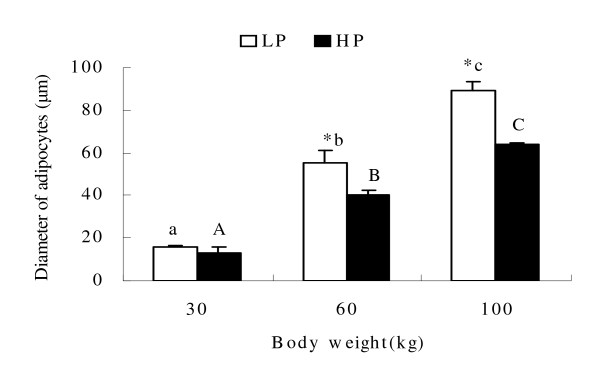
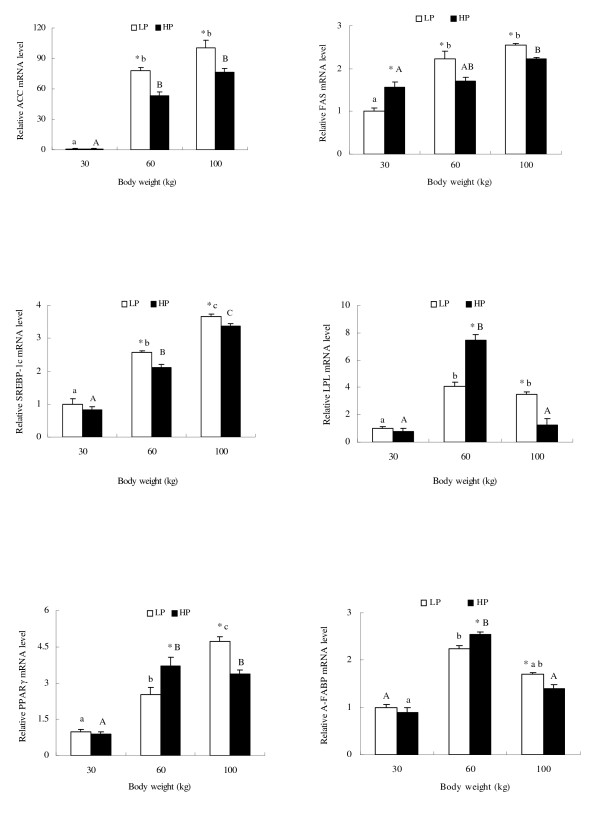
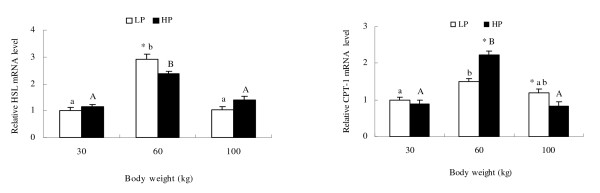
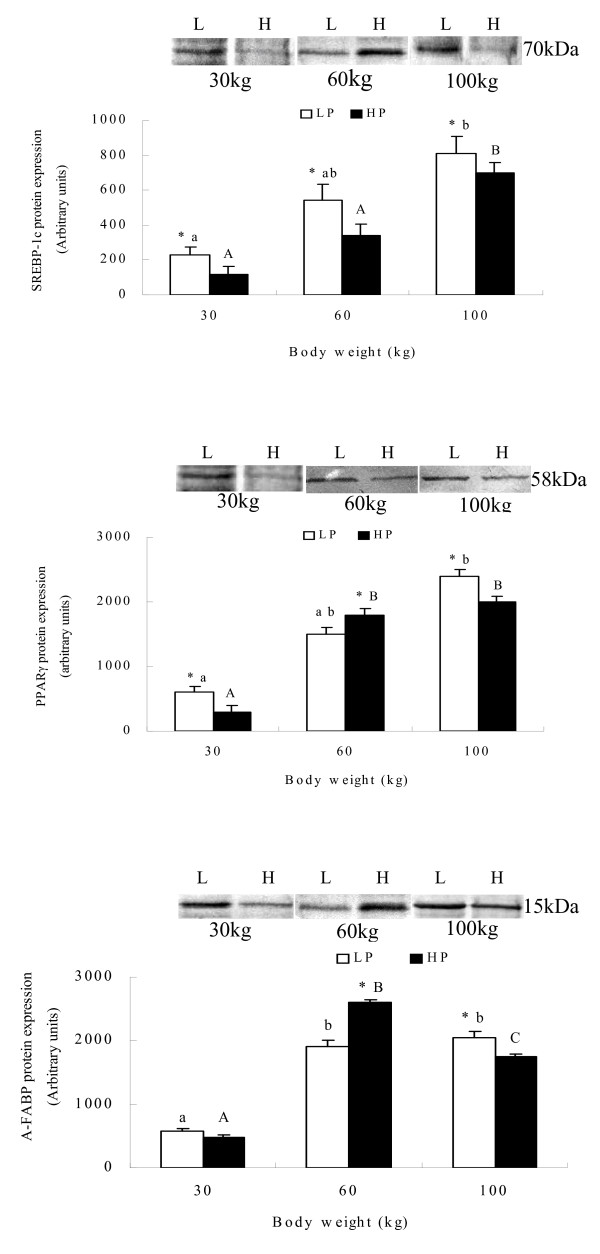
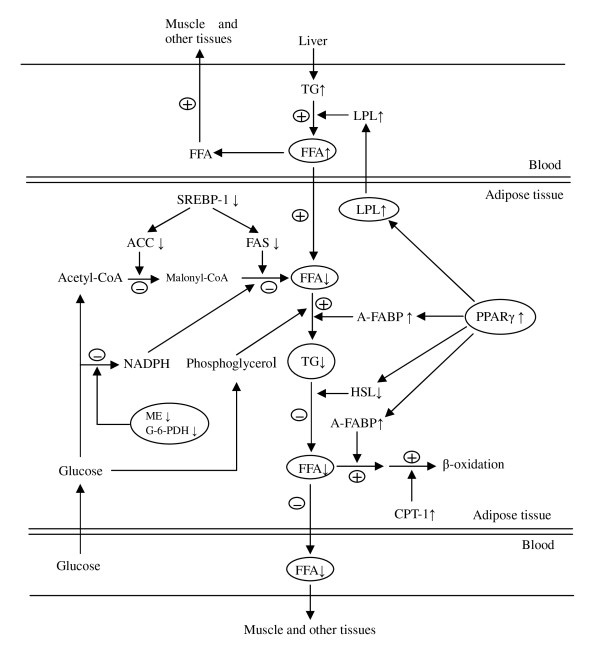
HP significantly reduced adipocyte size, fat meat percentage and backfat thickness, but significantly increased daily gain, lean meat percentage and loin eye area at 60 and 100 kg. Serum free fatty acid and triglyceride concentrations in the HP group were significantly higher than in the LP group. Serum glucose and insulin concentrations were not significantly affected by dietary protein at any body weight. HP significantly reduced gene expression of acetyl CoA carboxylase (ACC), fatty acid synthase (FAS) and sterol regulatory element binding protein 1c (SREBP-1c) at 60 kg and 100 kg; however, the mRNA level and enzyme activity of FAS were increased at 30 kg. HP promoted gene and protein expression and enzyme activities of lipoprotein lipase (LPL), carmitine palmtoyltransferase-1B (CPT-1B), peroxisome proliferator-activated receptor gamma (PPARgamma) and adipocyte-fatty acid binding proteins (A-FABP) at 60 kg, but reduced their expression at 100 kg.Gene expression and enzyme activity of hormone sensitive lipase (HSL) was reduced markedly at 60 kg but increased at 100 kg by the high dietary protein. Levels of mRNA, enzyme activities and protein expression of ACC, FAS, SREBP-1c and PPARgamma in both LP and HP groups increased with increasing body weight. However, gene and protein expression levels/enzyme activities of LPL, CPT-1B, A-FABP and HSL in both groups were higher at 60 kg than at 30 and 100 kg.
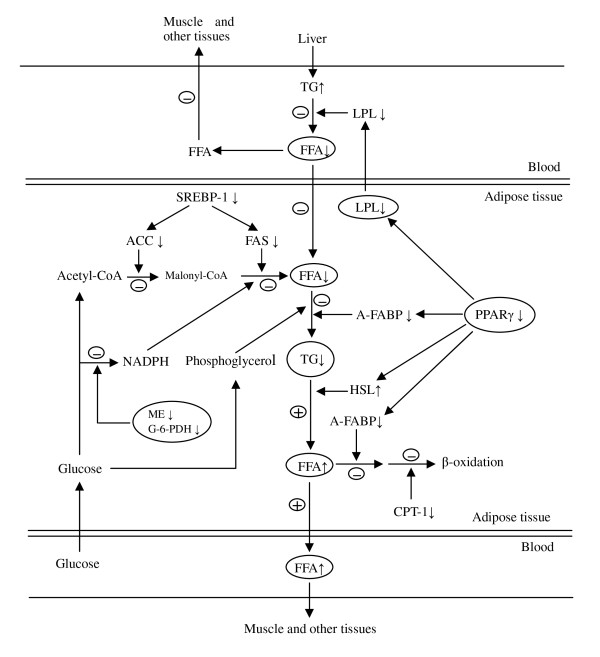
Fat deposition in Wujin pigs fed high dietary protein for 25 weeks was reduced mainly by depression of lipogenic gene expression. The mechanism of lipid transport, lipolysis and oxidation in adipose tissue regulated by dietary protein appeared to be different at 60 kg and 100 kg body weights.
高蛋白质饮食可以减少动物皮下脂肪组织中的脂肪沉积,但具体机制尚不清楚。
60 头体重约 15kg 的武进猪分别饲喂高蛋白(HP:18%)和低蛋白(LP:14%)日粮,体重达到 30、60 或 100kg 时屠宰。采集血液以测量血清参数。采集皮下脂肪组织,测定脂肪细胞大小、蛋白质含量、脂质代谢相关基因表达和酶活性。
HP 显著降低了脂肪细胞大小、肥猪肉百分比和背膘厚度,但显著提高了 60kg 和 100kg 时的日增重、瘦肉百分比和腰眼面积。HP 组血清游离脂肪酸和甘油三酯浓度显著高于 LP 组。任何体重时,血清葡萄糖和胰岛素浓度均不受蛋白质的影响。HP 显著降低了 60kg 和 100kg 时乙酰辅酶 A 羧化酶(ACC)、脂肪酸合成酶(FAS)和固醇调节元件结合蛋白 1c(SREBP-1c)的基因表达;然而,30kg 时 FAS 的 mRNA 水平和酶活性增加。HP 促进了脂蛋白脂肪酶(LPL)、肉碱棕榈酰转移酶-1B(CPT-1B)、过氧化物酶体增殖物激活受体γ(PPARγ)和脂肪细胞脂肪酸结合蛋白(A-FABP)的基因和蛋白表达以及酶活性在 60kg 时,但在 100kg 时降低。激素敏感脂肪酶(HSL)的基因表达和酶活性在 60kg 时显著降低,但在 100kg 时升高。高蛋白质饮食组和低蛋白质饮食组的 ACC、FAS、SREBP-1c 和 PPARγ 的 mRNA 水平、酶活性和蛋白表达均随体重增加而增加。然而,两组的 LPL、CPT-1B、A-FABP 和 HSL 的基因和蛋白表达水平/酶活性在 60kg 时均高于 30kg 和 100kg。
在 25 周高蛋白质饮食喂养的武进猪中,脂肪沉积减少主要是由于脂肪生成基因表达受到抑制。蛋白质对脂肪组织中脂质转运、脂肪分解和氧化的调节机制在 60kg 和 100kg 体重时似乎不同。