Department of Obstetrics & Gynecology and Cellular & Molecular Medicine, University of Ottawa, Ottawa Hospital Research Institute, Ottawa, ON K1Y 4E9, Canada.
J Ovarian Res. 2010 Mar 6;3:6. doi: 10.1186/1757-2215-3-6.
Ovarian follicle development is a complex process. Paracrine interactions between somatic and germ cells are critical for normal follicular development and oocyte maturation. Studies have suggested that the health and function of the granulosa and cumulus cells may be reflective of the health status of the enclosed oocyte. The objective of the present study is to assess, using an in vivo immature rat model, gene expression profile in granulosa cells, which may be linked to the developmental competence of the oocyte. We hypothesized that expression of specific genes in granulosa cells may be correlated with the developmental competence of the oocyte.
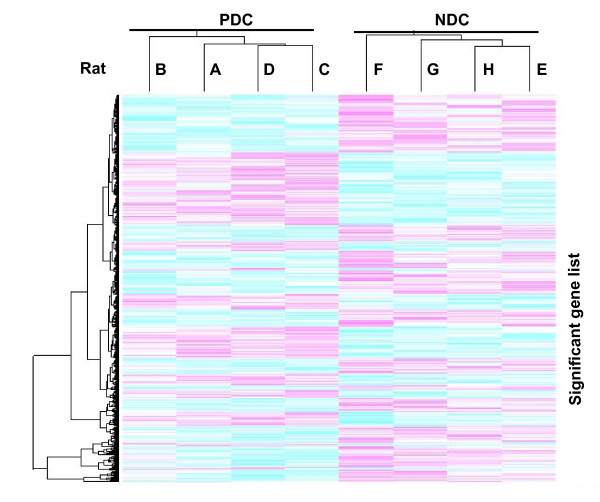
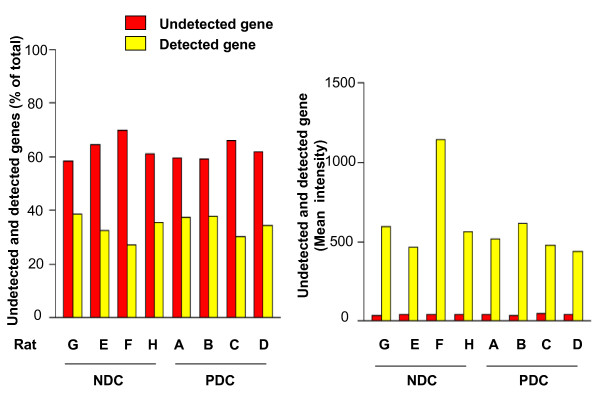
Immature rats were injected with eCG and 24 h thereafter with anti-eCG antibody to induce follicular atresia or with pre-immune serum to stimulate follicle development. A high percentage (30-50%, normal developmental competence, NDC) of oocytes from eCG/pre-immune serum group developed to term after embryo transfer compared to those from eCG/anti-eCG (0%, poor developmental competence, PDC). Gene expression profiles of mural granulosa cells from the above oocyte-collected follicles were assessed by Affymetrix rat whole genome array.
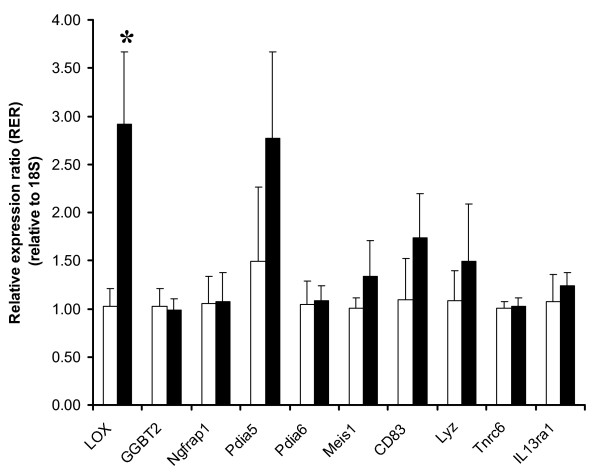
The result showed that twelve genes were up-regulated, while one gene was down-regulated more than 1.5 folds in the NDC group compared with those in the PDC group. Gene ontology classification showed that the up-regulated genes included lysyl oxidase (Lox) and nerve growth factor receptor associated protein 1 (Ngfrap1), which are important in the regulation of protein-lysine 6-oxidase activity, and in apoptosis induction, respectively. The down-regulated genes included glycoprotein-4-beta galactosyltransferase 2 (Ggbt2), which is involved in the regulation of extracellular matrix organization and biogenesis.
The data in the present study demonstrate a close association between specific gene expression in mural granulosa cells and the developmental competence of oocytes. This finding suggests that the most differentially expressed gene, lysyl oxidase, may be a candidate biomarker of oocyte health and useful for the selection of good quality oocytes for assisted reproduction.
卵巢卵泡发育是一个复杂的过程。体细胞和生殖细胞之间的旁分泌相互作用对于正常卵泡发育和卵母细胞成熟至关重要。研究表明,颗粒细胞和卵丘细胞的健康和功能可能反映了所包裹卵母细胞的健康状况。本研究的目的是使用体内未成熟大鼠模型评估颗粒细胞中的基因表达谱,这些基因表达谱可能与卵母细胞的发育能力有关。我们假设颗粒细胞中特定基因的表达可能与卵母细胞的发育能力相关。
给未成熟大鼠注射 eCG,24 小时后用抗 eCG 抗体诱导卵泡闭锁,或用预免疫血清刺激卵泡发育。与 eCG/抗 eCG 组(发育能力差,PDC)相比,来自 eCG/预免疫血清组的卵母细胞有 30-50%(正常发育能力,NDC)在胚胎移植后发育为足月。通过 Affymetrix 大鼠全基因组芯片评估上述卵母细胞收集卵泡的壁颗粒细胞的基因表达谱。
结果表明,与 PDC 组相比,NDC 组有 12 个基因上调,1 个基因下调 1.5 倍以上。基因本体论分类显示,上调的基因包括赖氨酰氧化酶(Lox)和神经生长因子受体相关蛋白 1(Ngfrap1),它们分别在调节蛋白赖氨酸 6-氧化酶活性和诱导细胞凋亡中起重要作用。下调的基因包括糖蛋白 4-β-半乳糖基转移酶 2(Ggbt2),它参与调节细胞外基质的组织和生物发生。
本研究的数据表明,壁颗粒细胞中特定基因的表达与卵母细胞的发育能力密切相关。这一发现表明,差异表达最明显的基因——赖氨酰氧化酶可能是卵母细胞健康的候选生物标志物,有助于选择用于辅助生殖的优质卵母细胞。