Department of Biochemistry, School of Medicine, University of Crete, Crete, Greece.
BMC Gastroenterol. 2010 Mar 8;10:28. doi: 10.1186/1471-230X-10-28.
Detection of autoantibodies giving nuclear rim pattern by immunofluorescence (anti-nuclear envelope antibodies - ANEA) in sera from patients with primary biliary cirrhosis (PBC) is a useful tool for the diagnosis and prognosis of the disease. Differences in the prevalence of ANEA in PBC sera so far reported have been attributed to the methodology used for the detection as well as to ethnic/geographical variations. Therefore, we evaluated the prevalence of ANEA in sera of Greek patients with PBC by using methods widely used by clinical laboratories and a combination of techniques and materials.
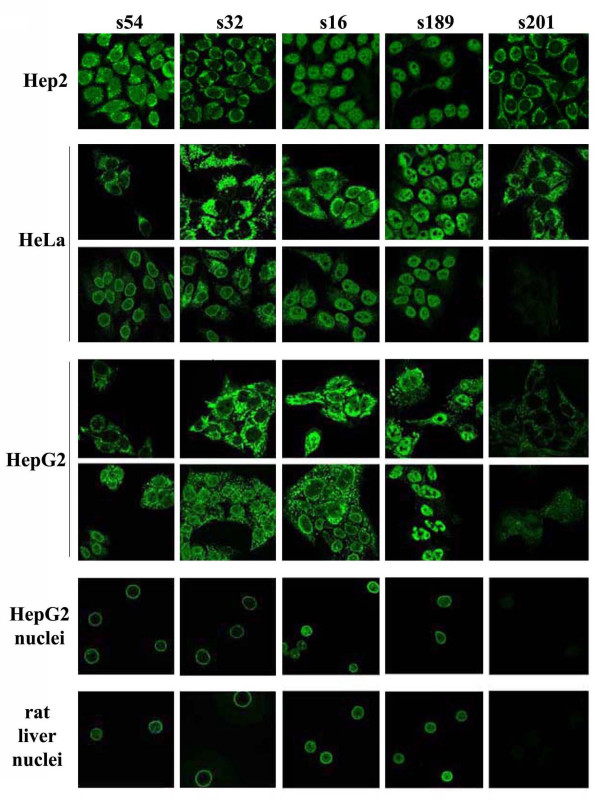
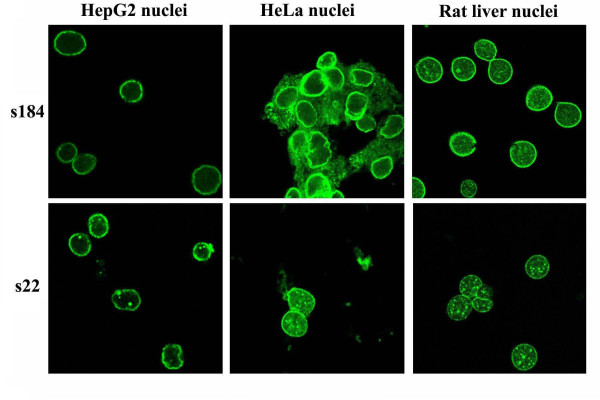
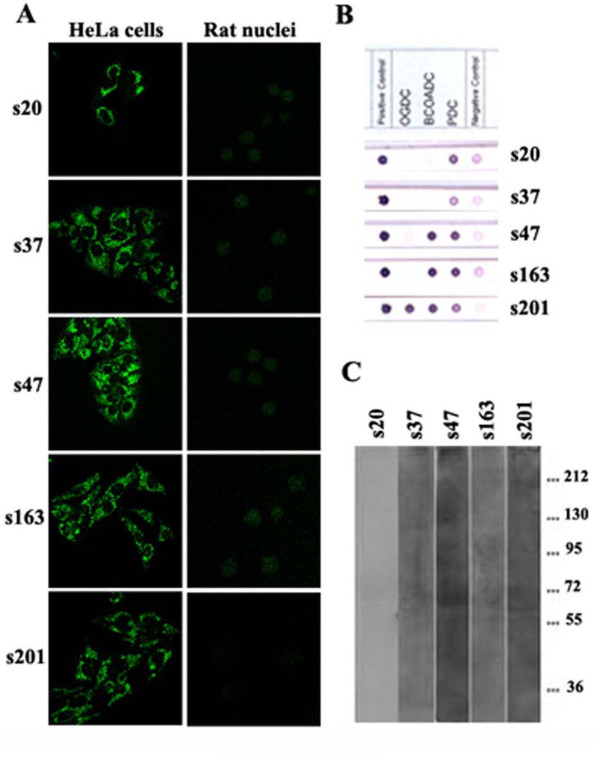
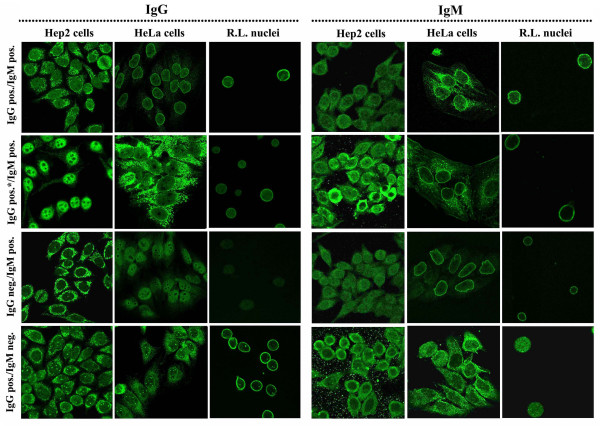
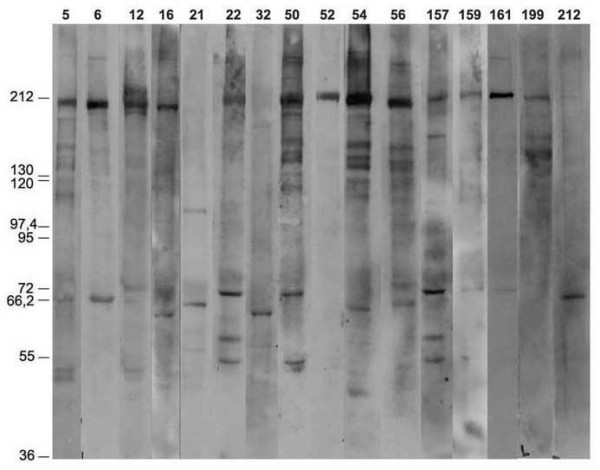
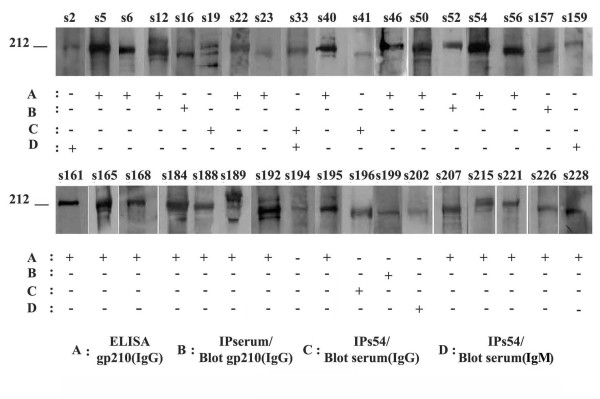
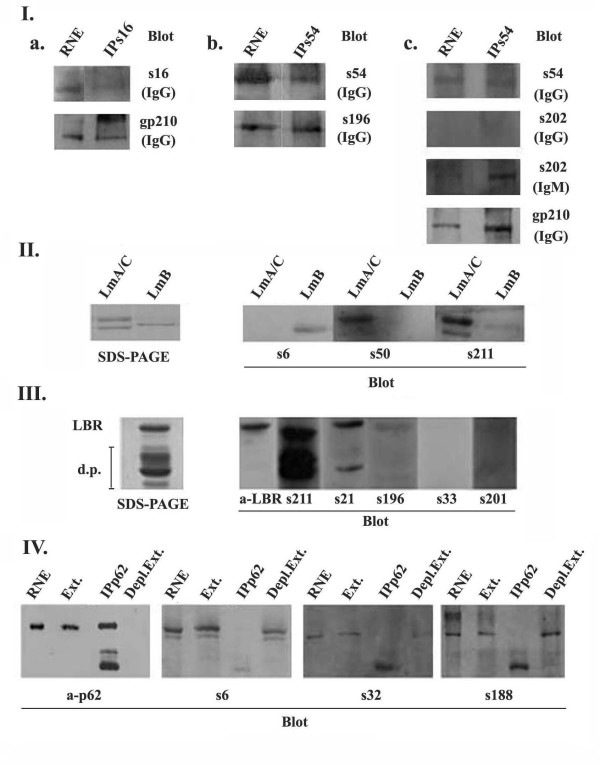
We screened 103 sera by immunoblotting on nuclear envelopes and indirect immunofluorescence (IIF) using cells and purified nuclei. Reactivities against specific autoantigens were assessed using purified proteins, ELISA, immunoprecipitation and mass spectrometry.
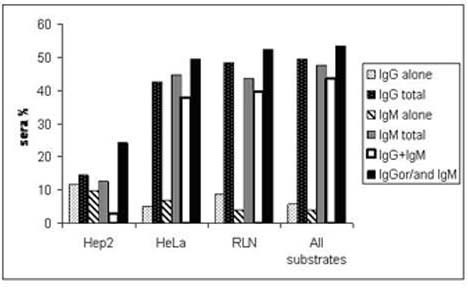
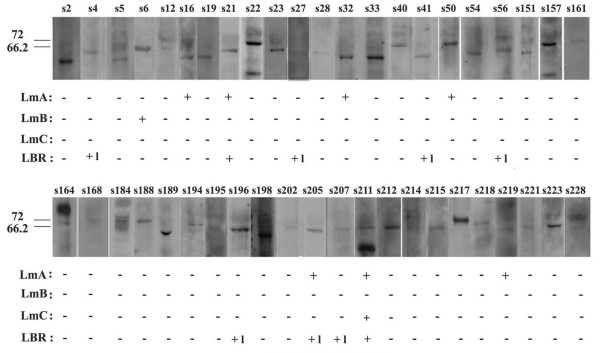
We found higher prevalence of ANEA when sera were assayed by IIF on purified nuclei or cultured cells (50%) compared to Hep2 commercially available slides (15%). Anti-gp210 antibodies were identified in 22.3% and 33% of sera using ELISA for the C-terminal of gp210 or both ELISA and immunoprecipitation, respectively. Immunoblotting on nuclear envelopes revealed that immunoreactivity for the 210 kDa zone is related to anti-gp210 antibodies (p < 0.0001). Moreover, we found that sera had antibodies for lamins A (6.8%), B (1%) and C (1%) and LBR (8.7%), whereas none at all had detectable anti-p62 antibodies.
The prevalence of ANEA or anti-gp210 antibodies is under-estimated in PBC sera which are analyzed by conventional commercially available IIF or ELISA, respectively. Therefore, new substrates for IIF and ELISA should be included by clinical laboratories in the analysis of ANEA in autoimmune sera.
通过免疫荧光法(抗核包膜抗体 - ANEA)检测原发性胆汁性肝硬化(PBC)患者血清中的核边缘模式自身抗体,是诊断和预测疾病的有用工具。迄今为止,不同 PBC 血清中 ANEA 的流行率差异归因于检测方法以及种族/地理位置的变化。因此,我们使用临床实验室广泛使用的方法以及技术和材料的组合,评估了希腊 PBC 患者血清中 ANEA 的流行率。
我们通过核包膜免疫印迹和使用细胞和纯化核的间接免疫荧光(IIF)筛选了 103 份血清。使用纯化蛋白、ELISA、免疫沉淀和质谱法评估针对特定自身抗原的反应性。
与 Hep2 商业幻灯片(15%)相比,当使用 IIF 对纯化核或培养细胞进行检测时,我们发现 ANEA 的流行率更高(50%)。使用针对 gp210 C 末端的 ELISA 或 ELISA 和免疫沉淀的组合,分别在 22.3%和 33%的血清中鉴定出抗 gp210 抗体。核包膜免疫印迹显示,210 kDa 区的免疫反应性与抗 gp210 抗体有关(p < 0.0001)。此外,我们发现血清中存在针对核纤层蛋白 A(6.8%)、B(1%)和 C(1%)和 LBR(8.7%)的抗体,而根本没有可检测到的抗 p62 抗体。
通过常规商业可用的 IIF 或 ELISA 分析 PBC 血清时,低估了 ANEA 或抗 gp210 抗体的流行率。因此,临床实验室在分析自身免疫性血清中的 ANEA 时,应包括新的 IIF 和 ELISA 底物。