Suppr超能文献

儿童轻度创伤性脑损伤后的脑震荡后症状。

Post-concussive symptoms in children with mild traumatic brain injury.

机构信息

Case Western Reserve University.

出版信息

Neuropsychology. 2010 Mar;24(2):148-59. doi: 10.1037/a0018112.

Abstract

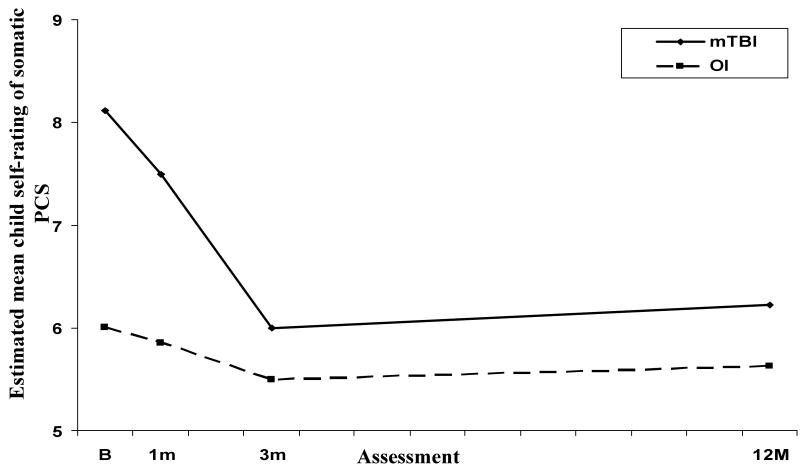
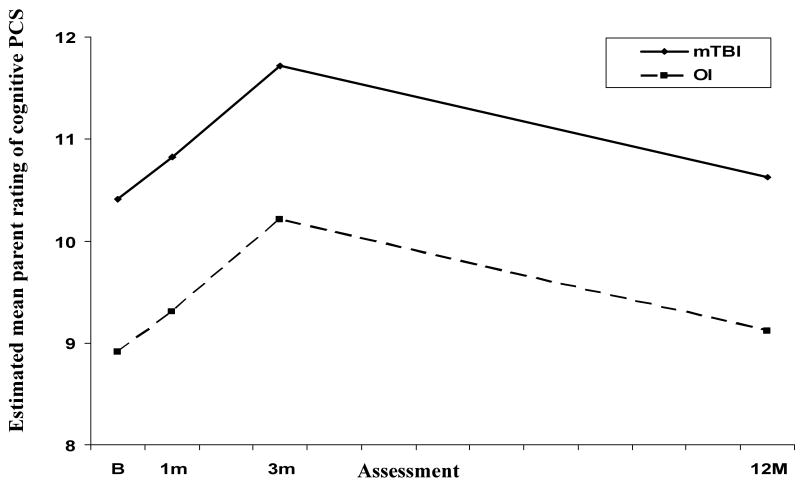
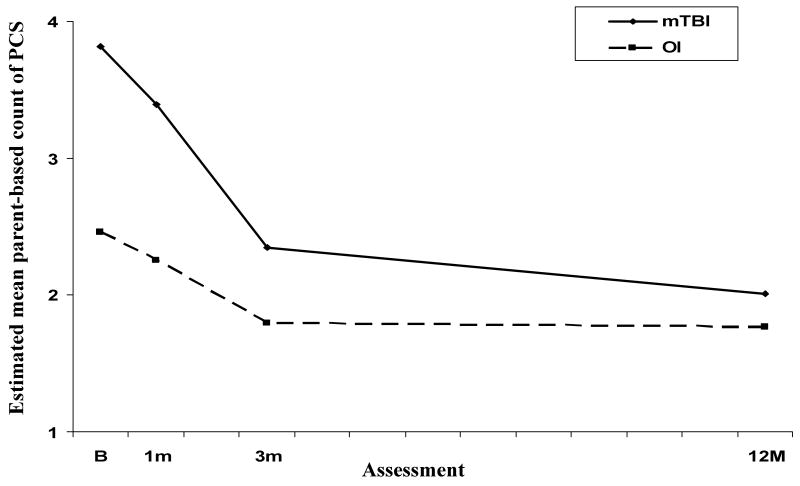
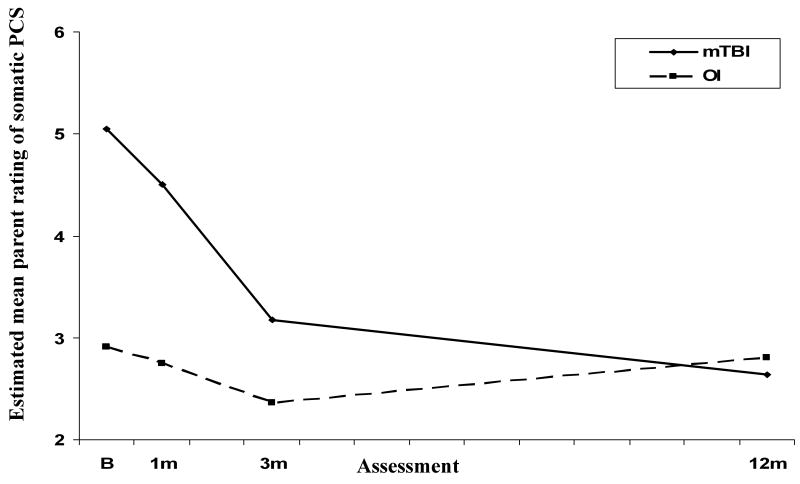
To investigate postconcussive symptoms (PCS) following pediatric mild traumatic brain injury (mTBI), 8- to 15-year-old children with mTBI (n = 186) and a comparison group with uncomplicated orthopedic injuries (OI, n = 99) were recruited from two emergency departments. Parent and child ratings of PCS and symptom counts were obtained within 3 weeks after injury (baseline) and at 1, 3, and 12 months postinjury. The mTBI group also completed magnetic resonance imaging at baseline. Group differences were examined using growth modeling, controlling for age at injury, sex, socioeconomic status, and (for parent-based measures) preinjury symptom levels. Relative to the OI group, the mTBI group had higher ratings of somatic PCS and parent counts of PCS at the initial assessments, but higher parent ratings of cognitive PCS and child counts of PCS throughout follow-up. Higher levels of PCS in the mTBI group were associated with motor-vehicle-related trauma, loss of consciousness, neuroimaging abnormalities, and hospitalization. The findings validate both transient and persistent PCS in children with mTBI and document associations of symptoms with injury and noninjury factors.

摘要

为了调查儿科轻度创伤性脑损伤(mTBI)后的脑震荡后症状(PCS),我们从两家急诊室招募了 186 名 mTBI 患儿(n=186)和 99 名无并发症骨科损伤(OI)的对照组患儿。在损伤后 3 周内(基线)和 1、3 和 12 个月时,家长和孩子对 PCS 和症状计数进行了评分。mTBI 组还在基线时进行了磁共振成像。使用增长模型,控制损伤时的年龄、性别、社会经济地位以及(对于基于家长的措施)受伤前的症状水平,对组间差异进行了检验。与 OI 组相比,mTBI 组在初始评估时的躯体 PCS 评分和家长报告的 PCS 计数更高,但在整个随访过程中,父母对认知 PCS 和儿童 PCS 计数的评分更高。mTBI 组中更高水平的 PCS 与与机动车相关的创伤、意识丧失、神经影像学异常和住院有关。这些发现验证了 mTBI 儿童存在短暂和持续的 PCS,并记录了症状与损伤和非损伤因素的关联。
相似文献

1
Post-concussive symptoms in children with mild traumatic brain injury.
Neuropsychology. 2010 Mar;24(2):148-59. doi: 10.1037/a0018112.
4
Sleep Disturbance and Postconcussive Symptoms in Pediatric Mild Traumatic Brain Injury and Orthopedic Injury.
J Head Trauma Rehabil. 2025;40(3):157-166. doi: 10.1097/HTR.0000000000001005. Epub 2024 Sep 13.
7
Do preinjury life events moderate the outcomes of mild traumatic brain injuries in children? An A-CAP Study.
J Pediatr Psychol. 2024 Mar 20;49(3):195-206. doi: 10.1093/jpepsy/jsae007.
8
Agreement between parents and children on ratings of post-concussive symptoms following mild traumatic brain injury.
Child Neuropsychol. 2011;17(1):17-33. doi: 10.1080/09297049.2010.495058. Epub 2010 Aug 2.
9
Symptoms of Persistent Behavior Problems in Children With Mild Traumatic Brain Injury.
J Head Trauma Rehabil. 2015 Sep-Oct;30(5):302-10. doi: 10.1097/HTR.0000000000000106.
10
Predictors of postconcussive symptoms 3 months after mild traumatic brain injury.
Neuropsychology. 2012 May;26(3):304-13. doi: 10.1037/a0027888. Epub 2012 Apr 2.

引用本文的文献

2
Postconcussive Symptoms After Early Childhood Concussion.
JAMA Netw Open. 2024 Mar 4;7(3):e243182. doi: 10.1001/jamanetworkopen.2024.3182.
3
Impaired Neuromotor Control During Gait in Concussed Adolescents-A Frequency Analysis.
J Appl Biomech. 2023 Dec 27;40(2):138-146. doi: 10.1123/jab.2023-0126. Print 2024 Apr 1.
4
Mood and anxiety symptoms following pediatric mild traumatic brain injury: a scoping review.
J Can Acad Child Adolesc Psychiatry. 2023 Nov;32(4):239-251. Epub 2023 Nov 1.
5
Neurophysiological and gait outcomes during a dual-task gait assessment in concussed adolescents.
Clin Biomech (Bristol). 2023 Oct;109:106090. doi: 10.1016/j.clinbiomech.2023.106090. Epub 2023 Sep 1.
6
Change in health-related quality of life and functional disability over time post-concussion in youth.
Qual Life Res. 2023 Dec;32(12):3339-3347. doi: 10.1007/s11136-023-03480-4. Epub 2023 Jul 24.
8
Longitudinal Gray Matter Trajectories in Pediatric Mild Traumatic Brain Injury.
Neurology. 2023 Aug 15;101(7):e728-e739. doi: 10.1212/WNL.0000000000207508. Epub 2023 Jun 23.
9
Trajectories of Daily Postconcussion Symptoms in Children.
J Head Trauma Rehabil. 2024;39(2):E41-E47. doi: 10.1097/HTR.0000000000000878. Epub 2024 Mar 18.
10
Cognition and post-concussive symptom status after pediatric mild traumatic brain injury.
Child Neuropsychol. 2024 Feb;30(2):203-220. doi: 10.1080/09297049.2023.2181946. Epub 2023 Feb 24.

本文引用的文献

1
Cognitive reserve as a moderator of postconcussive symptoms in children with complicated and uncomplicated mild traumatic brain injury.
J Int Neuropsychol Soc. 2010 Jan;16(1):94-105. doi: 10.1017/S1355617709991007. Epub 2009 Oct 19.
3
Dimensions of postconcussive symptoms in children with mild traumatic brain injuries.
J Int Neuropsychol Soc. 2009 Jan;15(1):19-30. doi: 10.1017/S1355617708090188.
6
Neuropsychology and clinical neuroscience of persistent post-concussive syndrome.
J Int Neuropsychol Soc. 2008 Jan;14(1):1-22. doi: 10.1017/S135561770808017X.
7
Management of pediatric mild traumatic brain injury: a neuropsychological review from injury through recovery.
Clin Neuropsychol. 2008 Sep;22(5):769-800. doi: 10.1080/13854040701543700. Epub 2007 Sep 1.
8
Persistent symptoms associated with factors identified by the WHO Task Force on Mild Traumatic Brain Injury.
Clin Neuropsychol. 2008 Mar;22(2):195-208. doi: 10.1080/13854040701263655.
9
Are the symptoms and severity of head injury predictive of clinical findings three months later?
Acta Paediatr. 2006 Dec;95(12):1533-9. doi: 10.1080/08035250600731957.

文献AI研究员

20分钟写一篇综述,助力文献阅读效率提升50倍。

立即体验

用中文搜PubMed

大模型驱动的PubMed中文搜索引擎

马上搜索

文档翻译

学术文献翻译模型,支持多种主流文档格式。

立即体验