Joseph T D, Bose S K
Department of Microbiology, St. Louis University School of Medicine, MO 63104-1028.
Proc Natl Acad Sci U S A. 1991 May 1;88(9):4054-8. doi: 10.1073/pnas.88.9.4054.
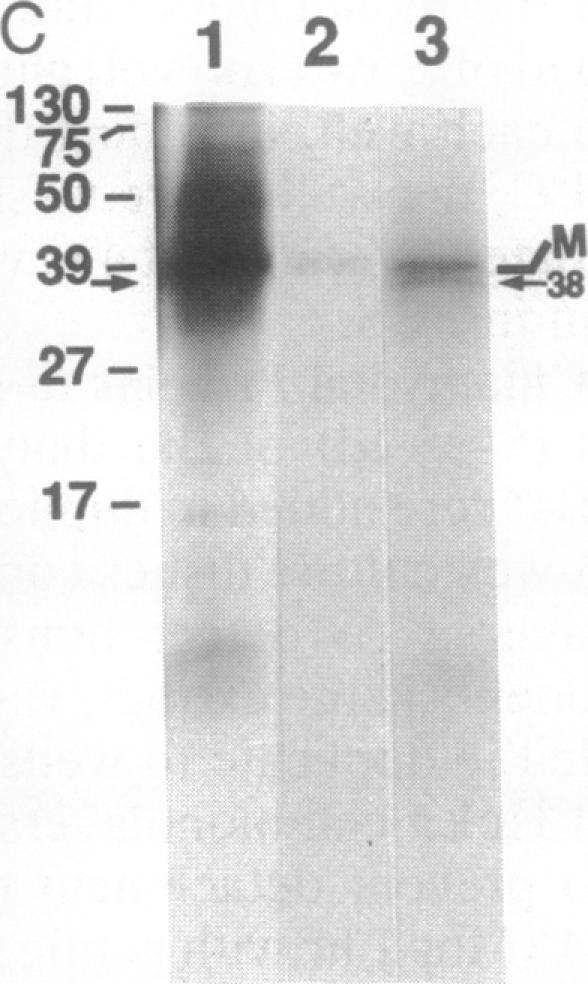
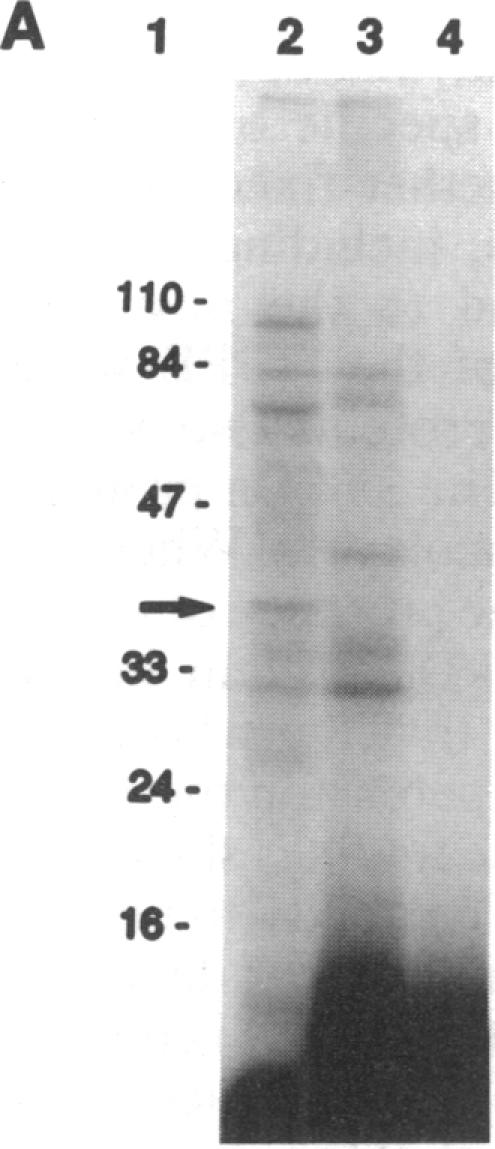
From highly purified elementary bodies (EBs) of Chlamydia trachomatis, we have identified a protein of 38 kDa that selectively binds to monolayer cultures of HeLa cells. This protein, which we have named the chlamydial cytadhesin (CCA), is present on the surface of the EBs of three C. trachomatis serovars (B, E, and L1) that were examined. Localization of the CCA at the surface was confirmed by its ability to be labeled when viable EBs were iodinated and by its absence in preparations from trypsin-treated EBs. Viable EBs, but not heated or trypsin-treated EBs, inhibited the binding of the CCA to HeLa cells, indicating competition for a common receptor on the host cell membrane. A dose-dependent inhibition of adherence of radioactive EBs to HeLa cells was effected by extracts containing the CCA. This inhibition occurred even with extracts prepared from the EB of heterologous serovars. However, no inhibition could be demonstrated with extracts prepared from heat-treated EBs. Heat treatment of the extract resulted in the loss of ability of the CCA to bind to the host cells. HeLa cells preincubated with CCA-containing chlamydial extract showed reduced ability to bind labeled EBs and to develop cytoplasmic inclusions after infection. This protective activity was lost after exposure of the extract to heat. These findings indicate that the CCA is a thermolabile surface-exposed chlamydial adhesin; it may be useful in the development of vaccines for diseases caused by the pathogenic bacterium.
从沙眼衣原体高度纯化的原体(EB)中,我们鉴定出一种38 kDa的蛋白质,它能选择性地与HeLa细胞单层培养物结合。我们将这种蛋白质命名为衣原体细胞粘附素(CCA),在所检测的三种沙眼衣原体血清型(B、E和L1)的EB表面均有存在。当活的EB进行碘化时,CCA能够被标记,且在胰蛋白酶处理过的EB制剂中不存在,这证实了CCA定位于表面。活的EB而非加热或胰蛋白酶处理过的EB,抑制了CCA与HeLa细胞的结合,表明它们竞争宿主细胞膜上的共同受体。含有CCA的提取物对放射性EB与HeLa细胞的粘附产生剂量依赖性抑制。即使是从异源血清型的EB制备的提取物,这种抑制也会发生。然而,加热处理过的EB制备的提取物未显示出抑制作用。提取物经热处理后,CCA与宿主细胞结合的能力丧失。用含CCA的衣原体提取物预孵育的HeLa细胞,在感染后与标记EB结合以及形成胞质包涵体的能力降低。提取物经加热处理后,这种保护活性丧失。这些发现表明,CCA是一种热不稳定的表面暴露的衣原体粘附素;它可能有助于开发针对该病原菌引起疾病的疫苗。