Bennett M W, Caulfield J P
Program in Cell and Developmental Biology, Harvard Medical School, Boston, MA 02115.
Am J Pathol. 1991 May;138(5):1173-82.
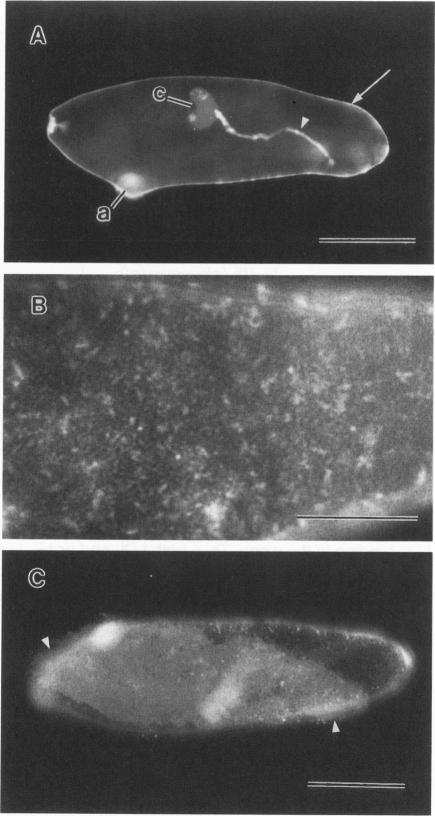
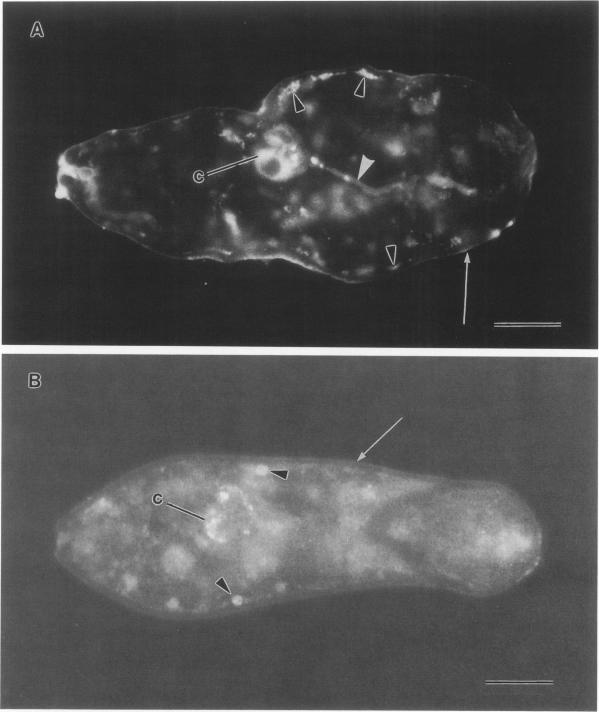
Low-density lipoproteins (LDL) may be important in human schistosomiasis because LDL bound to the surface of the parasite inhibits the binding of anti-schistosomal antibodies. Low-density lipoproteins also may serve as a source of lipids for the parasite membrane synthesis. Here LDL fluorescently labeled with carbocyanine dye (DiI-LDL) was used to measure the specificity of binding of LDL to the surface of schistosomula of Schistosoma mansoni and to examine the distribution of the LDL particles over time. DiI-LDL binding was saturable and specific, with strong inhibition by unlabeled LDL and apoB but not by apoA1, bovine serum albumin, or IgG, and only weak inhibition by high-density lipoproteins. Half of the bound DiI-LDL was displaced by unlabeled LDL. DiI-LDL remained bound on the surface of schistosomula for up to 36 hours in culture. However parasites also ingested both DiI-LDL and a second fluorescent LDL, Bodipy-LDL. Over time, both fluorophores appeared throughout the worm tissues, suggesting the LDL particles were breaking down and that the fluorophores and lipids originally contained within the LDL particle were partitioning throughout the worm. Thus human LDL appears to bind to the surface of schistosomula specifically. Ingested LDL appears to be broken down and may serve as a source of host lipids for the parasite.
低密度脂蛋白(LDL)在人类血吸虫病中可能具有重要作用,因为与寄生虫表面结合的LDL会抑制抗血吸虫抗体的结合。低密度脂蛋白还可能作为寄生虫膜合成的脂质来源。在此,用羰花青染料(DiI-LDL)荧光标记的LDL用于测量LDL与曼氏血吸虫童虫表面结合的特异性,并研究LDL颗粒随时间的分布情况。DiI-LDL的结合具有饱和性和特异性,未标记的LDL和载脂蛋白B可强烈抑制其结合,而载脂蛋白A1、牛血清白蛋白或IgG则无此作用,高密度脂蛋白仅有微弱抑制作用。一半结合的DiI-LDL可被未标记的LDL取代。在培养过程中,DiI-LDL在童虫表面可保持结合长达36小时。然而,寄生虫也摄取了DiI-LDL和另一种荧光LDL(Bodipy-LDL)。随着时间的推移,两种荧光团均出现在整个虫体组织中,这表明LDL颗粒正在分解,且LDL颗粒中原本含有的荧光团和脂质正在分布于整个虫体。因此,人类LDL似乎能特异性地结合到童虫表面。摄取的LDL似乎会被分解,并可能作为寄生虫的宿主脂质来源。