Department of Bioengineering and Therapeutic Sciences, University of California San Francisco, San Francisco, California, United States of America.
PLoS Comput Biol. 2010 Mar 12;6(3):e1000700. doi: 10.1371/journal.pcbi.1000700.
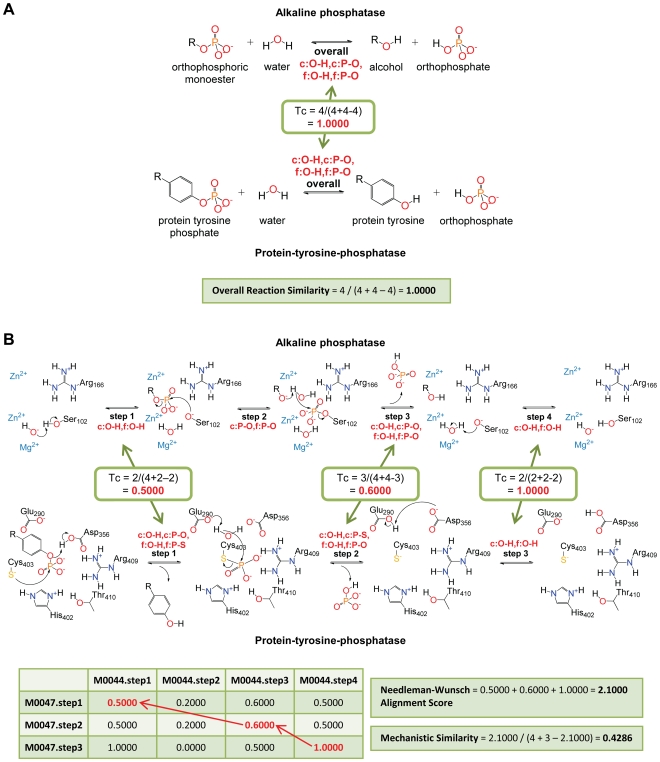
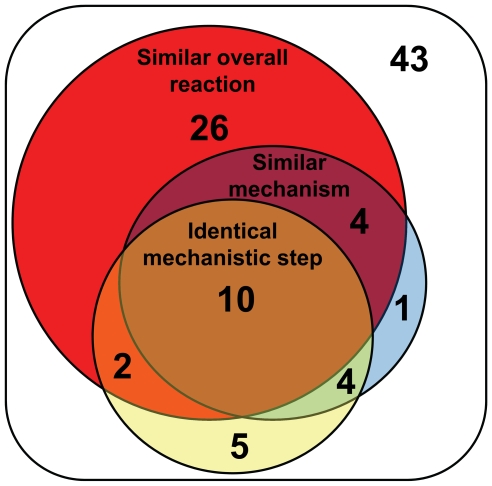
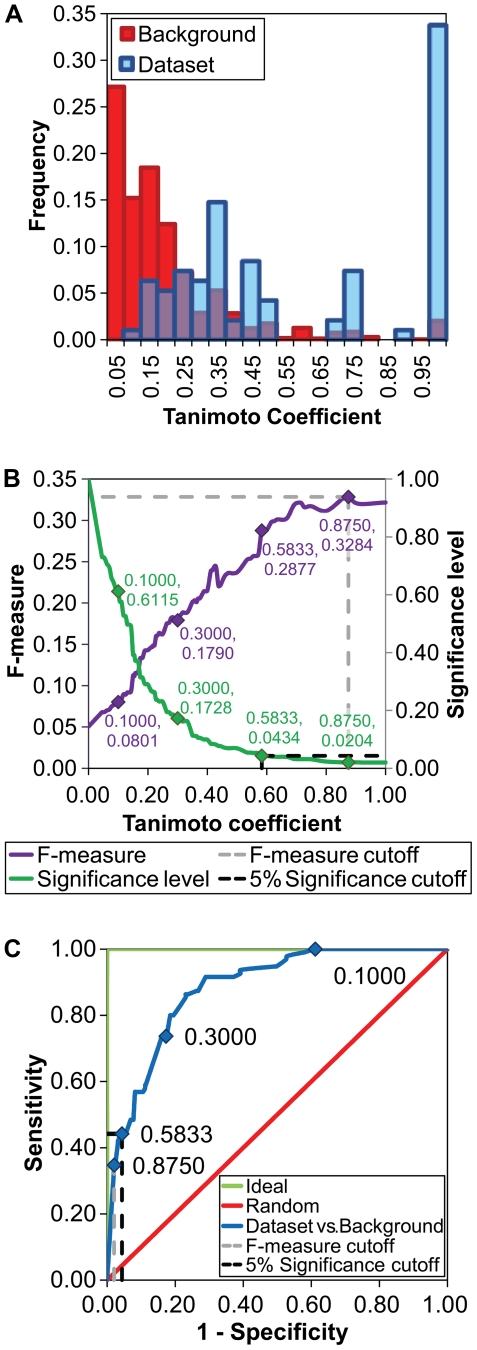
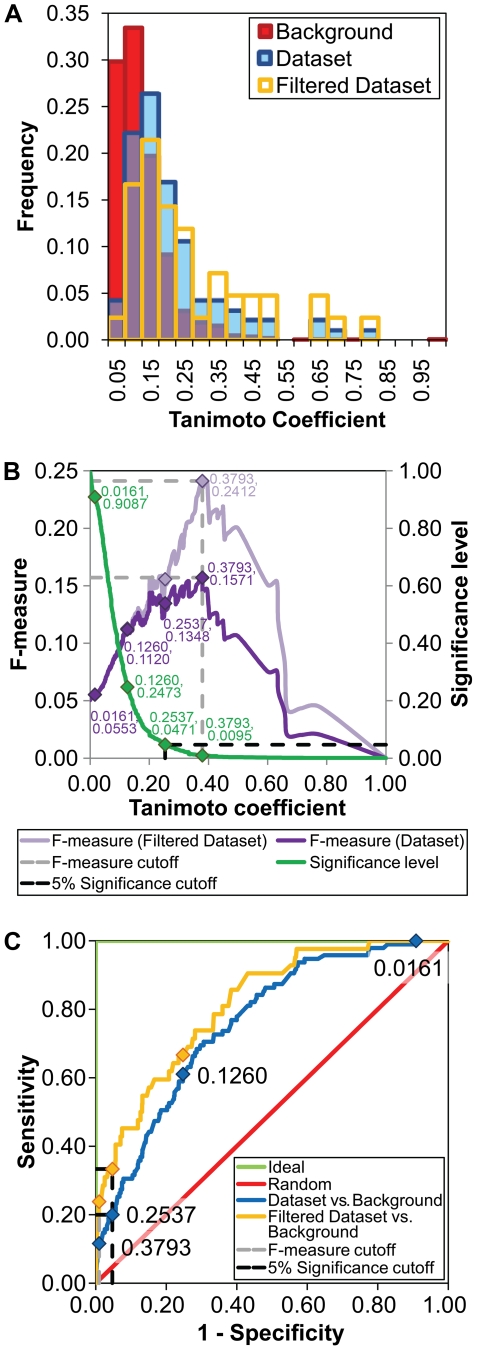
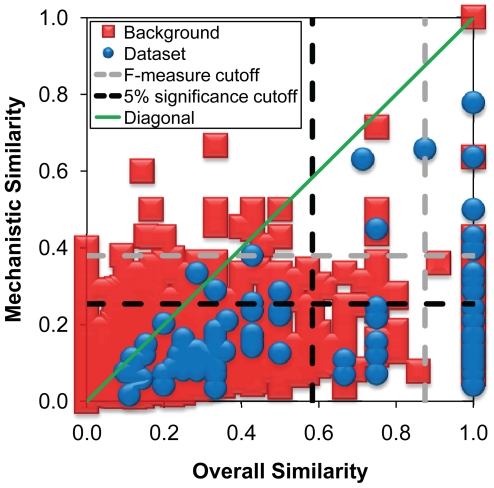
Functionally analogous enzymes are those that catalyze similar reactions on similar substrates but do not share common ancestry, providing a window on the different structural strategies nature has used to evolve required catalysts. Identification and use of this information to improve reaction classification and computational annotation of enzymes newly discovered in the genome projects would benefit from systematic determination of reaction similarities. Here, we quantified similarity in bond changes for overall reactions and catalytic mechanisms for 95 pairs of functionally analogous enzymes (non-homologous enzymes with identical first three numbers of their EC codes) from the MACiE database. Similarity of overall reactions was computed by comparing the sets of bond changes in the transformations from substrates to products. For similarity of mechanisms, sets of bond changes occurring in each mechanistic step were compared; these similarities were then used to guide global and local alignments of mechanistic steps. Using this metric, only 44% of pairs of functionally analogous enzymes in the dataset had significantly similar overall reactions. For these enzymes, convergence to the same mechanism occurred in 33% of cases, with most pairs having at least one identical mechanistic step. Using our metric, overall reaction similarity serves as an upper bound for mechanistic similarity in functional analogs. For example, the four carbon-oxygen lyases acting on phosphates (EC 4.2.3) show neither significant overall reaction similarity nor significant mechanistic similarity. By contrast, the three carboxylic-ester hydrolases (EC 3.1.1) catalyze overall reactions with identical bond changes and have converged to almost identical mechanisms. The large proportion of enzyme pairs that do not show significant overall reaction similarity (56%) suggests that at least for the functionally analogous enzymes studied here, more stringent criteria could be used to refine definitions of EC sub-subclasses for improved discrimination in their classification of enzyme reactions. The results also indicate that mechanistic convergence of reaction steps is widespread, suggesting that quantitative measurement of mechanistic similarity can inform approaches for functional annotation.
功能类似的酶是指那些在相似的底物上催化相似反应但没有共同祖先的酶,为了解自然为进化所需的催化剂而采用的不同结构策略提供了一个窗口。通过识别和利用这些信息来改进新发现的基因组项目中酶的反应分类和计算注释,将受益于系统地确定反应相似性。在这里,我们通过比较 MACiE 数据库中 95 对功能类似酶(EC 码前三位相同的非同源酶)的整体反应和催化机制的键变化,来量化键变化的相似性。通过比较从底物到产物的转化过程中的键变化集来计算整体反应的相似性。对于机制的相似性,比较每个机制步骤中发生的键变化集;然后,这些相似性被用于指导机制步骤的全局和局部对齐。使用该度量标准,数据集内只有 44%的功能类似酶对具有显著相似的整体反应。对于这些酶,在 33%的情况下会收敛到相同的机制,大多数对都至少有一个相同的机制步骤。使用我们的度量标准,整体反应相似性是功能类似物中机制相似性的上限。例如,作用于磷酸盐的四个碳-氧裂解酶(EC 4.2.3)既没有显著的整体反应相似性,也没有显著的机制相似性。相比之下,三种羧酸酯水解酶(EC 3.1.1)催化具有相同键变化的整体反应,并已收敛到几乎相同的机制。大量不显示显著整体反应相似性的酶对(56%)表明,至少对于这里研究的功能类似酶,可使用更严格的标准来改进其酶反应分类的 EC 亚亚类定义,以提高其分类的辨别力。结果还表明反应步骤的机制收敛是广泛存在的,这表明对机制相似性的定量测量可以为功能注释提供信息。