Center for Joint Preservation and Replacement, Rubin Institute for Advanced Orthopedics, Sinai Hospital of Baltimore, Baltimore, Maryland, USA.
J Orthop Surg Res. 2010 Mar 22;5:20. doi: 10.1186/1749-799X-5-20.
The purpose of this study was to evaluate whether compliance and rehabilitative efforts were predictors of early clinical outcome of total hip resurfacing arthroplasty.
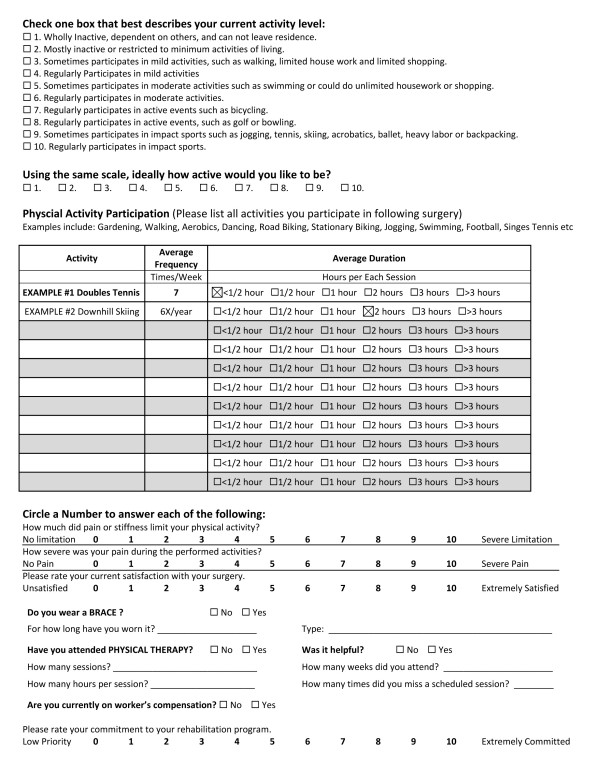
A cross-sectional survey was utilized to collect information from 147 resurfacing patients, who were operated on by a single surgeon, regarding their level of commitment to rehabilitation following surgery. Patients were followed for a mean of 52 months (range, 24 to 90 months). Clinical outcomes and functional capabilities were assessed utilizing the Harris hip objective rating system, the SF-12 Health Survey, and an eleven-point satisfaction score. A linear regression analysis was used to determine whether there was any correlation between the rehabilitation commitment scores and any of the outcome measures, and a multivariate regression model was used to control for potentially confounding factors.
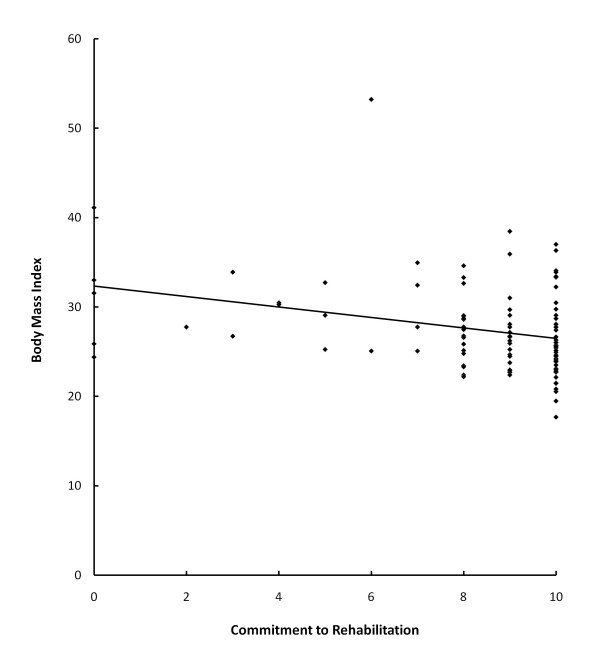
Overall, an increased level of commitment to rehabilitation was positively correlated with each of the following outcome measures: SF-12 Mental Component Score, SF-12 Physical Component Score, Harris Hip score, and satisfaction scores. These correlations remained statistically significant in the multivariate regression model.
Patients who were more committed to their therapy after hip resurfacing returned to higher levels of functionality and were more satisfied following their surgery.
本研究旨在评估全髋关节表面置换术后的依从性和康复努力是否是早期临床结果的预测因素。
采用横断面调查的方法,从一位外科医生手术的 147 例髋关节表面置换患者中收集有关术后康复承诺程度的信息。患者平均随访 52 个月(范围:24 至 90 个月)。利用 Harris 髋关节客观评分系统、SF-12 健康调查和 11 分满意度评分评估临床结果和功能能力。采用线性回归分析确定康复承诺评分与任何结果测量之间是否存在相关性,并采用多变量回归模型控制潜在的混杂因素。
总体而言,对康复的承诺程度越高,与以下所有结果测量指标呈正相关:SF-12 心理成分评分、SF-12 生理成分评分、Harris 髋关节评分和满意度评分。这些相关性在多变量回归模型中仍然具有统计学意义。
髋关节表面置换术后对治疗更有承诺的患者在手术后恢复到更高的功能水平,并更满意。