Swain Suresh, Wren Jodie F, Stürzenbaum Stephen R, Kille Peter, Morgan A John, Jager Tjalling, Jonker Martijs J, Hankard Peter K, Svendsen Claus, Owen Jenifer, Hedley B Ann, Blaxter Mark, Spurgeon David J
King's College London, Department of Biochemistry, Pharmaceutical Sciences Research Division, 150 Stamford Street, London, UK.
BMC Syst Biol. 2010 Mar 23;4:32. doi: 10.1186/1752-0509-4-32.
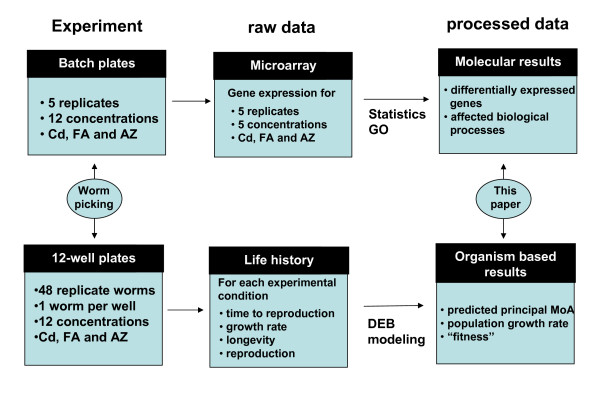
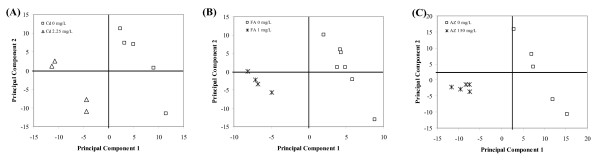
Physiologically based modelling using DEBtox (dynamic energy budget in toxicology) and transcriptional profiling were used in Caenorhabditis elegans to identify how physiological modes of action, as indicated by effects on system level resource allocation were associated with changes in gene expression following exposure to three toxic chemicals: cadmium, fluoranthene (FA) and atrazine (AZ).
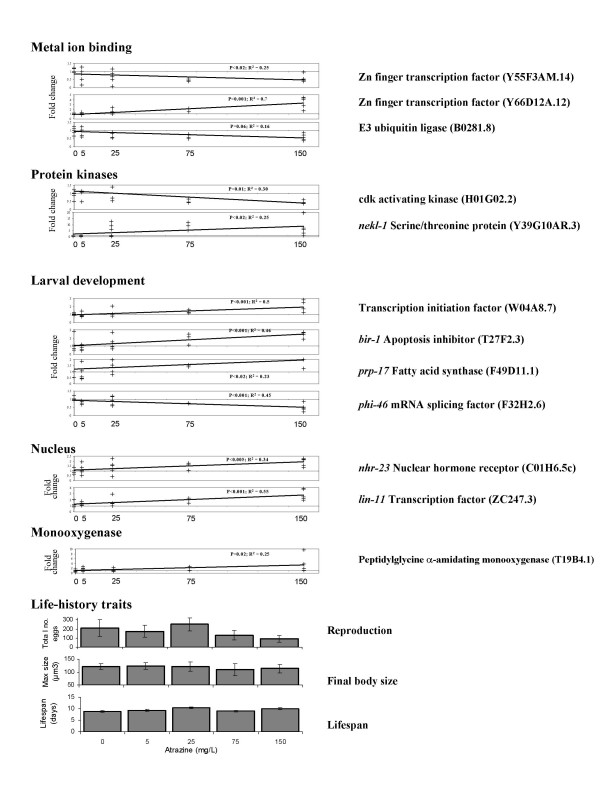
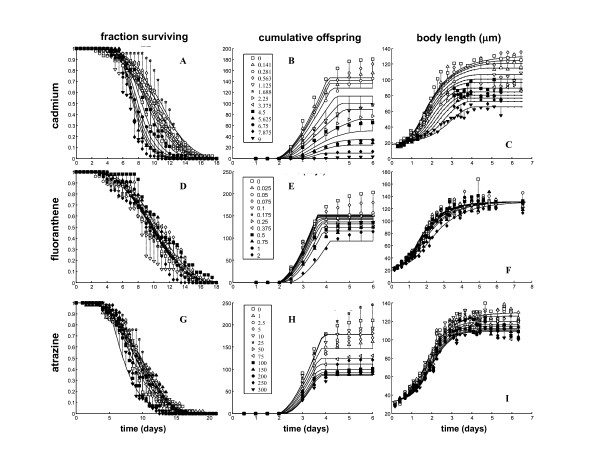
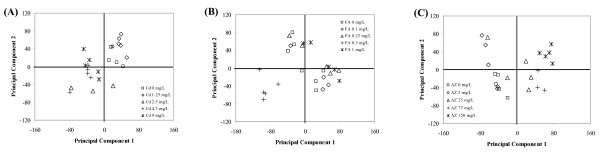
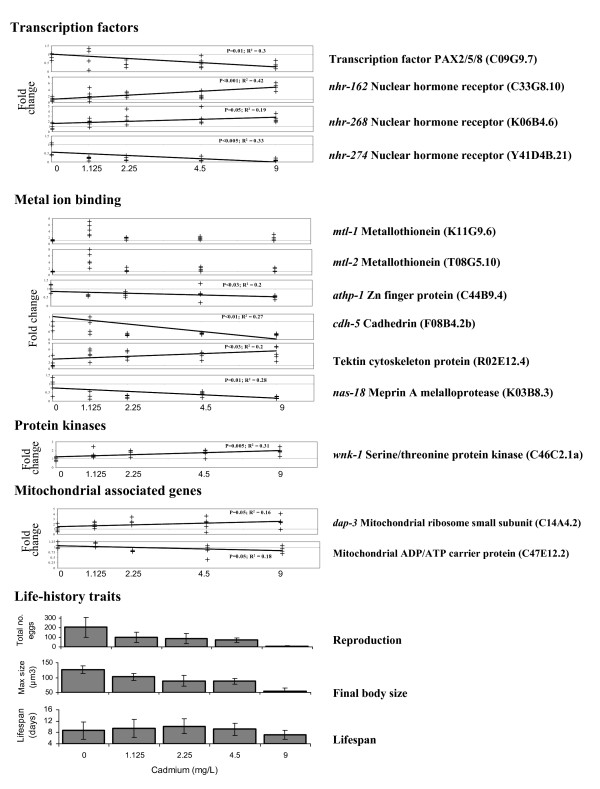
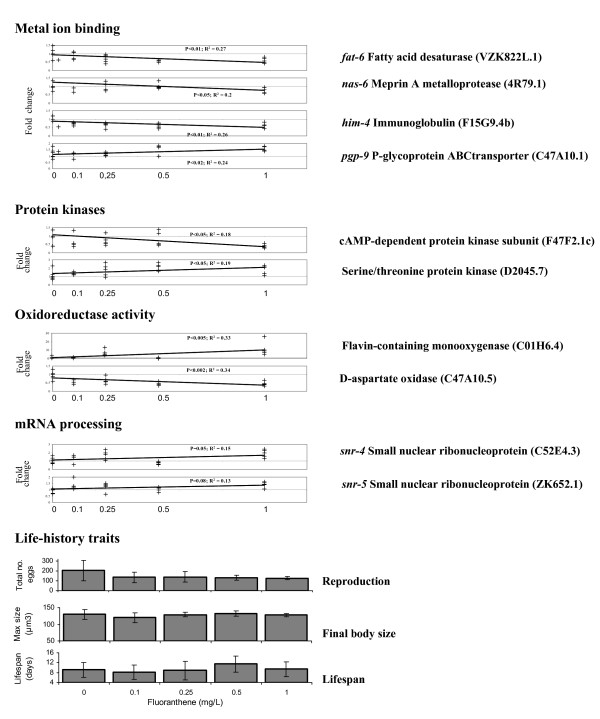
For Cd, the physiological mode of action as indicated by DEBtox model fitting was an effect on energy assimilation from food, suggesting that the transcriptional response to exposure should be dominated by changes in the expression of transcripts associated with energy metabolism and the mitochondria. While evidence for effect on genes associated with energy production were seen, an ontological analysis also indicated an effect of Cd exposure on DNA integrity and transcriptional activity. DEBtox modelling showed an effect of FA on costs for growth and reproduction (i.e. for production of new and differentiated biomass). The microarray analysis supported this effect, showing an effect of FA on protein integrity and turnover that would be expected to have consequences for rates of somatic growth. For AZ, the physiological mode of action predicted by DEBtox was increased cost for maintenance. The transcriptional analysis demonstrated that this increase resulted from effects on DNA integrity as indicated by changes in the expression of genes chromosomal repair.
Our results have established that outputs from process based models and transcriptomics analyses can help to link mechanisms of action of toxic chemicals with resulting demographic effects. Such complimentary analyses can assist in the categorisation of chemicals for risk assessment purposes.
利用基于生理学的DEBtox模型(毒理学中的动态能量预算)和转录谱分析,对线虫进行研究,以确定暴露于三种有毒化学物质(镉、荧蒽(FA)和莠去津(AZ))后,系统水平资源分配所显示的生理作用模式如何与基因表达变化相关联。
对于镉,DEBtox模型拟合所显示的生理作用模式是对食物能量同化的影响,这表明暴露后的转录反应应以与能量代谢和线粒体相关的转录本表达变化为主导。虽然观察到了对与能量产生相关基因的影响,但本体分析也表明镉暴露对DNA完整性和转录活性有影响。DEBtox模型显示荧蒽对生长和繁殖成本(即新的和分化的生物量产生)有影响。微阵列分析支持了这一影响,显示荧蒽对蛋白质完整性和周转率有影响,预计这将对体细胞生长速率产生影响。对于莠去津,DEBtox预测的生理作用模式是维持成本增加。转录分析表明,这种增加是由对DNA完整性的影响导致的,如染色体修复基因表达的变化所示。
我们的结果表明,基于过程的模型和转录组学分析的输出可以帮助将有毒化学物质的作用机制与由此产生的人口统计学效应联系起来。这种互补分析有助于对化学物质进行分类,以用于风险评估目的。