Infectious Disease, Epidemiology, Prevention and Control Division, Minnesota Department of Health, Saint Paul, Minnesota, United States of America.
PLoS One. 2010 Mar 19;5(3):e9782. doi: 10.1371/journal.pone.0009782.
In October 2007, a cluster of patients experiencing a novel polyradiculoneuropathy was identified at a pork abattoir (Plant A). Patients worked in the primary carcass processing area (warm room); the majority processed severed heads (head-table). An investigation was initiated to determine risk factors for illness.
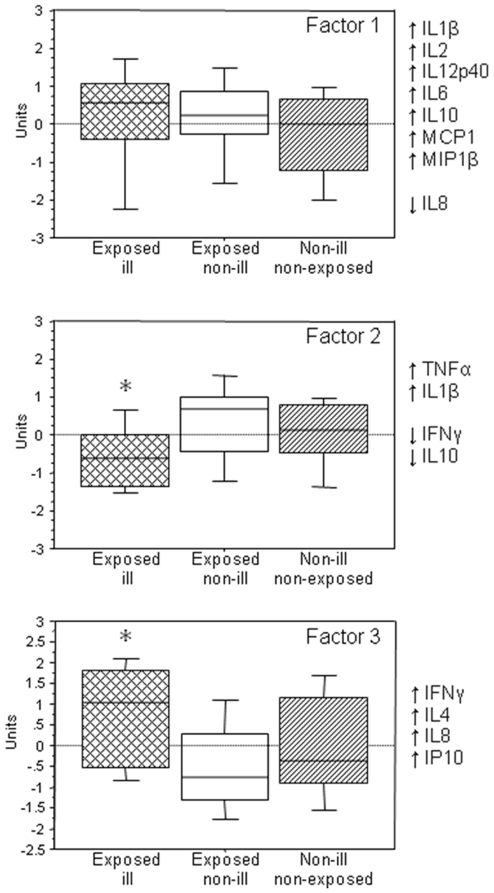
Symptoms of the reported patients were unlike previously described occupational associated illnesses. A case-control study was conducted at Plant A. A case was defined as evidence of symptoms of peripheral neuropathy and compatible electrodiagnostic testing in a pork abattoir worker. Two control groups were used - randomly selected non-ill warm-room workers (n = 49), and all non-ill head-table workers (n = 56). Consenting cases and controls were interviewed and blood and throat swabs were collected. The 26 largest U.S. pork abattoirs were surveyed to identify additional cases. Fifteen cases were identified at Plant A; illness onsets occurred during May 2004-November 2007. Median age was 32 years (range, 21-55 years). Cases were more likely than warm-room controls to have ever worked at the head-table (adjusted odds ratio [AOR], 6.6; 95% confidence interval [CI], 1.6-26.7), removed brains or removed muscle from the backs of heads (AOR, 10.3; 95% CI, 1.5-68.5), and worked within 0-10 feet of the brain removal operation (AOR, 9.9; 95% CI, 1.2-80.0). Associations remained when comparing head-table cases and head-table controls. Workers removed brains by using compressed air that liquefied brain and generated aerosolized droplets, exposing themselves and nearby workers. Eight additional cases were identified in the only two other abattoirs using this technique. The three abattoirs that used this technique have stopped brain removal, and no new cases have been reported after 24 months of follow up. Cases compared to controls had higher median interferon-gamma (IFNgamma) levels (21.7 pg/ml; vs 14.8 pg/ml, P<0.001).
This novel polyradiculoneuropathy was associated with removing porcine brains with compressed air. An autoimmune mechanism is supported by higher levels of IFNgamma in cases than in controls consistent with other immune mediated illnesses occurring in association with neural tissue exposure. Abattoirs should not use compressed air to remove brains and should avoid procedures that aerosolize CNS tissue. This outbreak highlights the potential for respiratory or mucosal exposure to cause an immune-mediated illness in an occupational setting.
2007 年 10 月,在一家猪肉屠宰场(A 厂)发现了一组患有新型多发性神经根炎的患者。患者在初级屠体加工区(热室)工作;大多数人处理切断的头部(头台)。进行了一项调查以确定患病的危险因素。
报告的患者的症状与以前描述的职业相关疾病不同。在 A 厂进行了病例对照研究。病例的定义是在猪肉屠宰场工人中出现周围神经病的症状和相容的电诊断检查。使用了两个对照组 - 随机选择的非病温室工人(n = 49)和所有非病头台工人(n = 56)。同意的病例和对照接受了采访,并采集了血液和咽喉拭子。对美国最大的 26 家猪肉屠宰场进行了调查以确定其他病例。在 A 厂发现了 15 例病例;发病时间为 2004 年 5 月至 2007 年 11 月。中位年龄为 32 岁(范围,21-55 岁)。与温室内对照相比,病例更有可能曾在头台工作过(调整后的优势比 [OR],6.6;95%置信区间 [CI],1.6-26.7),从头部背面取出大脑或肌肉(OR,10.3;95%CI,1.5-68.5),并且在大脑切除操作的 0-10 英尺范围内工作(OR,9.9;95%CI,1.2-80.0)。将头台病例与头台对照进行比较时,相关性仍然存在。工人使用压缩空气去除大脑,使大脑液化并产生气溶胶飞沫,使自己和附近的工人暴露于其中。在仅使用这种技术的另外两家屠宰场中又发现了 8 例病例。使用这种技术的三个屠宰场已经停止了大脑切除,在 24 个月的随访后没有报告新病例。与对照组相比,病例的中位干扰素 - γ(IFNγ)水平更高(21.7 pg/ml;与 14.8 pg/ml 相比,P<0.001)。
这种新型多发性神经根炎与使用压缩空气去除猪脑有关。较高的 IFNγ水平支持病例的自身免疫机制,与暴露于神经组织相关的其他免疫介导疾病一致。屠宰场不应用压缩空气去除大脑,应避免使中枢神经系统组织雾化的程序。此次疫情突显了在职业环境中,呼吸或粘膜暴露可能导致免疫介导疾病的可能性。