Department of Biological Sciences, Brock University, St. Catharines, ON, L2S 3A1, Canada.
Molecules. 2010 Mar 3;15(3):1196-212. doi: 10.3390/molecules15031196.
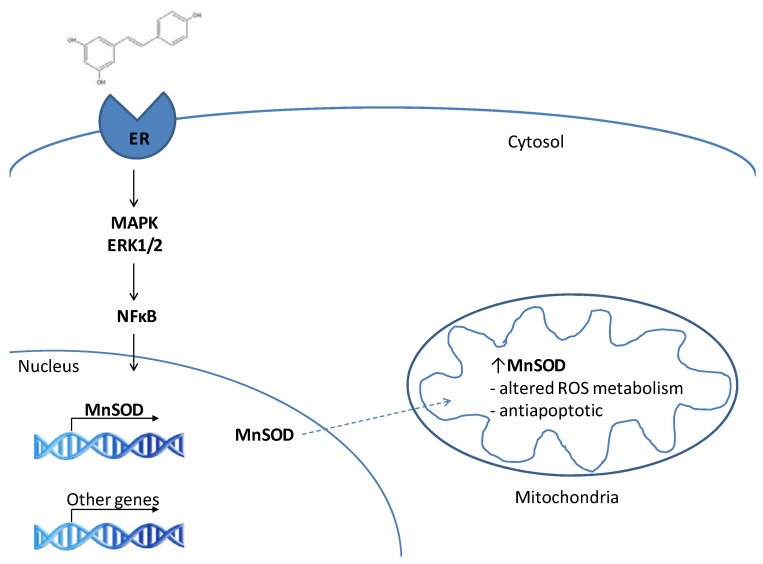
Epidemiological evidence indicates that nutritionally-derived polyphenols such as resveratrol (RES) have neuroprotective properties. Administration of RES to culture media protects a wide variety of neuronal cell types from stress-induced death. Dietary supplementation of RES can ameliorate neuronal damage and death resulting from both acute and chronic stresses in rodents. The specific molecular mechanisms by which RES acts at the cellular level remain incompletely understood. However, many experimental data indicate that RES reduces or prevents the occurrence of oxidative damage. Here we discuss possible mechanisms by which RES might exert protection against oxidative damage and cell death. Evidence suggesting that RES's chemical antioxidant potential is not sufficient explanation for its effects is discussed. Putative biological activities, including interactions with estrogen receptors and sirtuins are critically discussed. We provide a synthesis of how RES's phytoestrogenic properties might mediate the neuronal stress resistance underlying its observed neuroprotective properties.
流行病学证据表明,营养衍生的多酚类物质,如白藜芦醇(RES),具有神经保护作用。在培养基中给予 RES 可以保护多种神经元细胞类型免受应激诱导的死亡。在啮齿动物中,RES 的饮食补充可以改善急性和慢性应激引起的神经元损伤和死亡。RES 在细胞水平上的具体分子机制尚不完全清楚。然而,许多实验数据表明 RES 可减少或防止氧化损伤的发生。在这里,我们讨论了 RES 可能对抗氧化损伤和细胞死亡的保护机制。还讨论了 RES 的化学抗氧化潜力不足以解释其作用的证据。讨论了包括与雌激素受体和沉默调节蛋白相互作用的假定生物学活性。我们综合了 RES 的植物雌激素特性如何介导其观察到的神经保护特性所基于的神经元应激抗性。