National Institute of Mental Health, National Institutes of Health, Bethesda, MD 20892, USA.
Neuron. 2010 Mar 25;65(6):768-79. doi: 10.1016/j.neuron.2010.03.005.
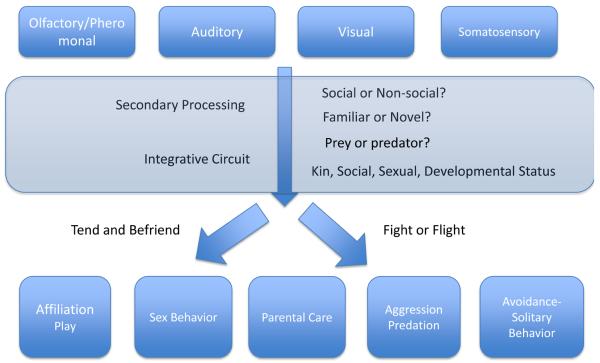
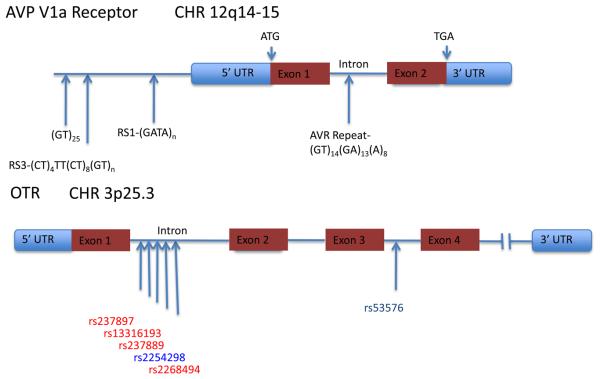
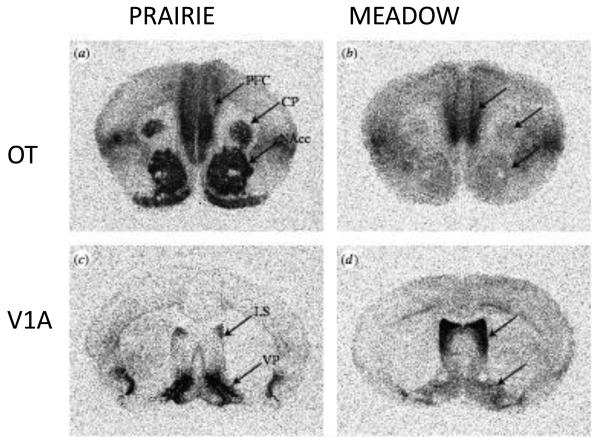
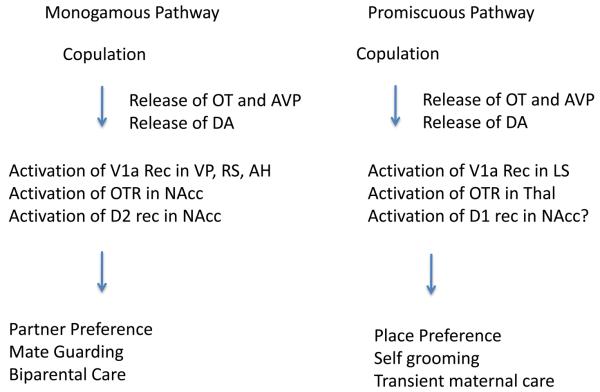
Social neuroscience is rapidly exploring the complex territory between perception and action where recognition, value, and meaning are instantiated. This review follows the trail of research on oxytocin and vasopressin as an exemplar of one path for exploring the "dark matter" of social neuroscience. Studies across vertebrate species suggest that these neuropeptides are important for social cognition, with gender- and steroid-dependent effects. Comparative research in voles yields a model based on interspecies and intraspecies variation of the geography of oxytocin receptors and vasopressin V1a receptors in the forebrain. Highly affiliative species have receptors in brain circuits related to reward or reinforcement. The neuroanatomical distribution of these receptors may be guided by variations in the regulatory regions of their respective genes. This review describes the promises and problems of extrapolating these findings to human social cognition, with specific reference to the social deficits of autism.
社会神经科学正在迅速探索感知与行动之间的复杂领域,其中包括识别、价值和意义的体现。本综述以催产素和加压素的研究为例,探讨了社会神经科学的“暗物质”。跨脊椎动物物种的研究表明,这些神经肽对社会认知很重要,具有性别和类固醇依赖性的影响。田鼠的比较研究提供了一个基于催产素受体和前脑中的加压素 V1a 受体的地理空间在种间和种内变异的模型。高度亲和的物种在前脑与奖励或强化相关的回路中有受体。这些受体的神经解剖分布可能受到其各自基因的调控区域变化的指导。本综述描述了将这些发现推断到人类社会认知中的前景和问题,并特别提到了自闭症的社交缺陷。