Division of Gastroenterology and Hepatology, 5 Hospital Drive, CE405 Clinical Support & Education Building, University of Missouri-Columbia, Columbia, MO 65212, USA.
J Hepatol. 2010 May;52(5):727-36. doi: 10.1016/j.jhep.2009.11.030. Epub 2010 Mar 4.
BACKGROUND & AIMS: In this study, we sought to determine the temporal relationship between hepatic mitochondrial dysfunction, hepatic steatosis and insulin resistance, and to examine their potential role in the natural progression of non-alcoholic fatty liver disease (NAFLD) utilising a sedentary, hyperphagic, obese, Otsuka Long-Evans Tokushima Fatty (OLETF) rat model.
OLETF rats and their non-hyperphagic control Long-Evans Tokushima Otsuka (LETO) rats were sacrificed at 5, 8, 13, 20, and 40 weeks of age (n=6-8 per group).
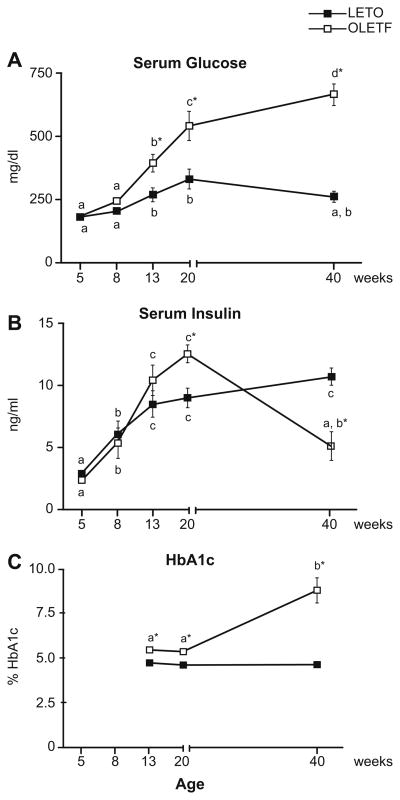
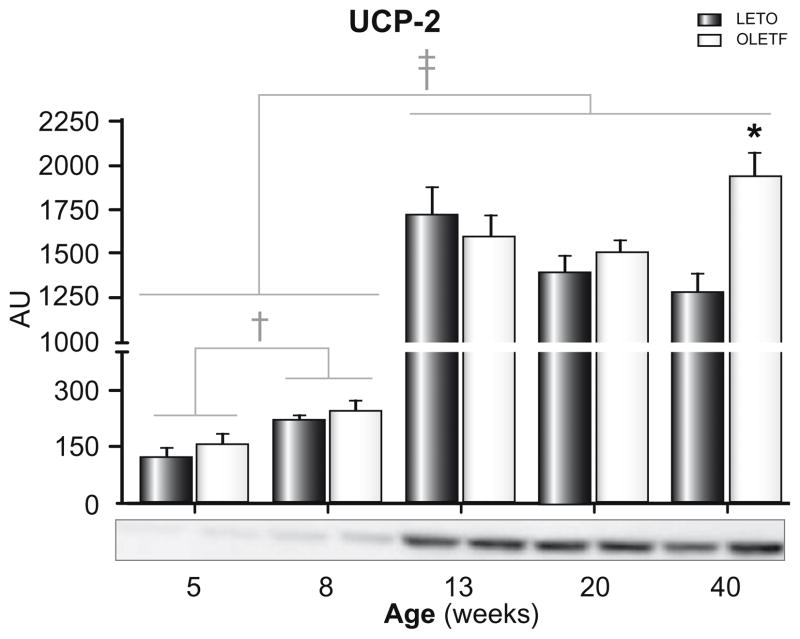
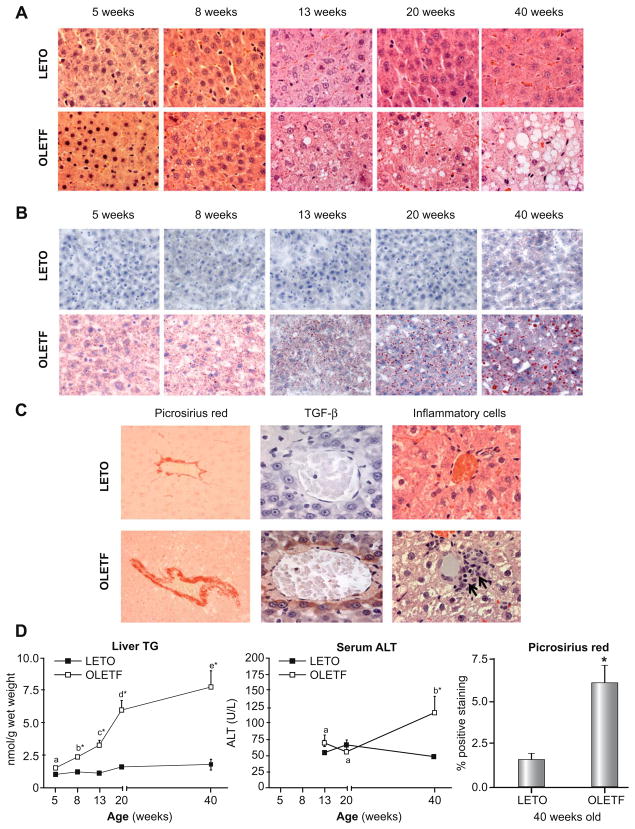
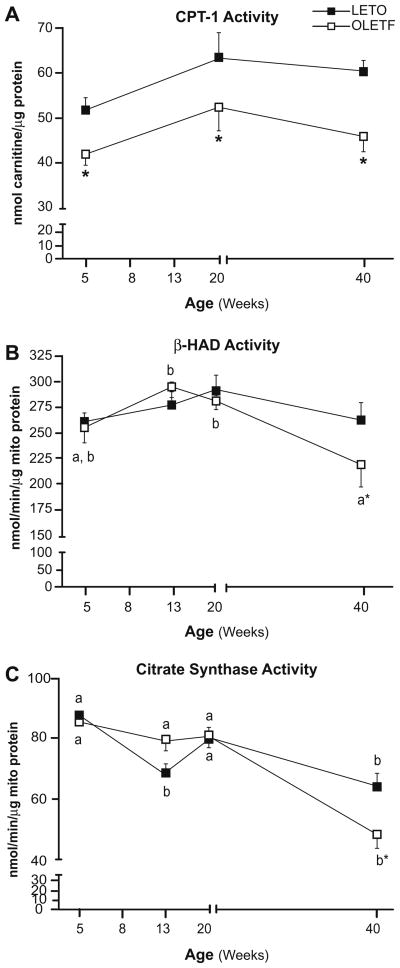
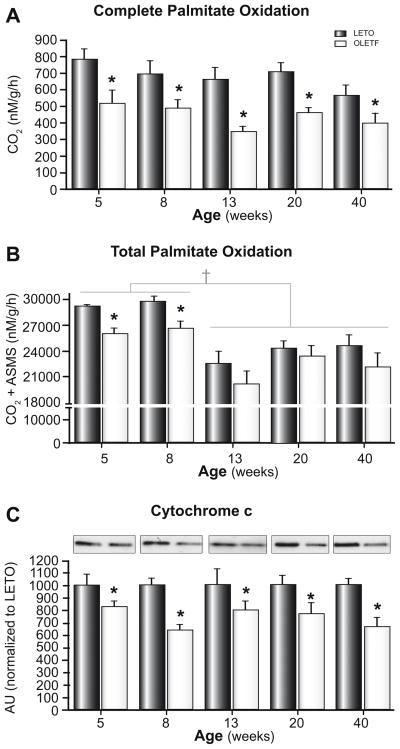
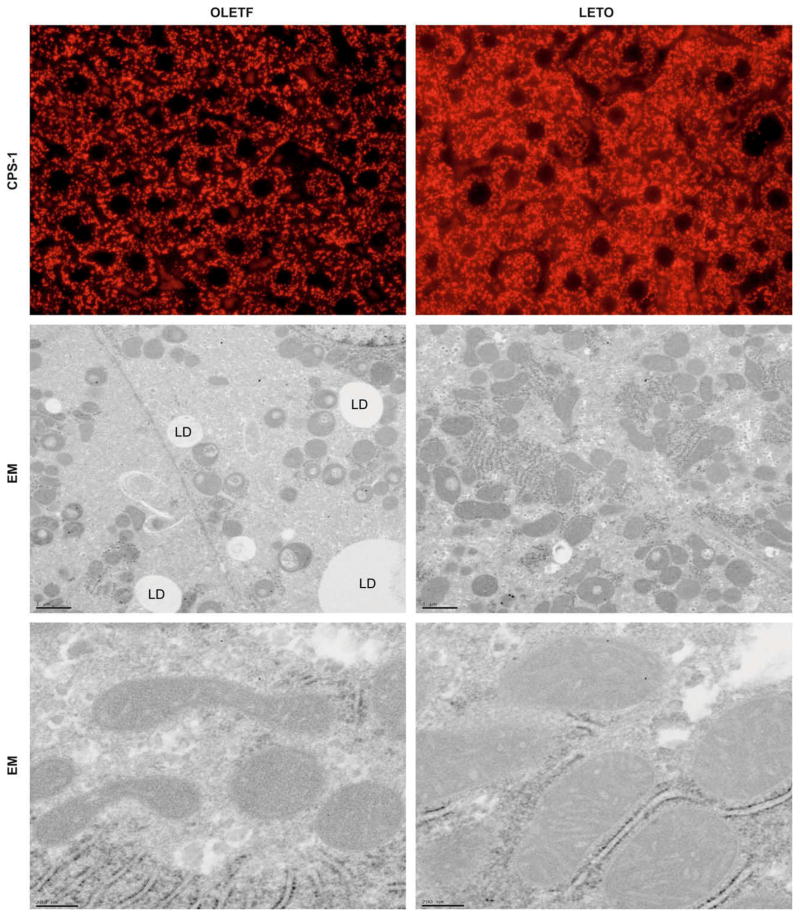
At 5 weeks of age, serum insulin and glucose and hepatic triglyceride (TG) concentrations did not differ between animal groups; however, OLETF animals displayed significant (p<0.01) hepatic mitochondrial dysfunction as measured by reduced hepatic carnitine palmitoyl-CoA transferase-1 activity, fatty acid oxidation, and cytochrome c protein content compared with LETO rats. Hepatic TG levels were significantly elevated by 8 weeks of age, and insulin resistance developed by 13 weeks in the OLETF rats. NAFLD progressively worsened to include hepatocyte ballooning, perivenular fibrosis, 2.5-fold increase in serum ALT, hepatic mitochondrial ultrastructural abnormalities, and increased hepatic oxidative stress in the OLETF animals at later ages. Measures of hepatic mitochondrial content and function including beta-hydroxyacyl-CoA dehydrogenase activity, citrate synthase activity, and immunofluorescence staining for mitochondrial carbamoyl phosphate synthetase-1, progressively worsened and were significantly reduced at 40 weeks in OLETF rats compared to LETO animals.
Our study documents that hepatic mitochondrial dysfunction precedes the development of NAFLD and insulin resistance in the OLETF rats. This evidence suggests that progressive mitochondrial dysfunction contributes to the natural history of obesity-associated NAFLD.
本研究旨在利用久坐、暴食、肥胖的 Otsuka Long-Evans Tokushima Fatty(OLETF)大鼠模型,确定肝线粒体功能障碍、肝脂肪变性和胰岛素抵抗之间的时间关系,并研究它们在非酒精性脂肪性肝病(NAFLD)自然进程中的潜在作用。
5、8、13、20 和 40 周龄时处死 OLETF 大鼠及其非暴食性对照 Long-Evans Tokushima Otsuka(LETO)大鼠(每组 6-8 只)。
5 周龄时,两组动物的血清胰岛素和葡萄糖及肝甘油三酯(TG)浓度无差异;然而,与 LETO 大鼠相比,OLETF 大鼠的肝肉毒碱棕榈酰转移酶-1 活性、脂肪酸氧化和细胞色素 c 蛋白含量降低,表明其存在显著的肝线粒体功能障碍(p<0.01)。8 周龄时,肝 TG 水平显著升高,13 周龄时 OLETF 大鼠出现胰岛素抵抗。NAFLD 逐渐加重,包括肝细胞气球样变、窦周纤维化、血清 ALT 增加 2.5 倍、肝线粒体超微结构异常和肝氧化应激增加,这些变化在 OLETF 动物后期更为明显。肝线粒体含量和功能的测量指标,包括β-羟酰基辅酶 A 脱氢酶活性、柠檬酸合酶活性以及线粒体氨基甲酰磷酸合成酶-1 的免疫荧光染色,在 OLETF 大鼠中逐渐恶化,并在 40 周龄时与 LETO 动物相比显著降低。
本研究表明,OLETF 大鼠的肝线粒体功能障碍先于 NAFLD 和胰岛素抵抗的发生。这一证据表明,进行性线粒体功能障碍可能导致肥胖相关的 NAFLD 的自然病史。