Redshaw Zoe, Strain Alastair J
School of Veterinary Medicine and Science, The University of Nottingham, Sutton Bonington Campus Sutton Bonington, Leicestershire, LE12 5RD, UK.
J Negat Results Biomed. 2010 Mar 31;9(1):2. doi: 10.1186/1477-5751-9-2.
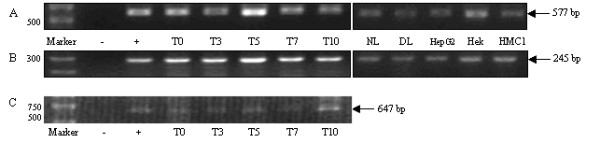
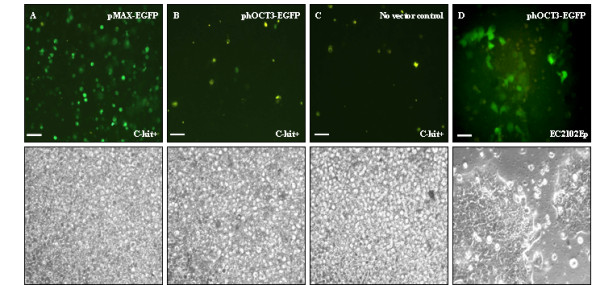
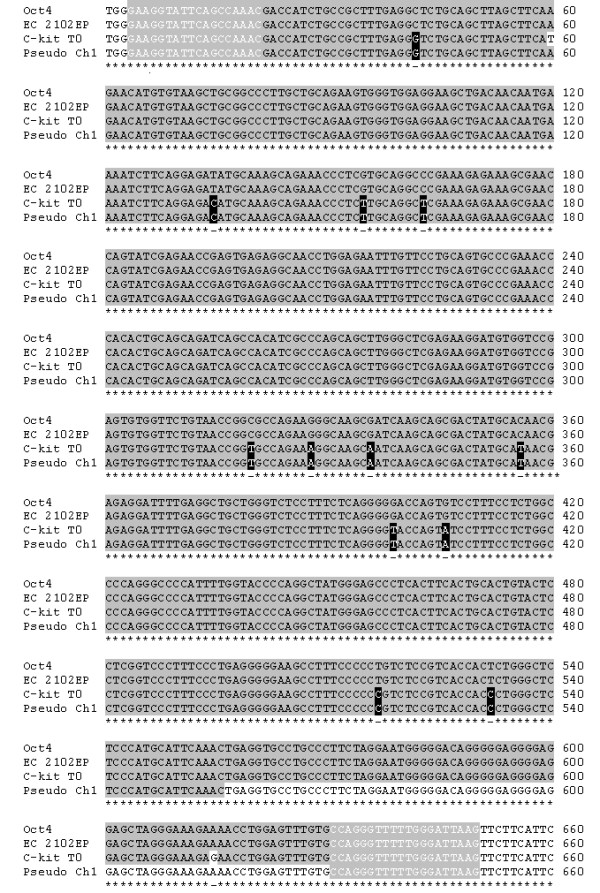
The transcription factor Oct4 is well defined as a key regulator of embryonic stem (ES) cell pluripotency. In recent years, the role of Oct4 has purportedly extended to the self renewal and maintenance of multipotency in adult stem cell (ASC) populations. This profile has arisen mainly from reports utilising reverse transcription-polymerase chain reaction (RT-PCR) based methodologies and has since come under scrutiny following the discovery that many developmental genes have multiple pseudogenes associated with them. Six known pseudogenes exist for Oct4, all of which exhibit very high sequence homology (three >97%), and for this reason the generation of artefacts may have contributed to false identification of Oct4 in somatic cell populations. While ASC lack a molecular blueprint of transcription factors proposed to be involved with 'stemness' as described for ES cells, it is not unreasonable to assume that similar gene patterns may exist. The focus of this work was to corroborate reports that Oct4 is involved in the regulation of ASC self-renewal and differentiation, using a combination of methodologies to rule out pseudogene interference. Haematopoietic stem cells (HSC) derived from human umbilical cord blood (UCB) and various differentiated cell lines underwent RT-PCR, product sequencing and transfection studies using an Oct4 promoter-driven reporter. In summary, only the positive control expressed Oct4, with all other cell types expressing a variety of Oct4 pseudogenes. Somatic cells were incapable of utilising an exogenous Oct4 promoter construct, leading to the conclusion that Oct4 does not appear involved in the multipotency of human HSC from UCB.
转录因子Oct4被明确界定为胚胎干细胞(ES细胞)多能性的关键调节因子。近年来,Oct4的作用据称已扩展至成体干细胞(ASC)群体的自我更新和多能性维持。这种情况主要源于利用基于逆转录-聚合酶链反应(RT-PCR)方法的报告,自发现许多发育基因有多个与之相关的假基因后,这一情况受到了审视。Oct4存在六个已知的假基因,所有这些假基因都表现出非常高的序列同源性(三个>97%),因此,假象的产生可能导致了在体细胞群体中对Oct4的错误鉴定。虽然ASC缺乏如ES细胞所描述的、被认为与“干性”相关的转录因子分子蓝图,但假设可能存在类似的基因模式并非不合理。这项工作的重点是,通过结合多种方法以排除假基因干扰,来证实Oct4参与ASC自我更新和分化调控的报告。使用Oct4启动子驱动的报告基因,对源自人脐带血(UCB)的造血干细胞(HSC)和各种分化细胞系进行了RT-PCR、产物测序和转染研究。总之,只有阳性对照表达Oct4,所有其他细胞类型均表达多种Oct4假基因。体细胞无法利用外源性Oct4启动子构建体,从而得出结论:Oct4似乎不参与来自UCB的人HSC的多能性。