Department of Pharmaceutical Sciences, University of Colorado Denver, USA.
Biochem Pharmacol. 2010 Jul 15;80(2):255-61. doi: 10.1016/j.bcp.2010.03.025. Epub 2010 Mar 30.
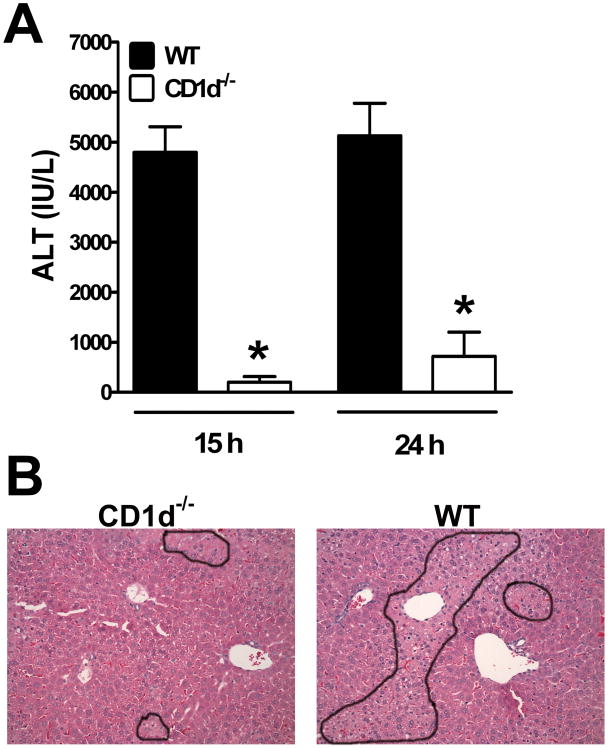
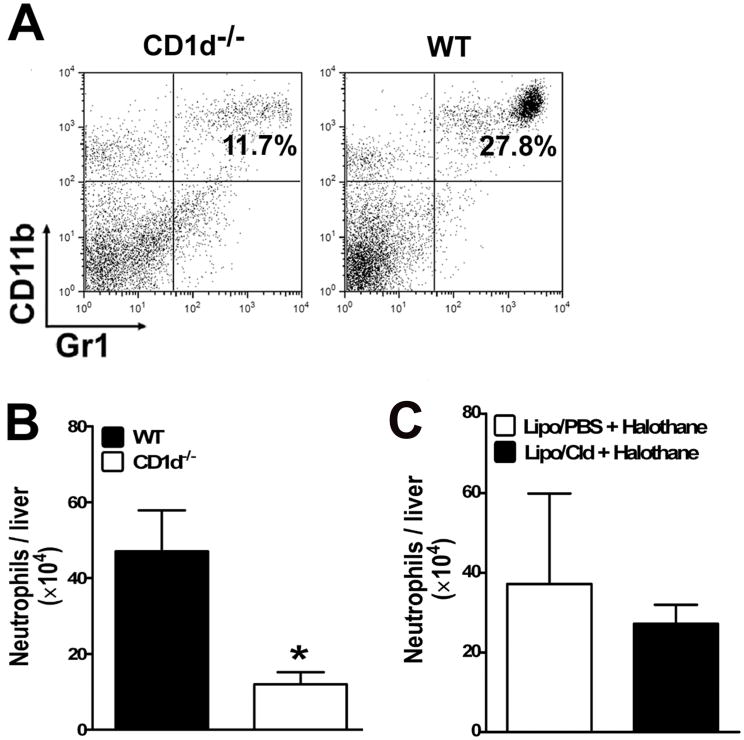
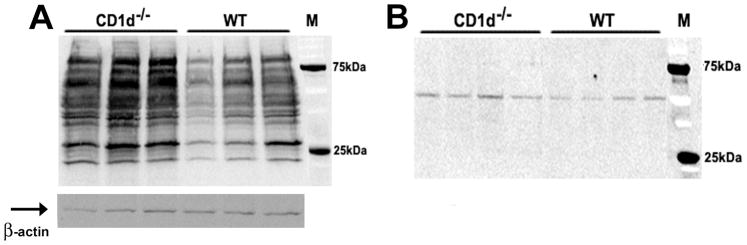
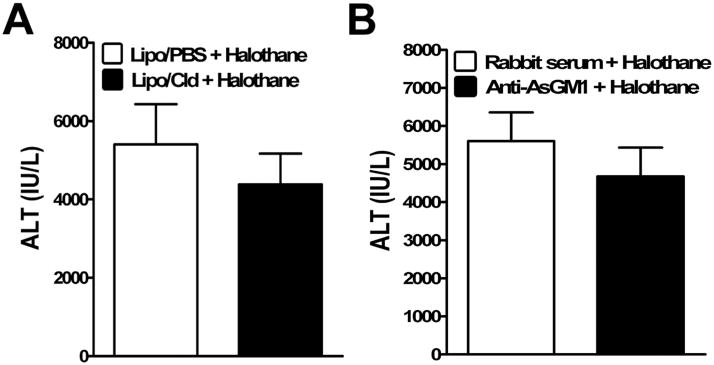
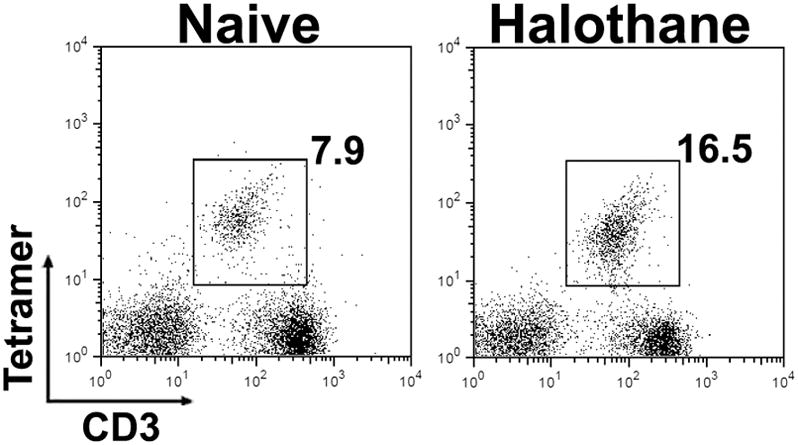
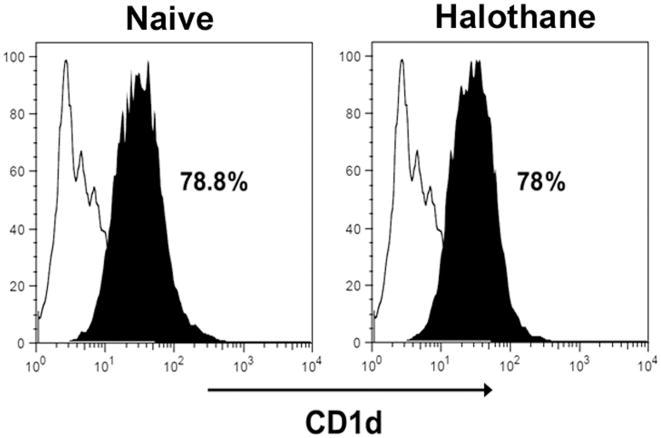
Drug-induced liver injury (DILI) causes significant patient morbidity and mortality, and is the most common reason for drug withdrawals. It is imperative to gain a thorough understanding of the underlying mechanisms of DILI to effectively predict and prevent these reactions. We have recently developed a murine model of halothane-induced liver injury (HILI). The aim of the present study was to investigate the role of hepatic natural killer T (NKT) cells in the pathogenesis of HILI. The degrees of HILI were compared between WT and CD1d(-/-) mice, which are deficient in NKT cells. The data revealed that CD1d(-/-) mice were resistant in developing HILI. This resistance appeared to be a direct result of NKT cell depletion rather than an indirect one due to the absence of cross-talk between NKT cells and other hepatic innate immune cells. Compared with WT mice, CD1d(-/-) mice exhibited a significantly lower number of hepatic infiltrating neutrophils upon halothane challenge (470,000+/-100,000/liver in WT vs. 120,000+/-31,500/liver in CD1d(-/-) mice). This result in conjunction with our previous finding of an indispensable role of neutrophils in HILI strongly suggests that NKT cells play a critical role in regulating neutrophil recruitment, thereby contributing to the development of HILI. Collectively, the current study and published reports indicate that this murine model of HILI provides an experimental system for the investigation of the underlying mechanisms of DILI. In addition, this model may yield the discovery of susceptibility factors that may control the development of liver injury in patients treated with halothane and potentially other drugs.
药物性肝损伤(DILI)导致患者发病率和死亡率显著增加,是药物撤市的最常见原因。深入了解 DILI 的潜在机制对于有效预测和预防这些反应至关重要。我们最近开发了一种氟烷诱导的肝损伤(HILI)小鼠模型。本研究旨在探讨肝自然杀伤 T(NKT)细胞在 HILI发病机制中的作用。比较了 WT 和缺乏 NKT 细胞的 CD1d(-/-)小鼠的 HILI 程度。结果显示,CD1d(-/-)小鼠对 HILI 的抗性明显增强。这种抗性似乎是 NKT 细胞耗竭的直接结果,而不是由于 NKT 细胞与其他肝固有免疫细胞之间缺乏相互作用的间接结果。与 WT 小鼠相比,氟烷攻击后 CD1d(-/-)小鼠肝内浸润的中性粒细胞数量明显减少(WT 小鼠为 470,000+/-100,000/肝,CD1d(-/-)小鼠为 120,000+/-31,500/肝)。这一结果与我们之前发现中性粒细胞在 HILI 中的不可或缺作用相结合,强烈表明 NKT 细胞在调节中性粒细胞募集中发挥关键作用,从而促进 HILI 的发展。总之,本研究和已发表的报告表明,这种 HILI 小鼠模型为研究 DILI 的潜在机制提供了一个实验系统。此外,该模型可能会发现易感性因素,这些因素可能会控制接受氟烷和潜在其他药物治疗的患者肝损伤的发展。