Department of Physiology, Faculty of Medicine and Dentistry, University of Alberta, Edmonton, Alberta, Canada.
PLoS One. 2010 Apr 1;5(4):e9965. doi: 10.1371/journal.pone.0009965.
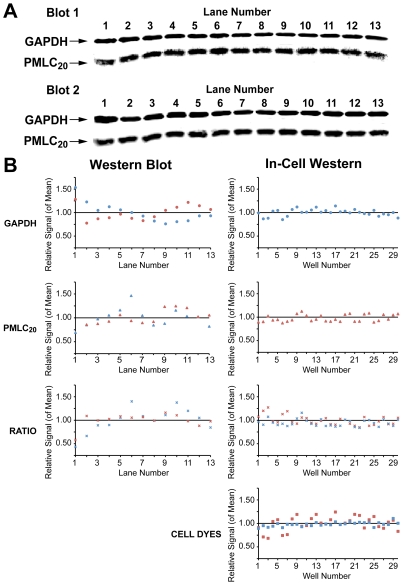
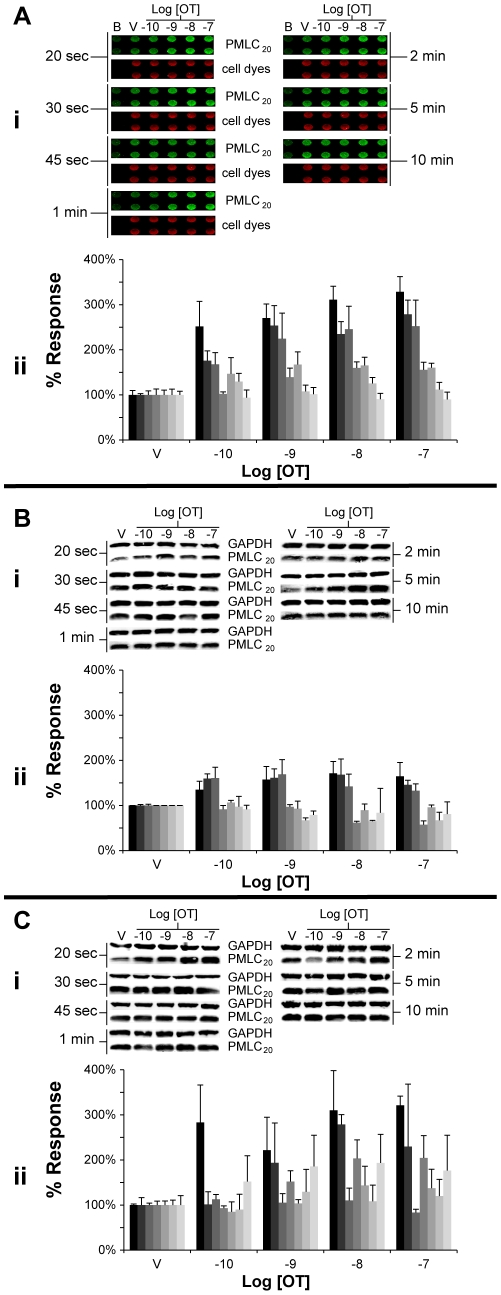
Quantification of phospho-proteins (PPs) is crucial when studying cellular signaling pathways. Western immunoblotting (WB) is commonly used for the measurement of relative levels of signaling intermediates in experimental samples. However, WB is in general a labour-intensive and low-throughput technique. Because of variability in protein yield and phospho-signal preservation during protein harvesting, and potential loss of antigen during protein transfer, WB provides only semi-quantitative data. By comparison, the "in-cell western" (ICW) technique has high-throughput capacity and requires less extensive sample preparation. Thus, we compared the ICW technique to WB for measuring phosphorylated myosin regulatory light chain (PMLC(20)) in primary cultures of uterine myocytes to assess their relative specificity, sensitivity, precision, and quantification of biologically relevant responses.
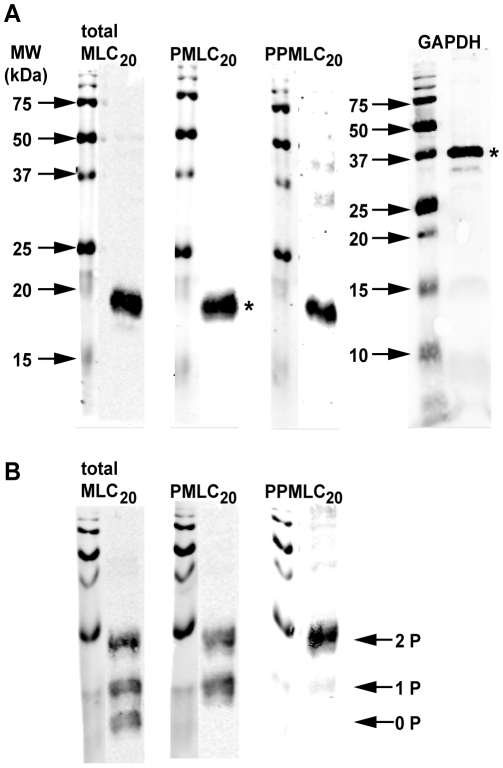
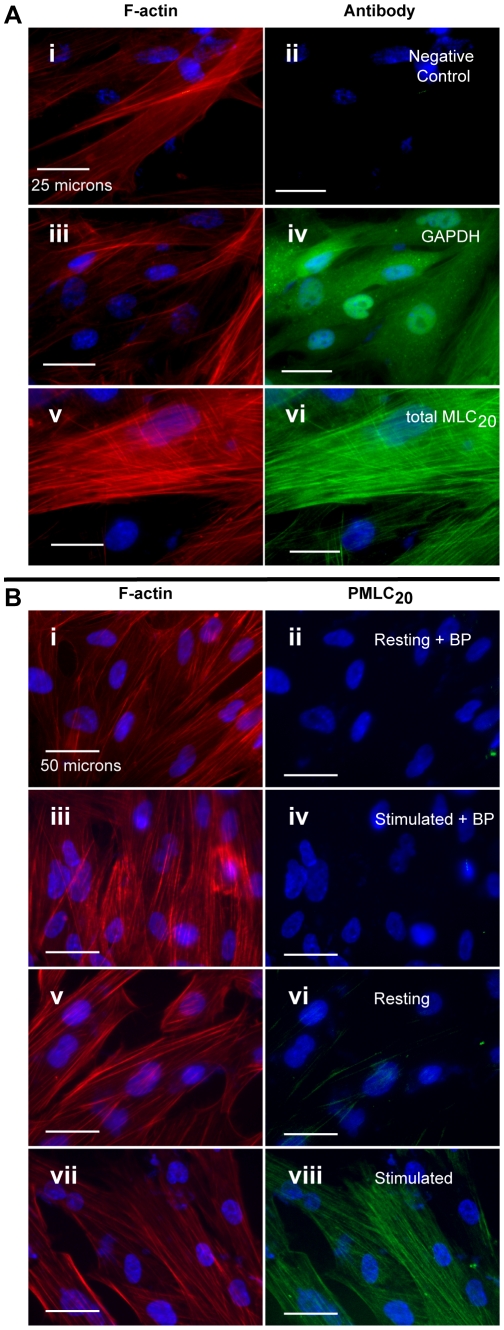
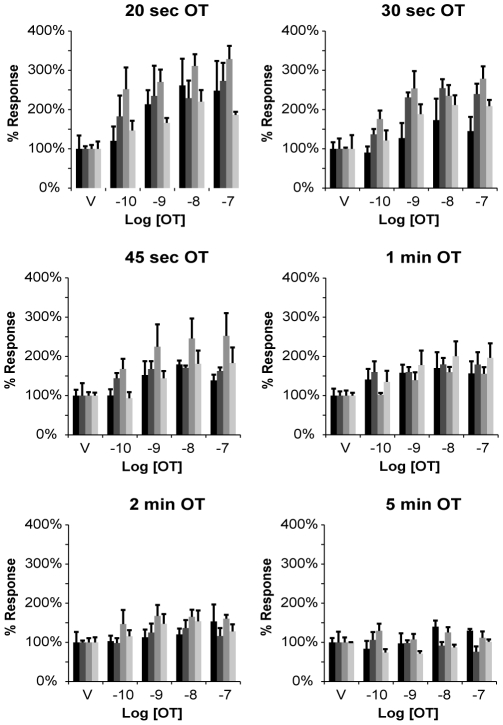
METHODOLOGY/PRINCIPAL FINDINGS: ICWs are cell-based microplate assays for quantification of protein targets in their cellular context. ICWs utilize a two-channel infrared (IR) scanner (Odyssey(R)) to quantify signals arising from near-infrared (NIR) fluorophores conjugated to secondary antibodies. One channel is dedicated to measuring the protein of interest and the second is used for data normalization of the signal in each well of the microplate. Using uterine myocytes, we assessed oxytocin (OT)-stimulated MLC(20) phosphorylation measured by ICW and WB, both using NIR fluorescence. ICW and WB data were comparable regarding signal linearity, signal specificity, and time course of phosphorylation response to OT.
CONCLUSION/SIGNIFICANCE: ICW and WB yield comparable biological data. The advantages of ICW over WB are its high-throughput capacity, improved precision, and reduced sample preparation requirements. ICW might provide better sensitivity and precision with low-quantity samples or for protocols requiring large numbers of samples. These features make the ICW technique an excellent tool for the study of phosphorylation endpoints. However, the drawbacks of ICW include the need for a cell culture format and the lack of utility where protein purification, concentration or stoichiometric analyses are required.
在研究细胞信号通路时,磷酸化蛋白(PPs)的定量至关重要。 免疫印迹(WB)通常用于测量实验样本中信号转导中间产物的相对水平。 但是,WB 通常是一种劳动密集型和低通量的技术。 由于在蛋白质收获过程中蛋白质产量和磷酸信号保存的可变性,以及在蛋白质转移过程中抗原的潜在损失,WB 仅提供半定量数据。 相比之下,“细胞内 Western”(ICW)技术具有高通量能力,并且需要较少的广泛的样品制备。 因此,我们将 ICW 技术与 WB 进行了比较,以测量原代培养的子宫肌细胞中磷酸化肌球蛋白调节轻链(PMLC(20)),以评估其相对特异性,敏感性,精密度和生物学相关反应的定量。
方法/主要发现:ICW 是一种基于细胞的微孔板测定法,用于在细胞环境中定量蛋白质靶标。 ICW 使用双通道近红外(IR)扫描仪(Odyssey(R))来量化与近红外(NIR)荧光染料缀合的二级抗体产生的信号。 一个通道专用于测量感兴趣的蛋白质,第二个通道用于对微孔板中每个孔的信号进行数据归一化。 使用子宫肌细胞,我们评估了催产素(OT)刺激的 ICW 和 WB 测量的 MLC(20)磷酸化,两者均使用 NIR 荧光。 ICW 和 WB 数据在信号线性,信号特异性和 OT 刺激的磷酸化反应的时间过程方面均具有可比性。
结论/意义:ICW 和 WB 产生可比较的生物学数据。 ICW 相对于 WB 的优势在于其高通量能力,提高的精密度和减少的样品制备要求。 ICW 可能会提供更好的灵敏度和精密度,适用于低量样品或需要大量样品的方案。 这些功能使 ICW 技术成为研究磷酸化终点的绝佳工具。 但是,ICW 的缺点包括需要细胞培养格式以及在需要蛋白质纯化,浓缩或化学计量分析的情况下缺乏实用性。