Department of Internal Medicine, Division of Diabetes, Metabolism, and Endocrinology, Kobe University Graduate School of Medicine, Kobe, Japan.
Diabetes. 2010 Jul;59(7):1608-15. doi: 10.2337/db09-1679. Epub 2010 Apr 14.
An increase in the rate of gluconeogenesis is largely responsible for the hyperglycemia in individuals with type 2 diabetes, with the antidiabetes action of metformin being thought to be achieved at least in part through suppression of gluconeogenesis.
We investigated whether the transcription factor KLF15 has a role in the regulation of gluconeogenesis and whether KLF15 participates in the antidiabetes effect of metformin.
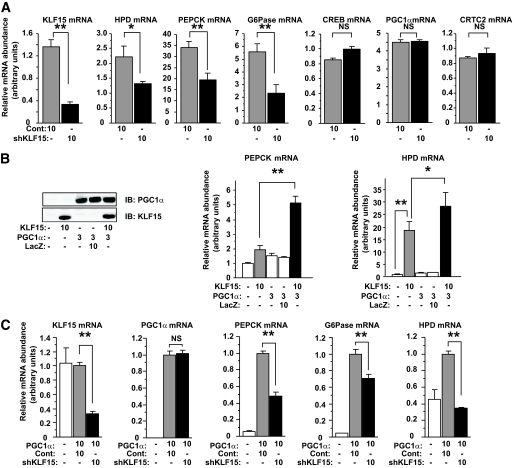
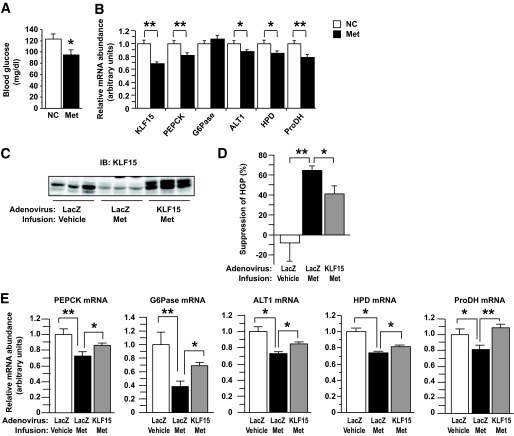
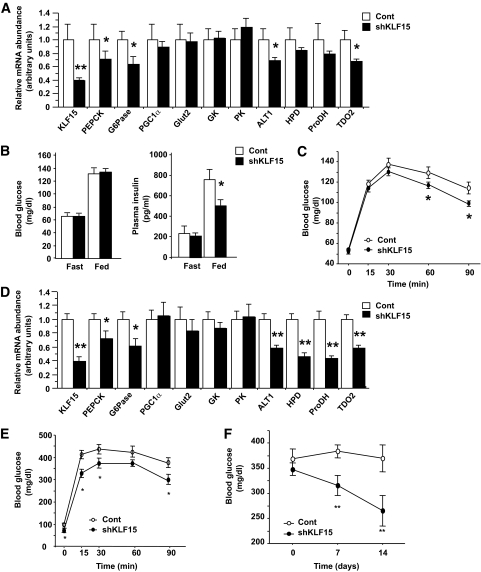
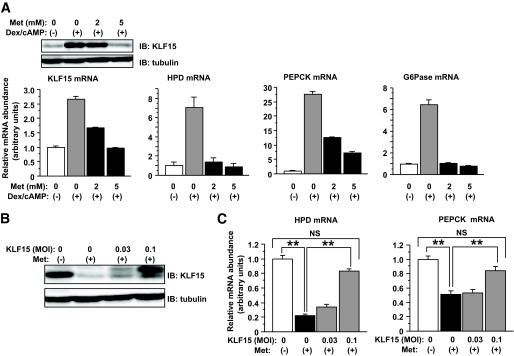
Here we show that KLF15 regulates the expression of genes for gluconeogenic or amino acid-degrading enzymes in coordination with the transcriptional coactivator peroxisome proliferator-activated receptor gamma coactivator 1alpha. Liver-specific ablation of KLF15 in diabetic mice resulted in downregulation of the expression of genes for gluconeogenic or amino acid catabolic enzymes and in amelioration of hyperglycemia. Exposure of cultured hepatocytes to metformin reduced the abundance of KLF15 through acceleration of its degradation and downregulation of its mRNA. Metformin suppressed the expression of genes for gluconeogenic or amino acid-degrading enzymes in cultured hepatocytes, and these effects of metformin were attenuated by restoration of KLF15 expression. Administration of metformin to mice inhibited both the expression of KLF15 and glucose production in the liver, the latter effect also being attenuated by restoration of hepatic KLF15 expression.
KLF15 plays an important role in regulation of the expression of genes for gluconeogenic and amino acid-degrading enzymes and that the inhibitory effect of metformin on gluconeogenesis is mediated at least in part by downregulation of KLF15 and consequent attenuation of the expression of such genes.
糖异生率的增加是 2 型糖尿病患者高血糖的主要原因,二甲双胍的抗糖尿病作用至少部分是通过抑制糖异生来实现的。
我们研究了转录因子 KLF15 是否在糖异生的调节中起作用,以及 KLF15 是否参与二甲双胍的抗糖尿病作用。
我们发现,KLF15 与转录共激活因子过氧化物酶体增殖物激活受体γ共激活因子 1α协同调节糖异生或氨基酸降解酶的基因表达。在糖尿病小鼠中,肝特异性敲除 KLF15 导致糖异生或氨基酸分解酶的基因表达下调,从而改善高血糖。暴露于二甲双胍的培养肝细胞通过加速其降解和下调其 mRNA 来减少 KLF15 的丰度。二甲双胍抑制培养肝细胞中糖异生或氨基酸降解酶的基因表达,而二甲双胍对这些基因表达的抑制作用可被 KLF15 表达的恢复所减弱。给予小鼠二甲双胍可抑制肝脏中 KLF15 的表达和葡萄糖的产生,后者的作用也可被肝 KLF15 表达的恢复所减弱。
KLF15 在调节糖异生和氨基酸降解酶的基因表达中起着重要作用,二甲双胍对糖异生的抑制作用至少部分是通过下调 KLF15 和随后减弱这些基因的表达来介导的。