Center for Molecular Pathology, Department of Laboratory Medicine, Lund University, Malmö University Hospital, SE- 205 02 Malmö, Sweden.
Mol Cancer. 2010 Apr 14;9:76. doi: 10.1186/1476-4598-9-76.
Protein kinase C (PKC) isoforms are potential targets for breast cancer therapy. This study was designed to evaluate which PKC isoforms might be optimal targets for different breast cancer subtypes.
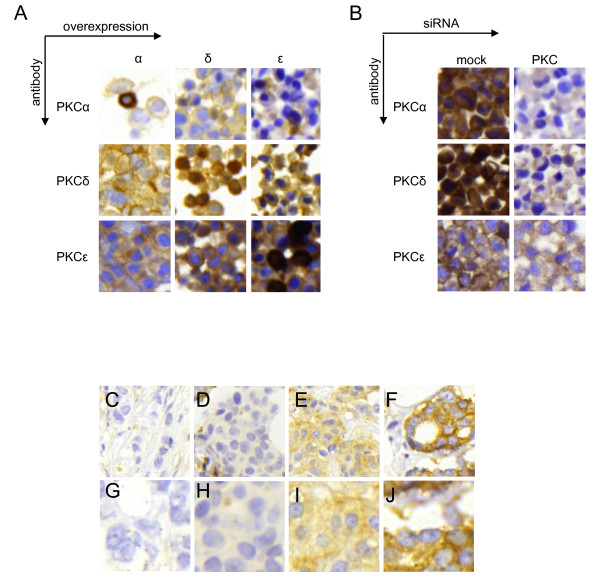
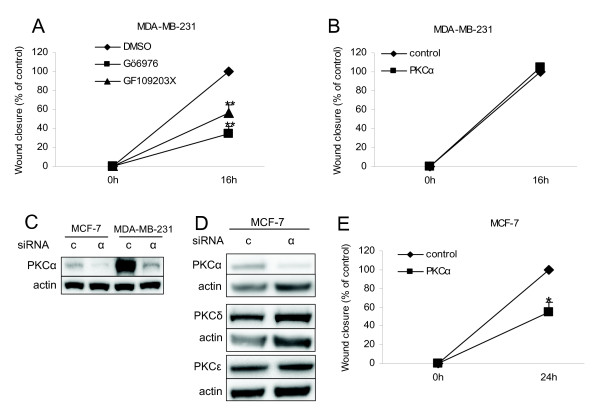
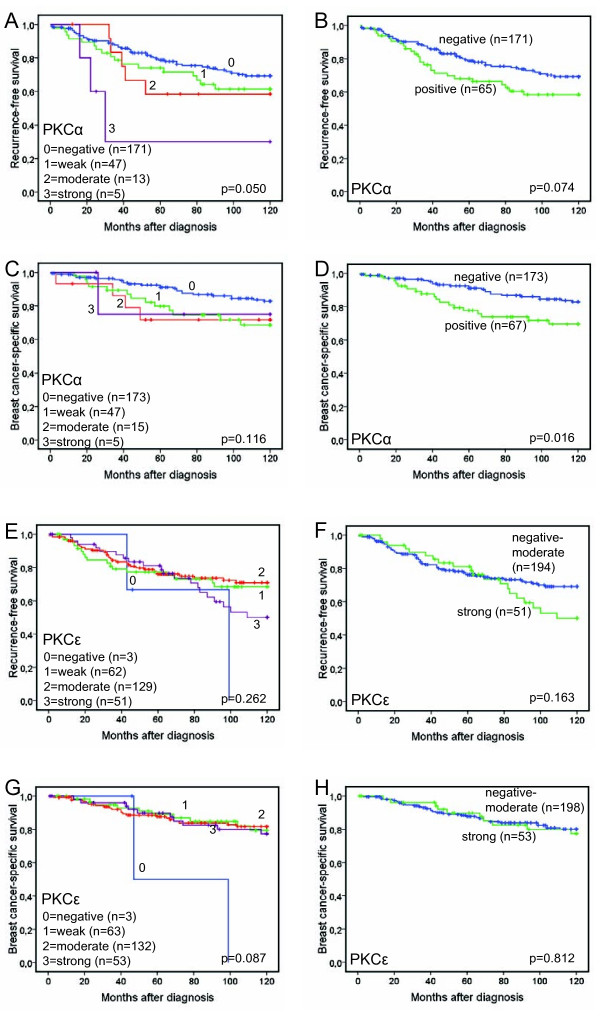
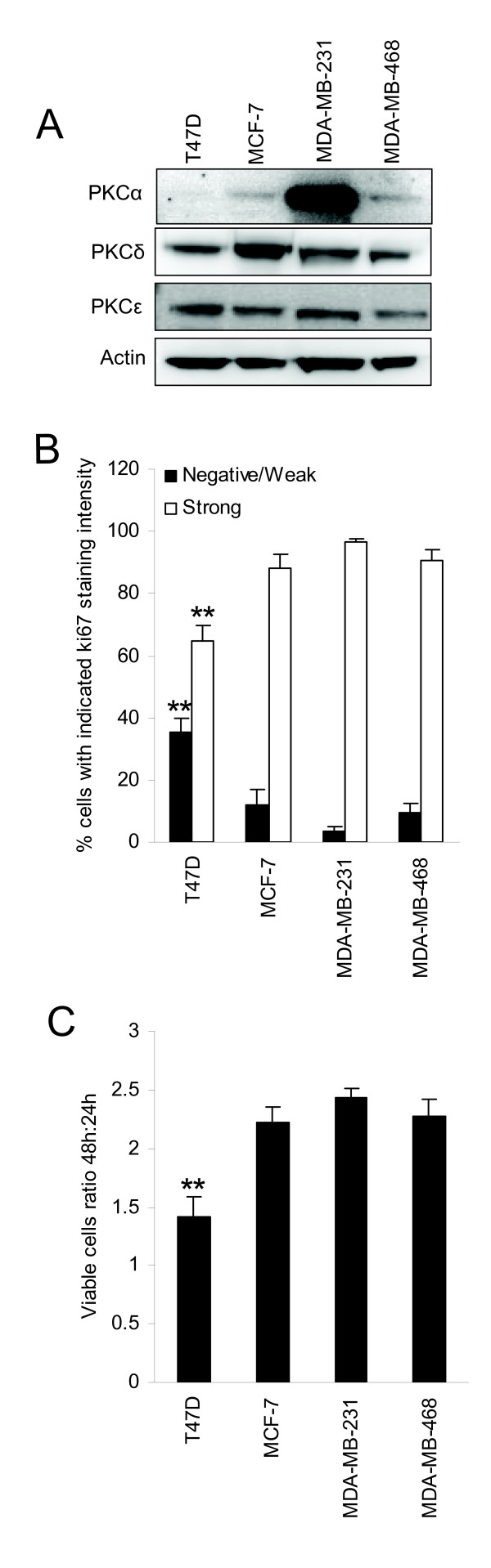
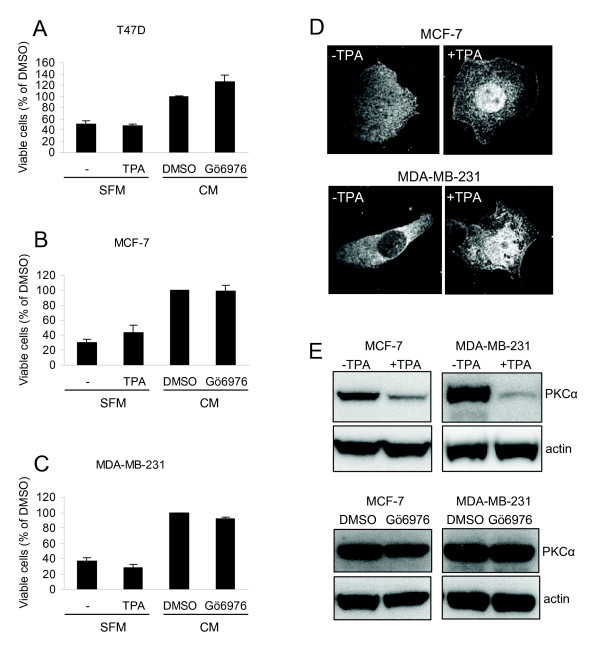
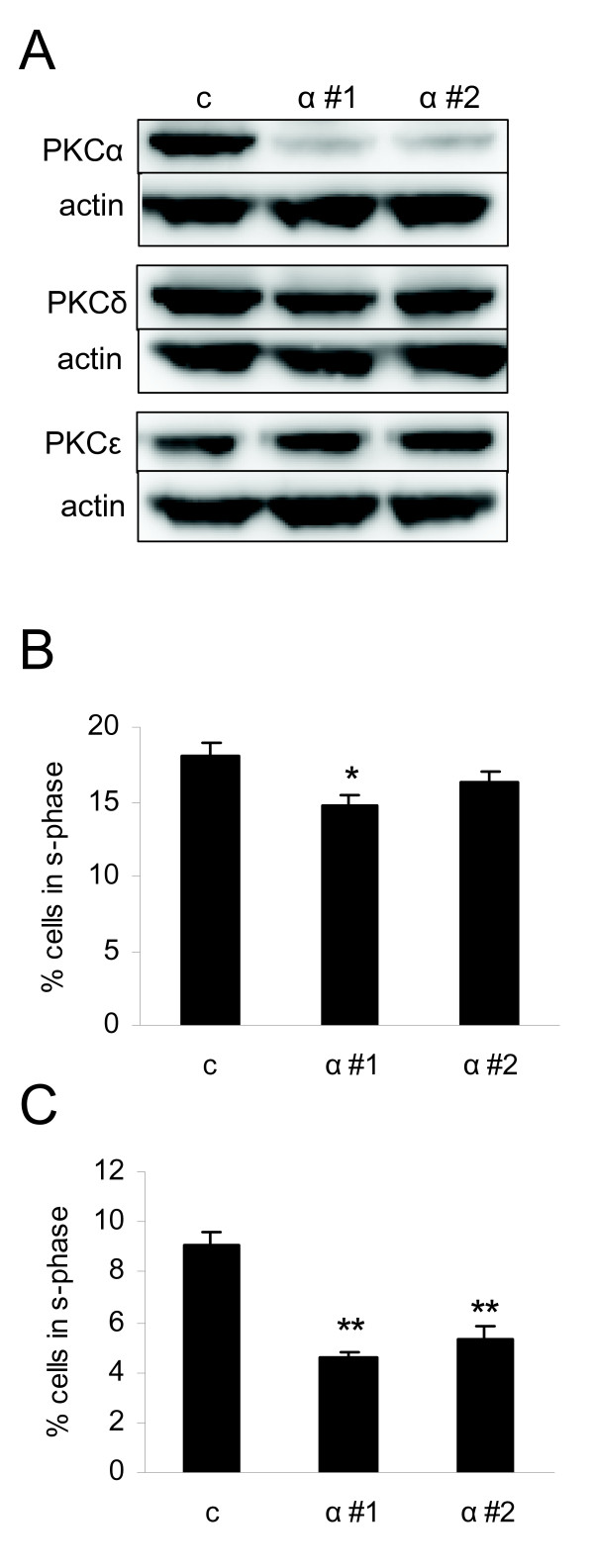
In two cohorts of primary breast cancers, PKCalpha levels correlated to estrogen and progesterone receptor negativity, tumor grade, and proliferative activity, whereas PKCdelta and PKCepsilon did not correlate to clinicopathological parameters. Patients with PKCalpha-positive tumors showed poorer survival than patients with PKCalpha-negative tumors independently of other factors. Cell line studies demonstrated that PKCalpha levels are high in MDA-MB-231 and absent in T47D cells which proliferated slower than other cell lines. Furthermore, PKCalpha silencing reduced proliferation of MDA-MB-231 cells. PKCalpha inhibition or downregulation also reduced cell migration in vitro.
PKCalpha is a marker for poor prognosis of breast cancer and correlates to and is important for cell functions associated with breast cancer progression.
蛋白激酶 C(PKC)同工型是乳腺癌治疗的潜在靶点。本研究旨在评估哪种 PKC 同工型可能是不同乳腺癌亚型的最佳靶点。
在两个原发性乳腺癌队列中,PKCalpha 水平与雌激素和孕激素受体阴性、肿瘤分级和增殖活性相关,而 PKCdelta 和 PKCepsilon 与临床病理参数不相关。PKCalpha 阳性肿瘤患者的生存情况比 PKCalpha 阴性肿瘤患者差,独立于其他因素。细胞系研究表明,PKCalpha 水平在 MDA-MB-231 中较高,而在 T47D 细胞中缺失,后者比其他细胞系增殖更慢。此外,PKCalpha 沉默降低了 MDA-MB-231 细胞的增殖。PKCalpha 的抑制或下调也减少了体外细胞迁移。
PKCalpha 是乳腺癌预后不良的标志物,与与乳腺癌进展相关的细胞功能相关且重要。