Department of Biochemistry, Cardiovascular Research Institute Maastricht, Maastricht University, Maastricht, The Netherlands.
PLoS One. 2010 Apr 12;5(4):e10130. doi: 10.1371/journal.pone.0010130.
In most models of experimental thrombosis, healthy blood vessels are damaged. This results in the formation of a platelet thrombus that is stabilized by ADP signaling via P2Y(12) receptors. However, such models do not predict involvement of P2Y(12) in the clinically relevant situation of thrombosis upon rupture of atherosclerotic plaques. We investigated the role of P2Y(12) in thrombus formation on (collagen-containing) atherosclerotic plaques in vitro and in vivo, by using a novel mouse model of atherothrombosis.
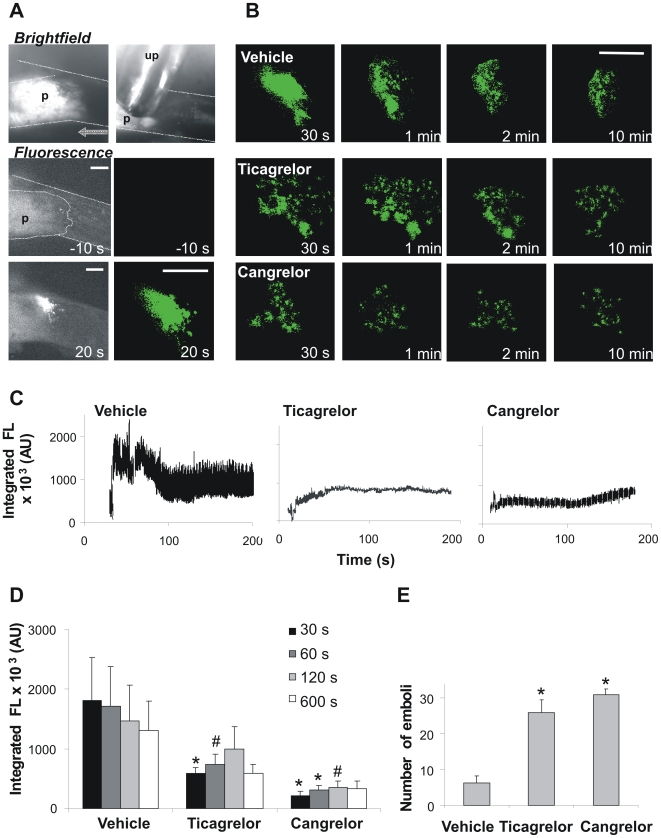
Plaques in the carotid arteries from Apoe(-/-) mice were acutely ruptured by ultrasound treatment, and the thrombotic process was monitored via intravital fluorescence microscopy. Thrombus formation in vitro was assessed in mouse and human blood perfused over collagen or plaque material under variable conditions of shear rate and coagulation. Effects of two reversible P2Y(12) blockers, ticagrelor (AZD6140) and cangrelor (AR-C69931MX), were investigated.
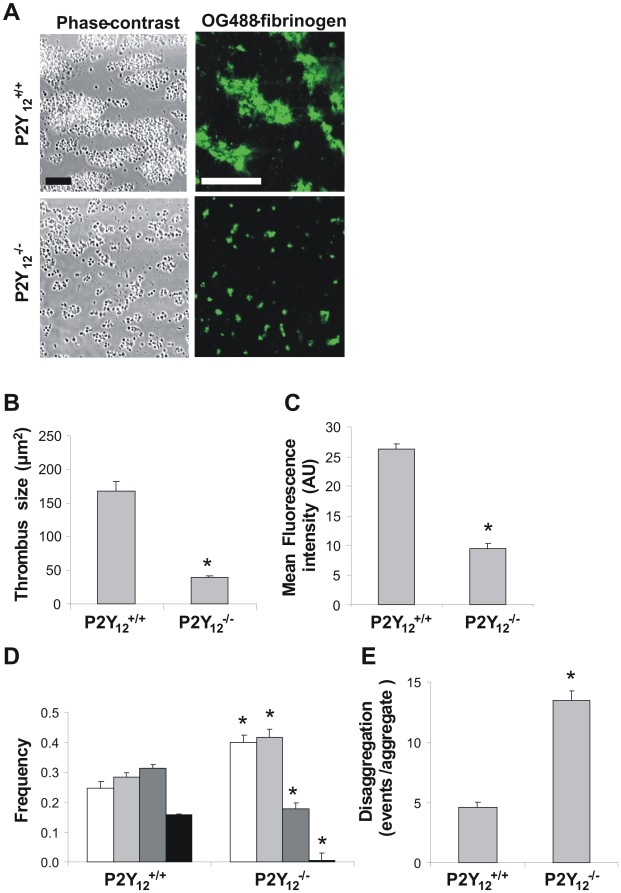
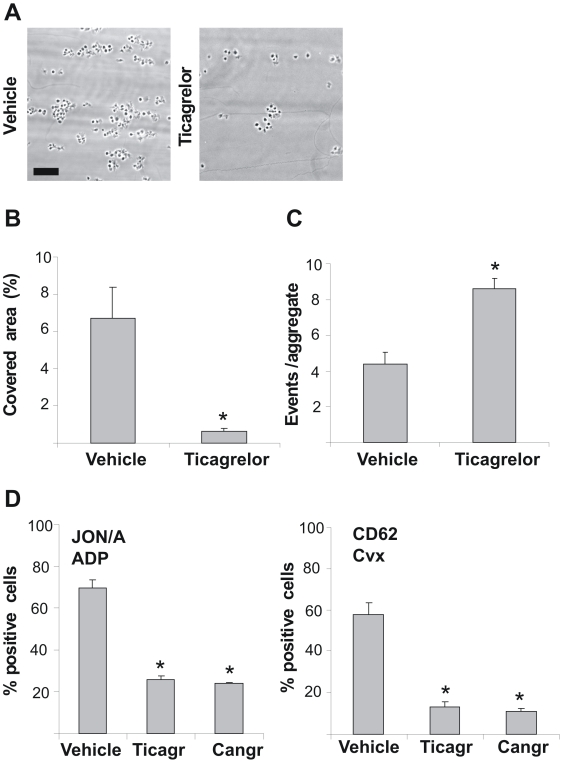
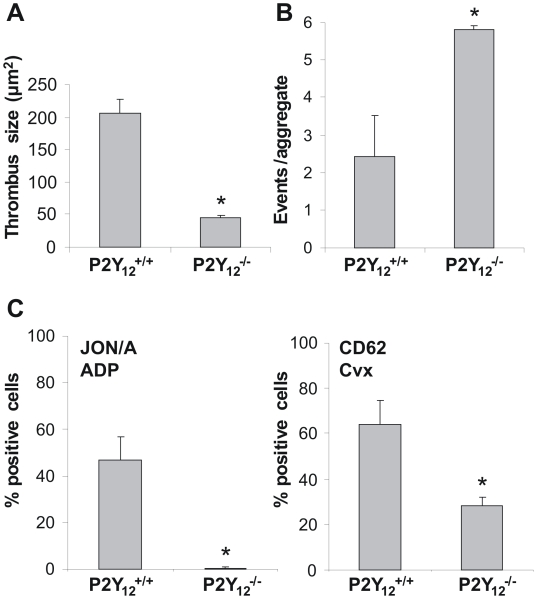
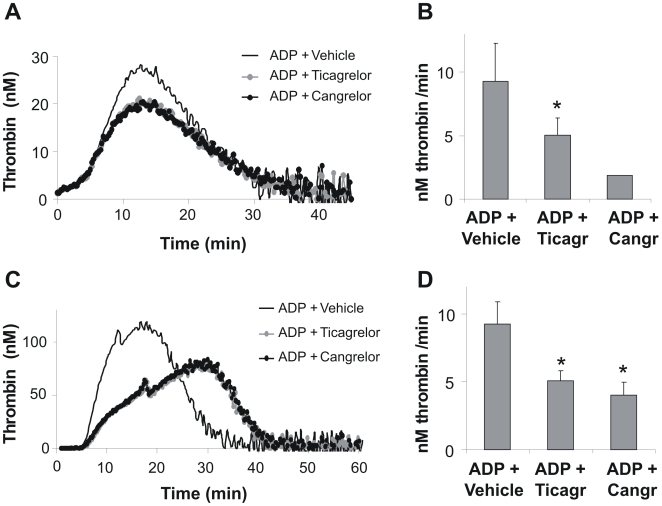
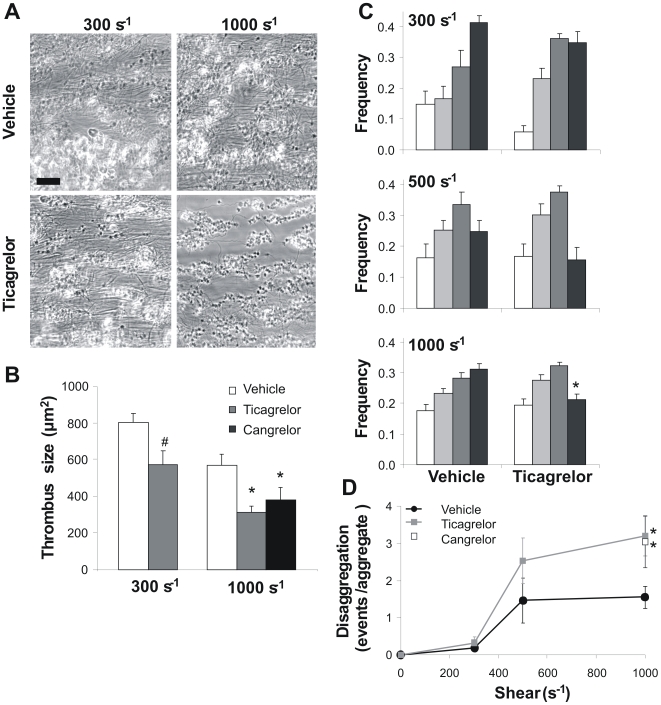
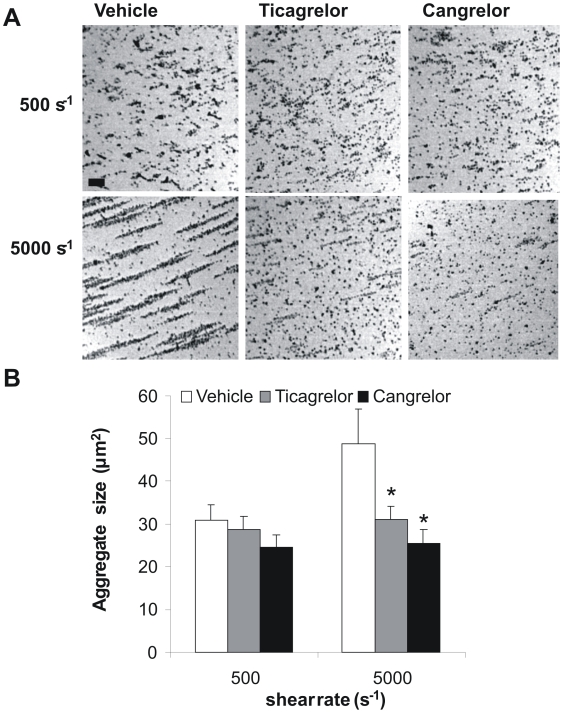
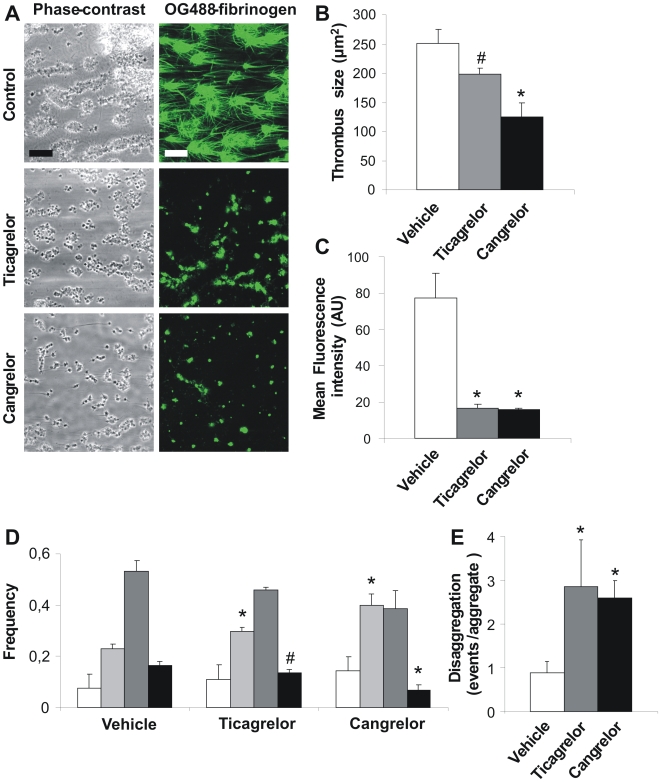
Acute plaque rupture by ultrasound treatment provoked rapid formation of non-occlusive thrombi, which were smaller in size and unstable in the presence of P2Y(12) blockers. In vitro, when mouse or human blood was perfused over collagen or atherosclerotic plaque material, blockage or deficiency of P2Y(12) reduced the thrombi and increased embolization events. These P2Y(12) effects were present at shear rates >500 s(-1), and they persisted in the presence of coagulation. P2Y(12)-dependent thrombus stabilization was accompanied by increased fibrin(ogen) binding.
CONCLUSIONS/SIGNIFICANCE: Platelet P2Y(12) receptors play a crucial role in the stabilization of thrombi formed on atherosclerotic plaques. This P2Y(12) function is restricted to high shear flow conditions, and is preserved in the presence of coagulation.
在大多数实验性血栓形成模型中,健康的血管会受到损伤。这会导致血小板血栓的形成,而血小板血栓的稳定则是通过 P2Y(12)受体的 ADP 信号来实现的。然而,这些模型并不能预测 P2Y(12)在动脉粥样硬化斑块破裂导致的临床相关血栓形成中的作用。我们通过使用一种新的动脉粥样硬化血栓形成的小鼠模型,研究了 P2Y(12)在(含胶原)动脉粥样硬化斑块上血栓形成中的作用。
通过超声处理急性破裂载脂蛋白 E 基因敲除(Apoe(-/-))小鼠颈动脉中的斑块,并通过活体荧光显微镜监测血栓形成过程。在不同剪切率和凝血条件下,评估了在胶原或斑块材料上灌注的小鼠和人血液中的体外血栓形成情况。研究了两种可逆的 P2Y(12)抑制剂,替卡格雷(AZD6140)和坎格雷洛(AR-C69931MX)的作用。
超声处理急性斑块破裂会迅速形成非闭塞性血栓,而在 P2Y(12)抑制剂存在的情况下,血栓体积较小且不稳定。在体外,当小鼠或人血液流过胶原或动脉粥样硬化斑块材料时,P2Y(12)的阻断或缺失会减少血栓形成并增加栓塞事件。这些 P2Y(12)作用在剪切率 >500 s(-1)时出现,并且在凝血存在的情况下仍然存在。依赖 P2Y(12)的血栓稳定伴随着纤维蛋白(原)结合的增加。
结论/意义:血小板 P2Y(12)受体在动脉粥样硬化斑块上形成的血栓稳定中起着关键作用。这种 P2Y(12)功能仅限于高剪切流条件,并且在凝血存在的情况下仍然存在。