Manchester Centre for Integrative Systems Biology, Manchester Interdisciplinary Biocentre, 131 Princess Street, Manchester, M1 7DN, UK.
Biol Direct. 2010 Apr 20;5:22. doi: 10.1186/1745-6150-5-22.
The transition from premalignant to invasive tumour growth is a prolonged multistep process governed by phenotypic adaptation to changing microenvironmental selection pressures. Cancer prevention strategies are required to interrupt or delay somatic evolution of the malignant invasive phenotype. Empirical studies have consistently demonstrated that increased physical activity is highly effective in reducing the risk of breast cancer but the mechanism is unknown.
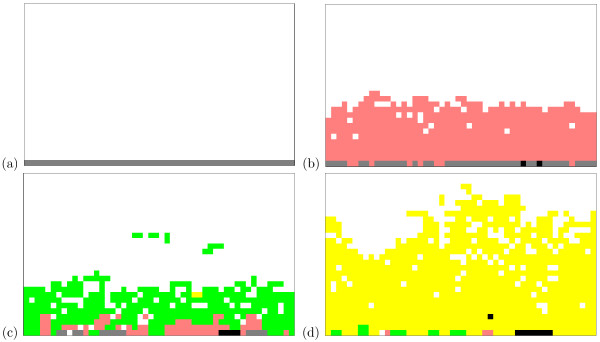
Here we propose the hypothesis that exercise-induced transient systemic acidosis will alter the in situ tumour microenvironment and delay tumour adaptation to regional hypoxia and acidosis in the later stages of carcinogenesis. We test this hypothesis using a hybrid cellular automaton approach. This model has been previously applied to somatic evolution on epithelial surfaces and demonstrated three phases of somatic evolution, with cancer cells escaping in turn from the constraints of limited space, nutrient supply and waste removal. In this paper we extend the model to test our hypothesis that transient systemic acidosis is sufficient to arrest, or at least delay, transition from in situ to invasive cancer.
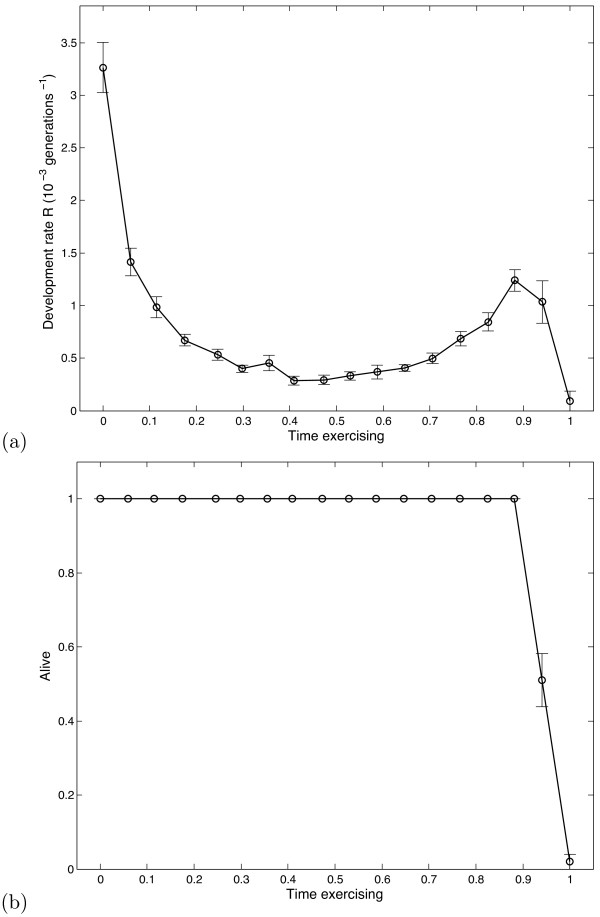
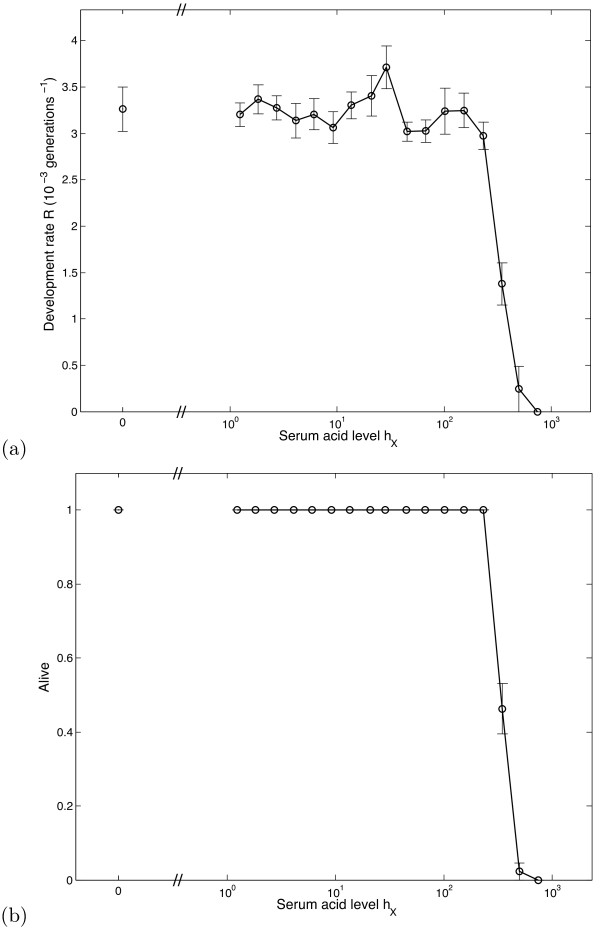
Model simulations demonstrate that repeated episodes of transient systemic acidosis will interrupt critical evolutionary steps in the later stages of carcinogenesis resulting in substantial delay in the evolution to the invasive phenotype. Our results suggest transient systemic acidosis may mediate the observed reduction in cancer risk associated with increased physical activity.
从癌前病变到侵袭性肿瘤生长的转变是一个漫长的多步骤过程,受表型适应不断变化的微环境选择压力的控制。需要采取癌症预防策略来中断或延迟恶性侵袭表型的体细胞进化。实证研究一致表明,增加身体活动对于降低乳腺癌风险非常有效,但具体机制尚不清楚。
在这里,我们提出假设,即运动引起的短暂系统性酸中毒将改变原位肿瘤微环境,并延迟肿瘤在致癌作用后期对区域性缺氧和酸中毒的适应。我们使用混合细胞自动机方法来验证这一假设。该模型以前曾应用于上皮表面的体细胞进化,并证明了体细胞进化的三个阶段,癌细胞依次逃避有限空间、营养供应和废物清除的限制。在本文中,我们扩展了模型以检验我们的假设,即短暂的系统性酸中毒足以阻止,或至少延迟原位癌向侵袭性癌症的转变。
模型模拟表明,反复发生短暂的系统性酸中毒将中断致癌作用后期的关键进化步骤,导致向侵袭性表型的进化显著延迟。我们的结果表明,短暂的系统性酸中毒可能介导了与增加身体活动相关的观察到的癌症风险降低。