Department of Trauma and Hand Surgery, University Hospital, Düsseldorf, Germany.
J Inflamm (Lond). 2010 Apr 20;7:18. doi: 10.1186/1476-9255-7-18.
Hemorrhagic shock/resuscitation is associated with aberrant neutrophil activation and organ failure. This experimental porcine study was done to evaluate the effects of Fas-directed extracorporeal immune therapy with a leukocyte inhibition module (LIM) on hemodynamics, neutrophil tissue infiltration, and tissue damage after hemorrhagic shock/resuscitation.
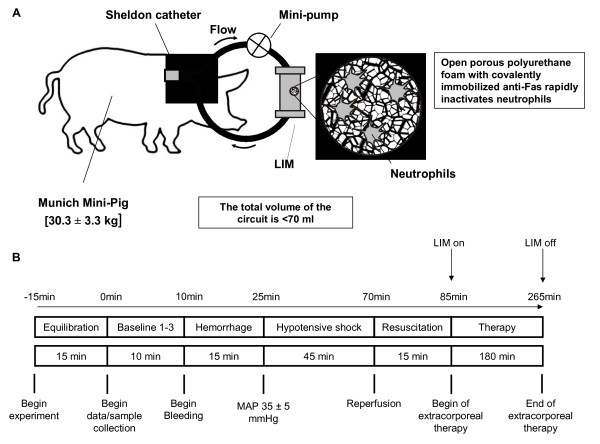
In a prospective controlled double-armed animal trial 24 Munich Mini Pigs (30.3 +/- 3.3 kg) were rapidly haemorrhaged to reach a mean arterial pressure (MAP) of 35 +/- 5 mmHg, maintained hypotensive for 45 minutes, and then were resuscitated with Ringer' solution to baseline MAP. With beginning of resuscitation 12 pigs underwent extracorporeal immune therapy for 3 hours (LIM group) and 12 pigs were resuscitated according to standard medical care (SMC). Haemodynamics, haematologic, metabolic, and organ specific damage parameters were monitored. Neutrophil infiltration was analyzed histologically after 48 and 72 hours. Lipid peroxidation and apoptosis were specifically determined in lung, bowel, and liver.
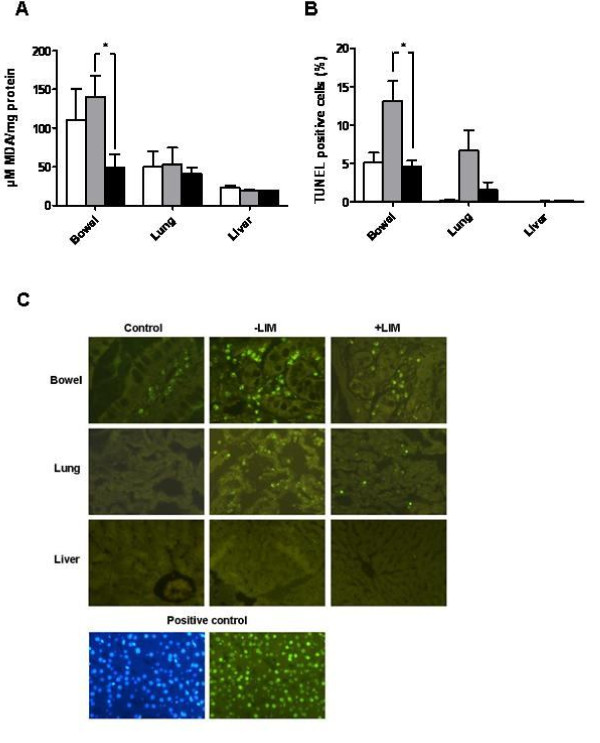
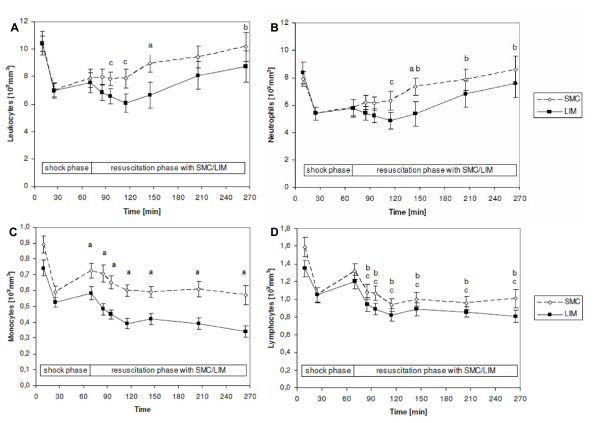
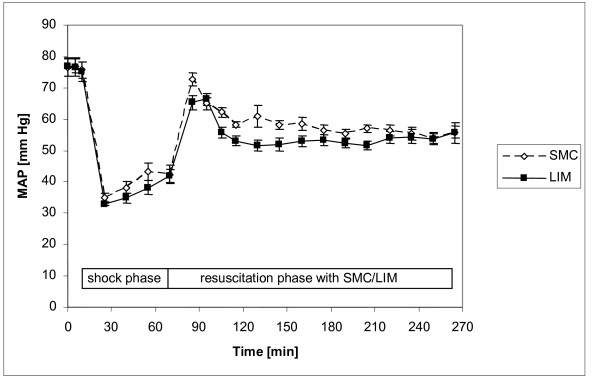
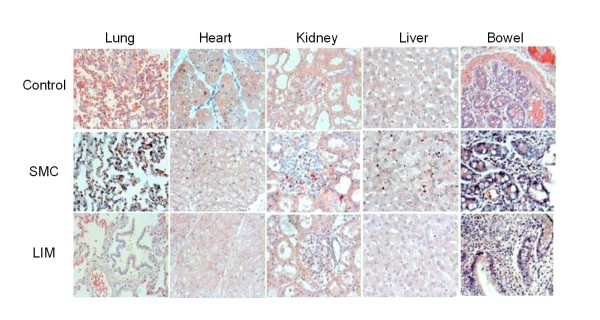
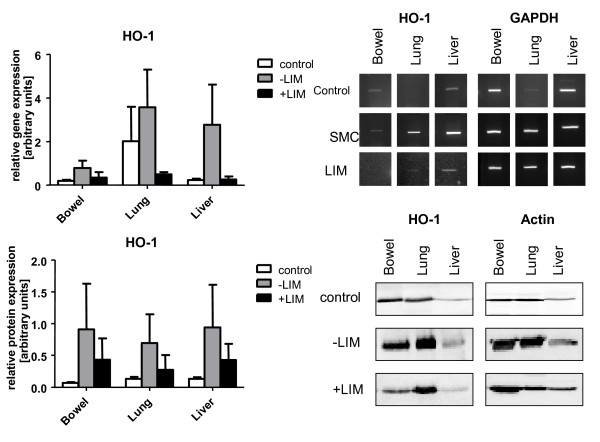
In the LIM group, neutrophil counts were reduced versus SMC during extracorporeal immune therapy. After 72 hours, the haemodynamic parameters MAP and cardiac output (CO) were significantly better in the LIM group. Histological analyses showed reduction of shock-related neutrophil tissue infiltration in the LIM group, especially in the lungs. Lower amounts of apoptotic cells and lipid peroxidation were found in organs after LIM treatment.
Transient Fas-directed extracorporeal immune therapy may protect from posthemorrhagic neutrophil tissue infiltration and tissue damage.
失血性休克/复苏与中性粒细胞异常激活和器官衰竭有关。本实验性猪研究旨在评估 Fas 定向体外免疫疗法与白细胞抑制模块(LIM)对失血性休克/复苏后血流动力学、中性粒细胞组织浸润和组织损伤的影响。
在一项前瞻性对照双臂动物试验中,24 头慕尼黑迷你猪(30.3±3.3kg)迅速失血至平均动脉压(MAP)为 35±5mmHg,维持低血压 45 分钟,然后用林格氏液复苏至基线 MAP。在开始复苏时,12 头猪接受 3 小时的体外免疫治疗(LIM 组),12 头猪根据标准医疗护理(SMC)进行复苏。监测血流动力学、血液学、代谢和器官特异性损伤参数。在 48 小时和 72 小时后进行组织学分析中性粒细胞浸润。特别在肺、肠和肝中测定脂质过氧化和细胞凋亡。
在 LIM 组中,与 SMC 相比,中性粒细胞计数在体外免疫治疗期间减少。72 小时后,LIM 组的血流动力学参数 MAP 和心输出量(CO)明显更好。组织学分析显示,LIM 组中与休克相关的中性粒细胞组织浸润减少,尤其是在肺部。LIM 治疗后,器官中的凋亡细胞和脂质过氧化产物减少。
短暂的 Fas 定向体外免疫疗法可能有助于防止失血性休克后中性粒细胞组织浸润和组织损伤。