Center for Cell and Gene Therapy, Baylor College of Medicine, The Methodist Hospital and Texas Children's Hospital, Houston, TX 77030, USA.
Leukemia. 2010 Jun;24(6):1160-70. doi: 10.1038/leu.2010.75. Epub 2010 Apr 29.
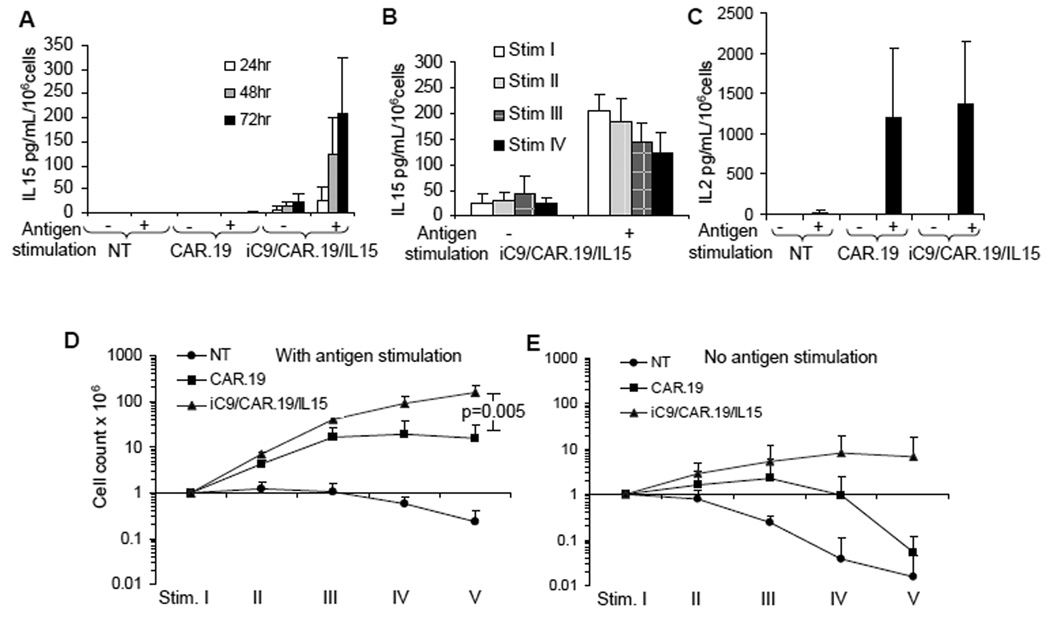
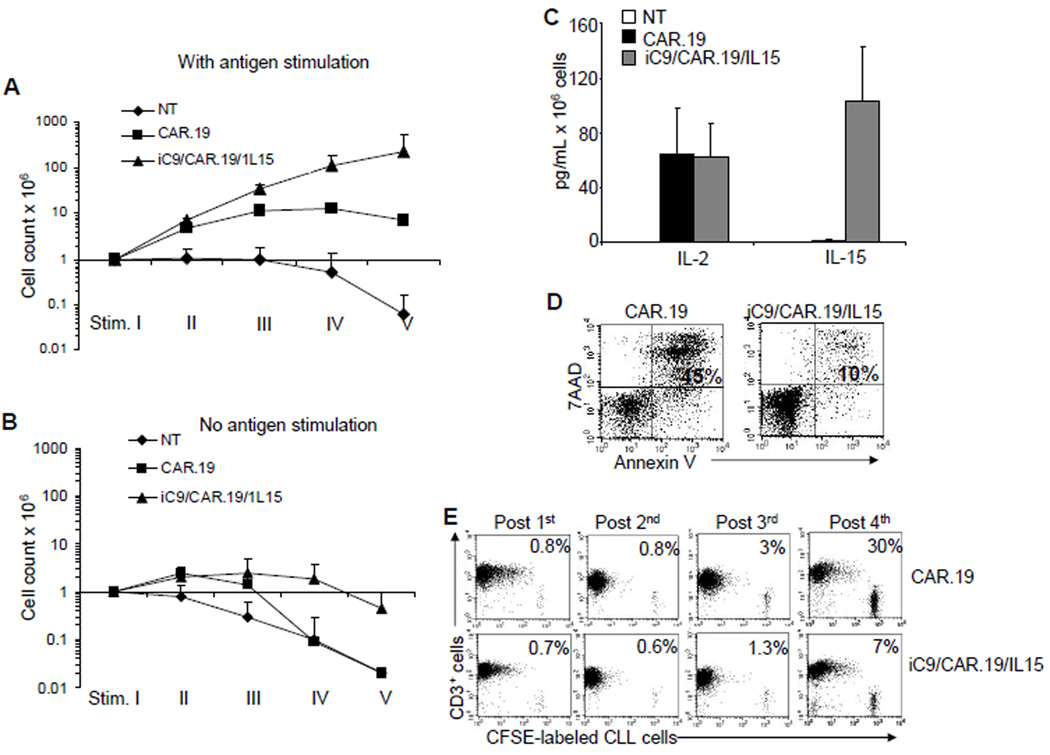
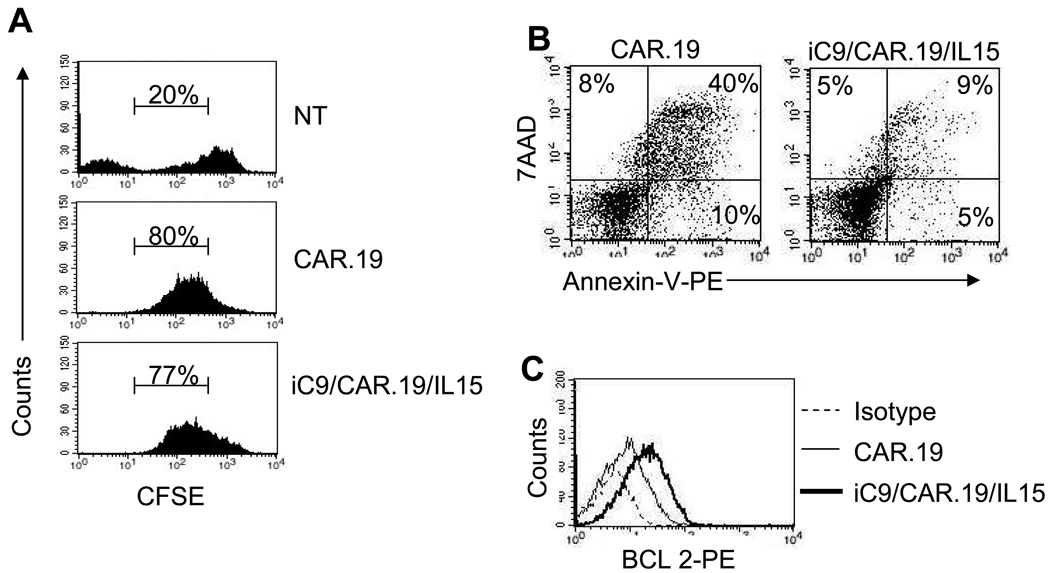
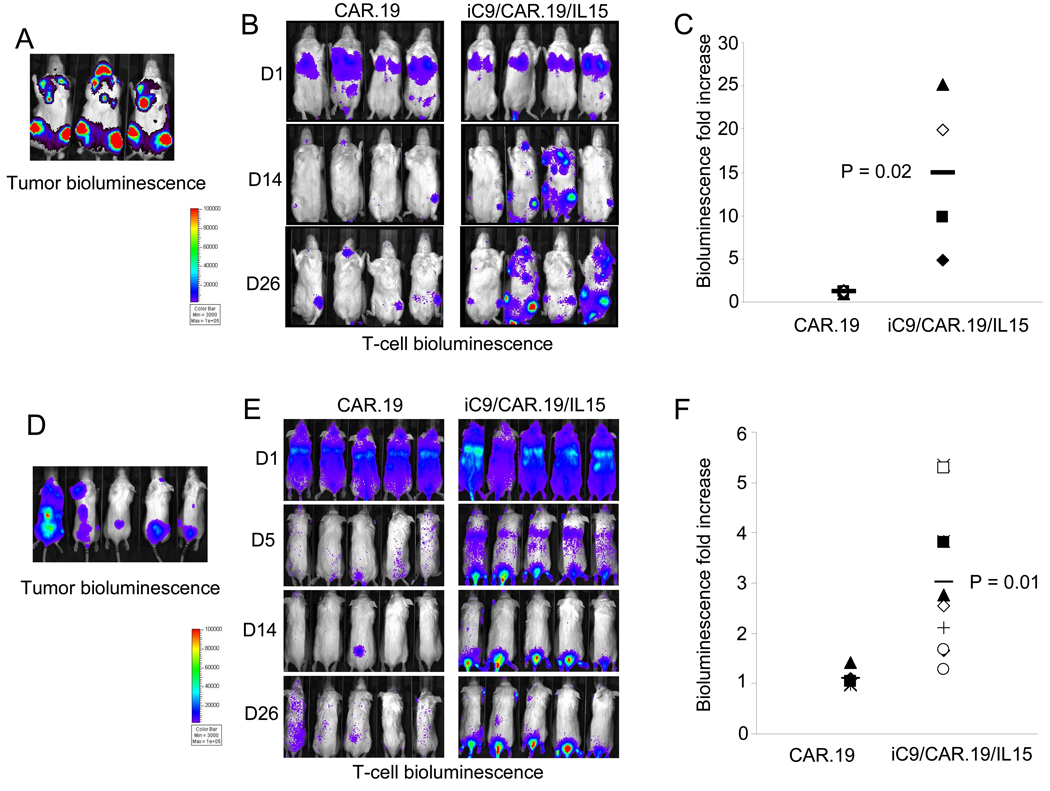
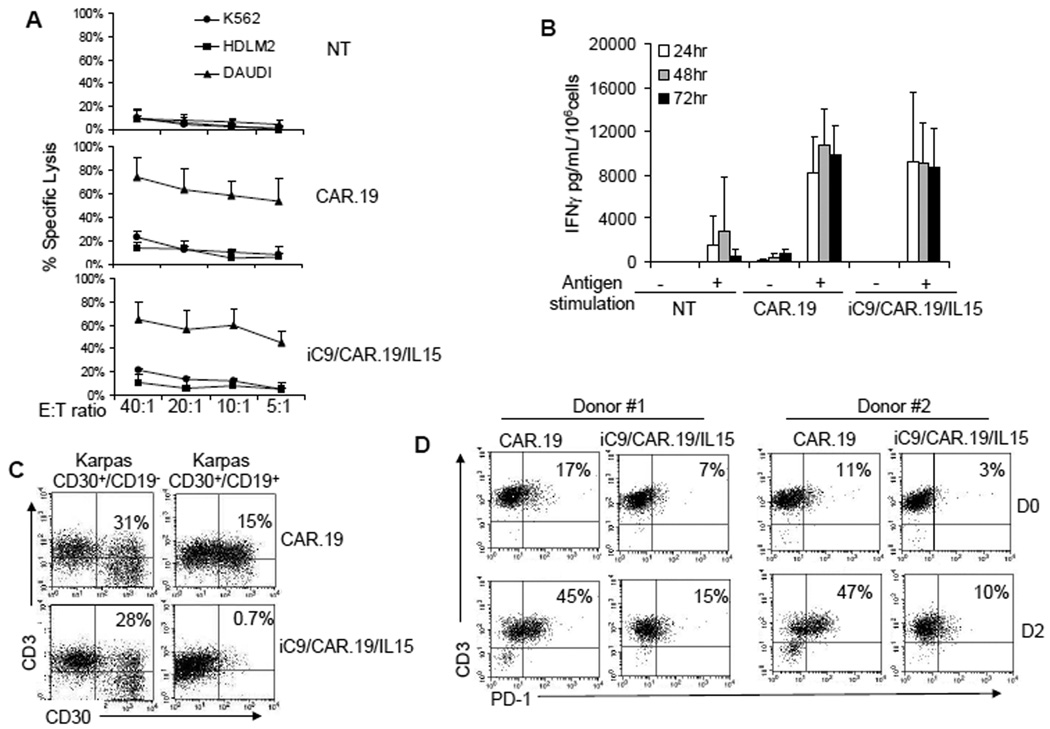
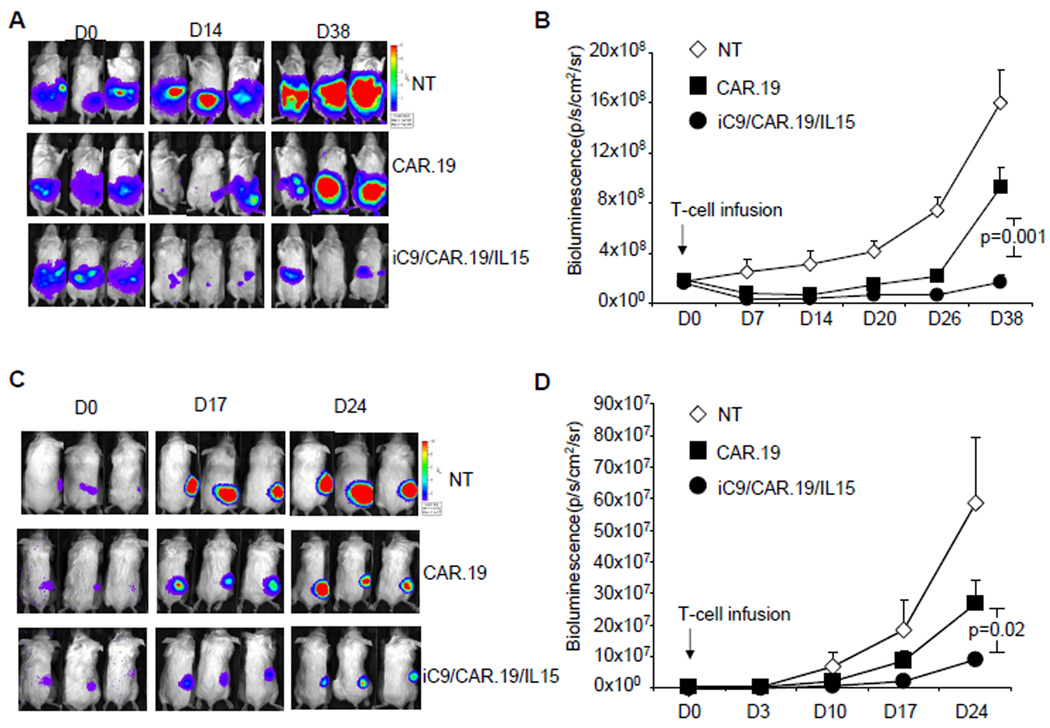
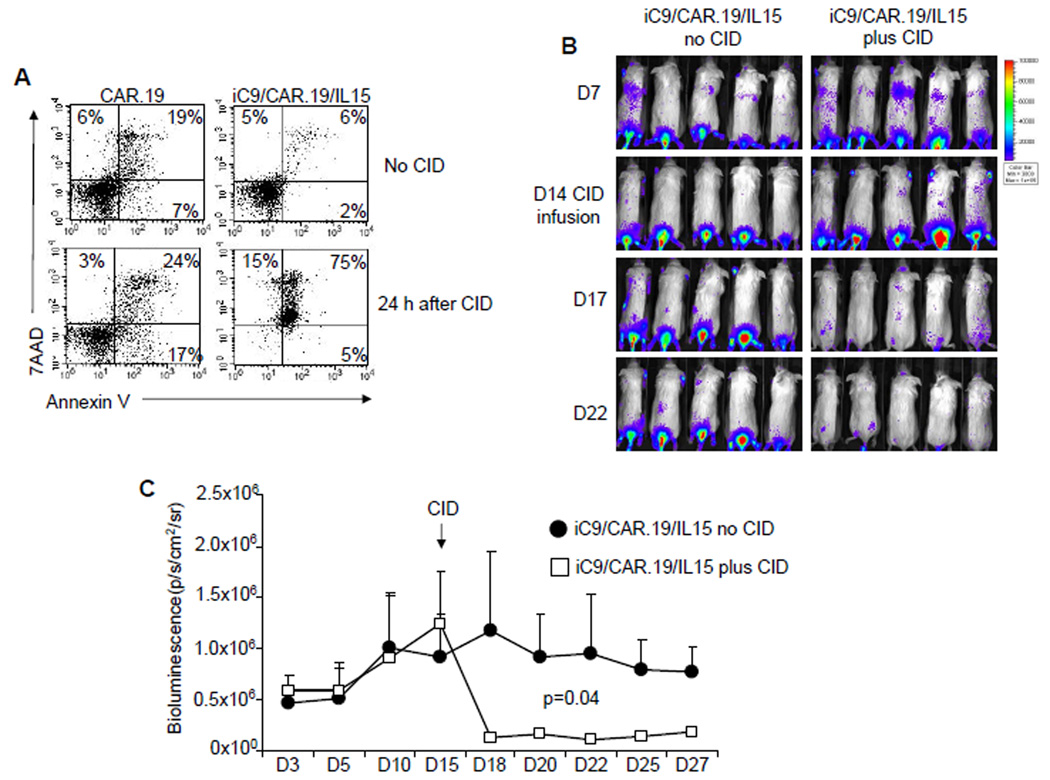
T lymphocytes expressing a chimeric antigen receptor (CAR) targeting the CD19 antigen (CAR.19) may be of value for the therapy of B-cell malignancies. Because the in vivo survival, expansion and anti-lymphoma activity of CAR.19(+) T cells remain suboptimal even when the CAR contains a CD28 costimulatory endodomain, we generated a novel construct that also incorporates the interleukin-15 (IL-15) gene and an inducible caspase-9-based suicide gene (iC9/CAR.19/IL-15). We found that compared with CAR.19(+) T cells, iC9/CAR.19/IL-15(+) T cells had: (1) greater numeric expansion upon antigen stimulation (10-fold greater expansion in vitro, and 3- to 15-fold greater expansion in vivo) and reduced cell death rate (Annexin-V(+)/7-AAD(+) cells 10+/-6% for iC9/CAR.19/IL-15(+) T cells and 32+/-19% for CAR.19(+) T cells); (2) reduced expression of the programmed death 1 (PD-1) receptor upon antigen stimulation (PD-1(+) cells <15% for iC9/CAR.19/IL-15(+) T cells versus >40% for CAR.19(+) T cells); and (3) improved antitumor effects in vivo (from 4.7- to 5.4-fold reduced tumor growth). In addition, iC9/CAR.19/IL-15(+) T cells were efficiently eliminated upon pharmacologic activation of the suicide gene. In summary, this strategy safely increases the anti-lymphoma/leukemia effects of CAR.19-redirected T lymphocytes and may be a useful approach for treatment of patients with B-cell malignancies.
表达针对 CD19 抗原的嵌合抗原受体 (CAR) 的 T 淋巴细胞(CAR.19)可能对 B 细胞恶性肿瘤的治疗有价值。因为即使 CAR 包含 CD28 共刺激结构域,CAR.19(+)T 细胞的体内存活、扩增和抗淋巴瘤活性仍然不理想,我们生成了一种新型构建体,该构建体还包含白细胞介素-15(IL-15)基因和基于诱导型半胱天冬酶-9 的自杀基因(iC9/CAR.19/IL-15)。我们发现,与 CAR.19(+)T 细胞相比,iC9/CAR.19/IL-15(+)T 细胞具有:(1)在抗原刺激下的更大数量扩增(体外扩增 10 倍,体内扩增 3 至 15 倍)和降低的细胞死亡率(Annexin-V(+)/7-AAD(+)细胞 10+/-6%用于 iC9/CAR.19/IL-15(+)T 细胞,而 32+/-19%用于 CAR.19(+)T 细胞);(2)在抗原刺激下 PD-1 受体表达减少(PD-1(+)细胞 <15%用于 iC9/CAR.19/IL-15(+)T 细胞,而 >40%用于 CAR.19(+)T 细胞);和(3)体内抗肿瘤效果的改善(肿瘤生长减少 4.7 至 5.4 倍)。此外,自杀基因的药理激活可有效消除 iC9/CAR.19/IL-15(+)T 细胞。总之,该策略可安全地增加 CAR.19 重定向的 T 淋巴细胞的抗淋巴瘤/白血病作用,可能是治疗 B 细胞恶性肿瘤患者的有用方法。