Laboratory of Bacterial Genomics, Pathogen Genomics Center, National Institute of Infectious Diseases, Tokyo, Japan.
PLoS One. 2010 Apr 23;5(4):e10256. doi: 10.1371/journal.pone.0010256.
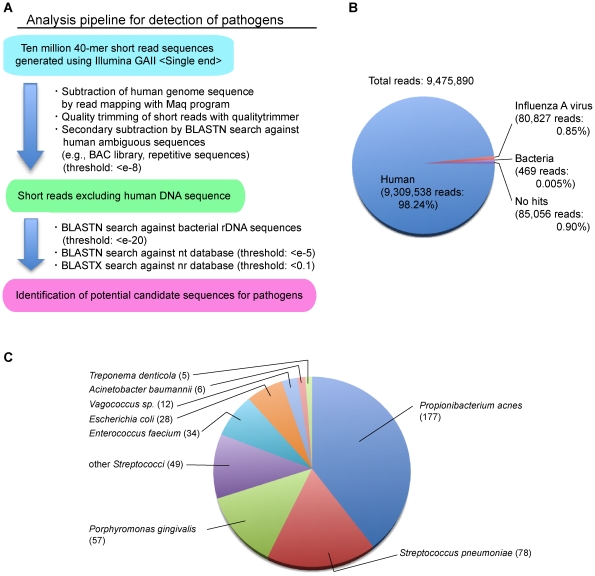
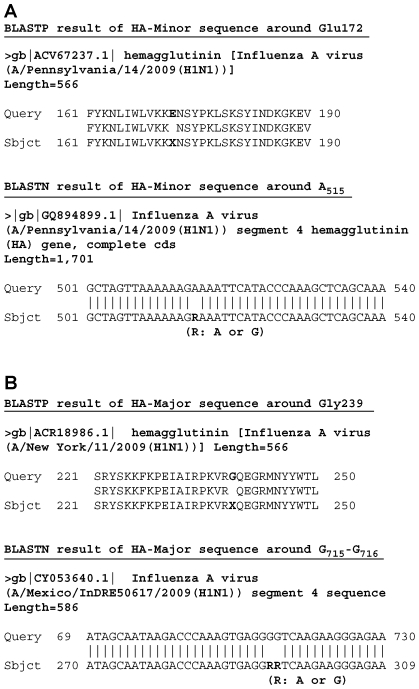
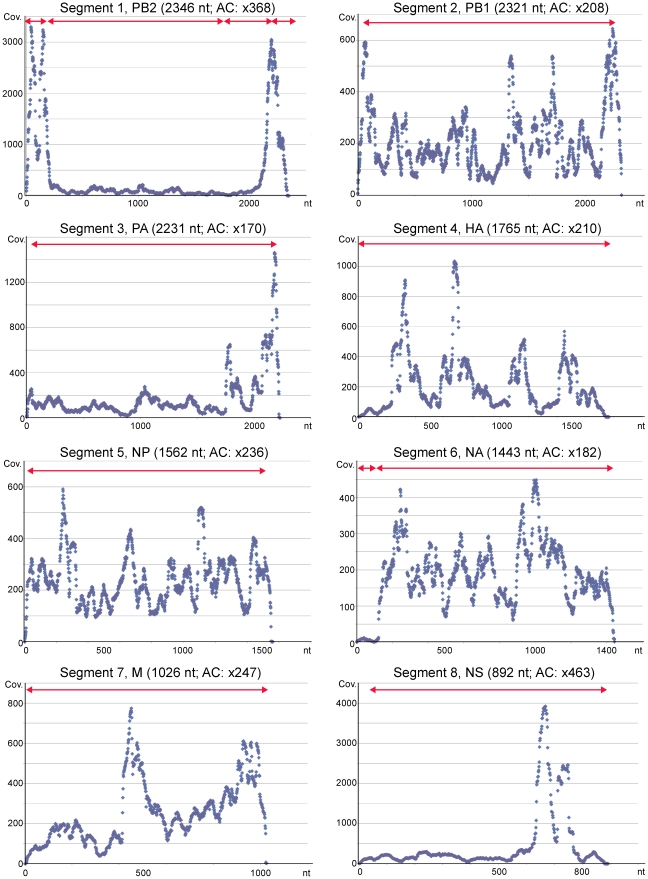
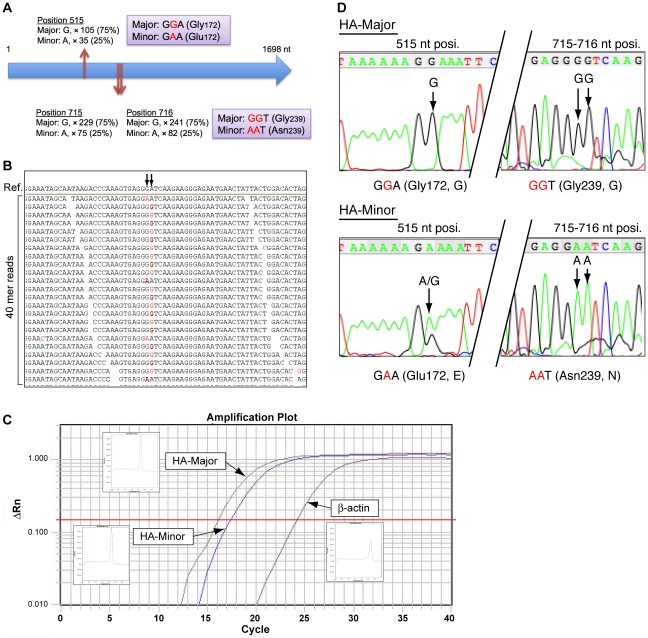
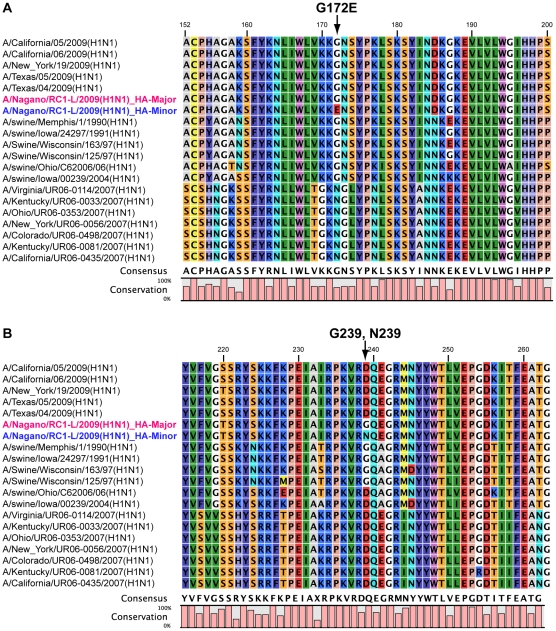
Pandemic 2009 influenza A virus (A/H1N1/2009) has emerged globally. In this study, we performed a comprehensive detection of potential pathogens by de novo sequencing using a next-generation DNA sequencer on total RNAs extracted from an autopsy lung of a patient who died of viral pneumonia with A/H1N1/2009. Among a total of 9.4x10(6) 40-mer short reads, more than 98% appeared to be human, while 0.85% were identified as A/H1N1/2009 (A/Nagano/RC1-L/2009(H1N1)). Suspected bacterial reads such as Streptococcus pneumoniae and other oral bacteria flora were very low at 0.005%, and a significant bacterial infection was not histologically observed. De novo assembly and read mapping analysis of A/Nagano/RC1-L/2009(H1N1) showed more than x200 coverage on average, and revealed nucleotide heterogeneity on hemagglutinin as quasispecies, specifically at two amino acids (Gly(172)Glu and Gly(239)Asn of HA) located on the Sa and Ca2 antigenic sites, respectively. Gly239 and Asn239 on antigenic site Ca2 appeared to be minor amino acids compared with the highly distributed Asp239 in H1N1 HAs. This study demonstrated that de novo sequencing can comprehensively detect pathogens, and such in-depth investigation facilitates the identification of influenza A viral heterogeneity. To better characterize the A/H1N1/2009 virus, unbiased comprehensive techniques will be indispensable for the primary investigations of emerging infectious diseases.
2009 年甲型流感病毒(A/H1N1/2009)在全球范围内出现。在这项研究中,我们使用下一代 DNA 测序仪对从死于甲型 H1N1/2009 病毒性肺炎的患者尸检肺中提取的总 RNA 进行从头测序,全面检测了潜在的病原体。在总共 9.4x10(6)个 40 -mer 短读序列中,超过 98%似乎是人类的,而 0.85%被鉴定为 A/H1N1/2009(A/Nagano/RC1-L/2009(H1N1))。疑似细菌读段,如肺炎链球菌和其他口腔细菌菌群,非常低,为 0.005%,组织学上未观察到明显的细菌感染。对 A/Nagano/RC1-L/2009(H1N1)的从头组装和读段映射分析显示,平均覆盖率超过 x200,并揭示了血凝素上的核苷酸异质性,即准种,分别位于 Sa 和 Ca2 抗原位点上的两个氨基酸(HA 上的 Gly(172)Glu 和 Gly(239)Asn)。与 H1N1 HAs 中高度分布的 Asp239 相比,抗原位点 Ca2 上的 Gly239 和 Asn239 似乎是次要氨基酸。这项研究表明,从头测序可以全面检测病原体,这种深入的调查有助于识别甲型流感病毒的异质性。为了更好地描述 A/H1N1/2009 病毒,对于新发传染病的初步研究,无偏的全面技术将是必不可少的。