Department of Marine Science and Resources, College of Bioresource Science, Nihon University, 1866 Kameino, Fujisawa, 252-8510, Japan.
J Physiol Sci. 2010 Jul;60(4):235-44. doi: 10.1007/s12576-010-0090-2. Epub 2010 Apr 29.
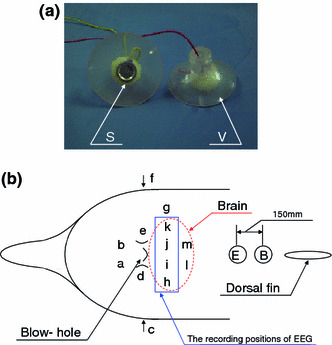
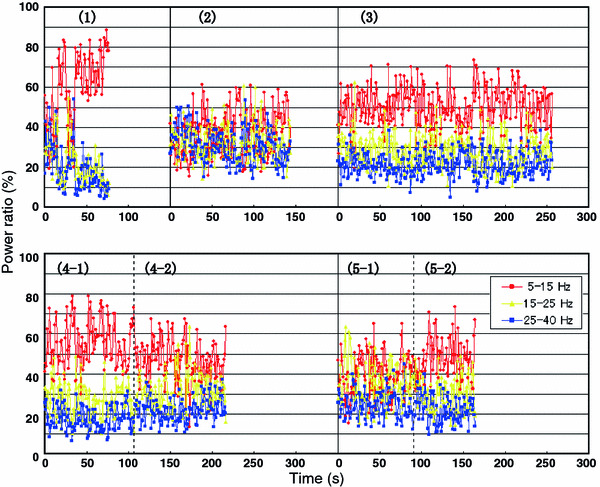
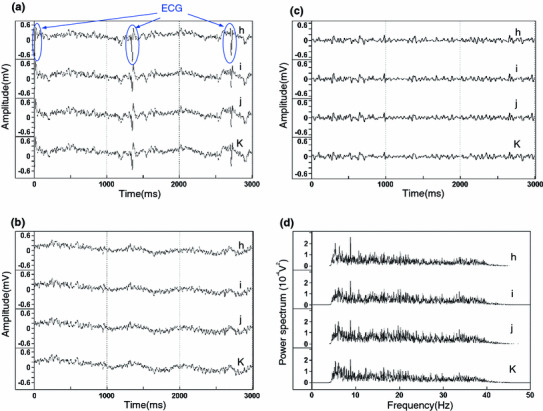
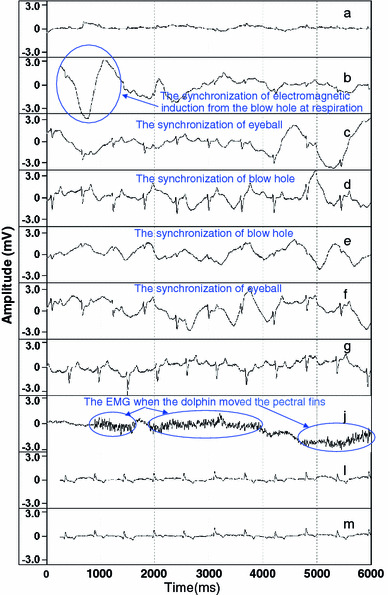
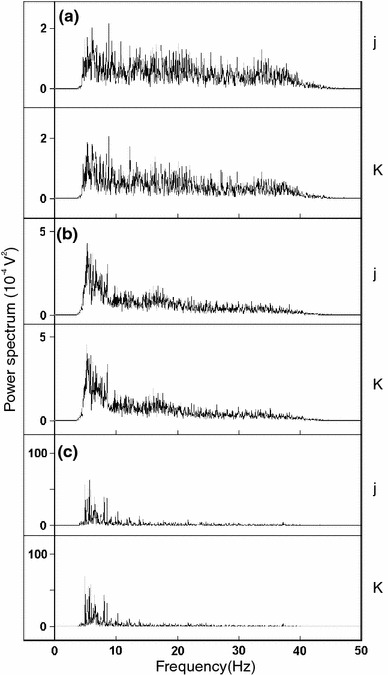
In order to obtain information regarding the correlation between an electroencephalogram (EEG) and the state of a dolphin, we developed a noninvasive recording method of EEG of a bottlenose dolphin (Tursiops truncatus) and an extraction method of true-EEG (EEG) from recorded-EEG (R-EEG) based on a human EEG recording method, and then carried out frequency analysis during transportation by truck. The frequency detected in the EEG of dolphin during apparent awakening was divided conveniently into three bands (5-15, 15-25, and 25-40 Hz) based on spectrum profiles. Analyses of the relationship between power ratio and movement of the dolphin revealed that the power ratio of dolphin in a situation when it was being quiet was evenly distributed among the three bands. These results suggested that the EEG of a dolphin could be detected accurately by this method, and that the frequency analysis of the detected EEG seemed to provide useful information for understanding the central nerve activity of these animals.
为了获取有关脑电图(EEG)与海豚状态之间相关性的信息,我们开发了一种非侵入性的记录方法,用于记录宽吻海豚(Tursiops truncatus)的脑电图(EEG),并基于人类 EEG 记录方法,从记录的 EEG(R-EEG)中提取真正的 EEG(EEG),然后在卡车运输过程中进行频率分析。根据频谱图,方便地将海豚在明显觉醒时的 EEG 中检测到的频率分为三个频段(5-15、15-25 和 25-40 Hz)。对海豚运动时功率比关系的分析表明,当海豚安静时,其功率比均匀分布在三个频段中。这些结果表明,这种方法可以准确地检测到海豚的 EEG,并且检测到的 EEG 的频率分析似乎为理解这些动物的中枢神经活动提供了有用的信息。