United Graduate School of Agricultural Sciences, Iwate University, Morioka, Japan.
BMC Evol Biol. 2010 May 1;10:126. doi: 10.1186/1471-2148-10-126.
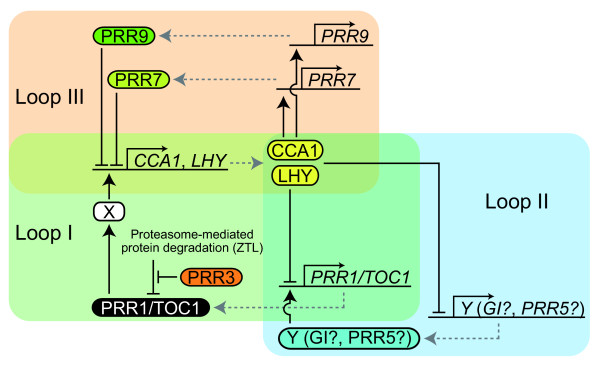
Plant circadian clocks regulate many photoperiodic and diurnal responses that are conserved among plant species. The plant circadian clock system has been uncovered in the model plant, Arabidopsis thaliana, using genetics and systems biology approaches. However, it is still not clear how the clock system had been organized in the evolutionary history of plants. We recently revealed the molecular phylogeny of LHY/CCA1 genes, one of the essential components of the clock system. The aims of this study are to reconstruct the phylogenetic relationships of angiosperm clock-associated PRR genes, the partner of the LHY/CCA1 genes, and to clarify the evolutionary history of the plant clock system in angiosperm lineages.
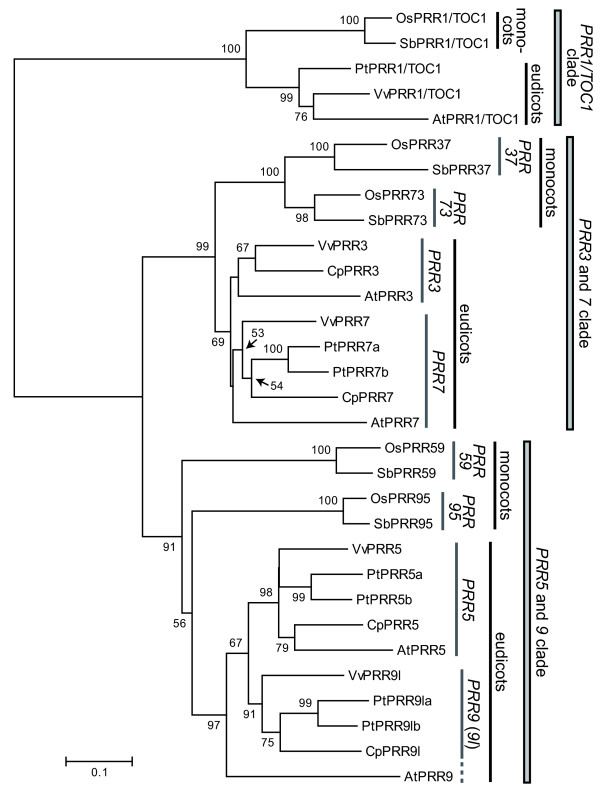
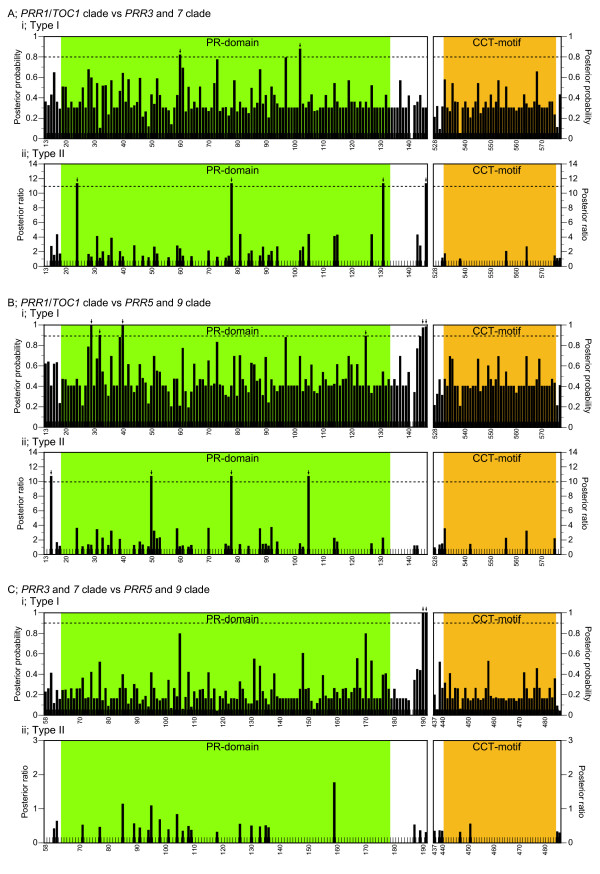
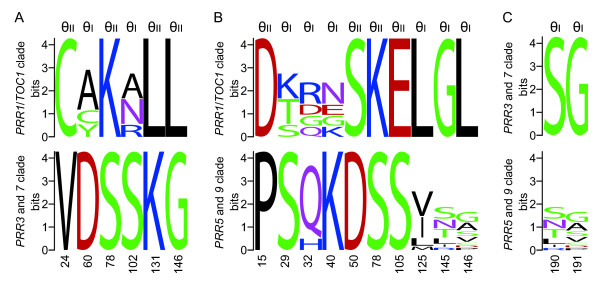
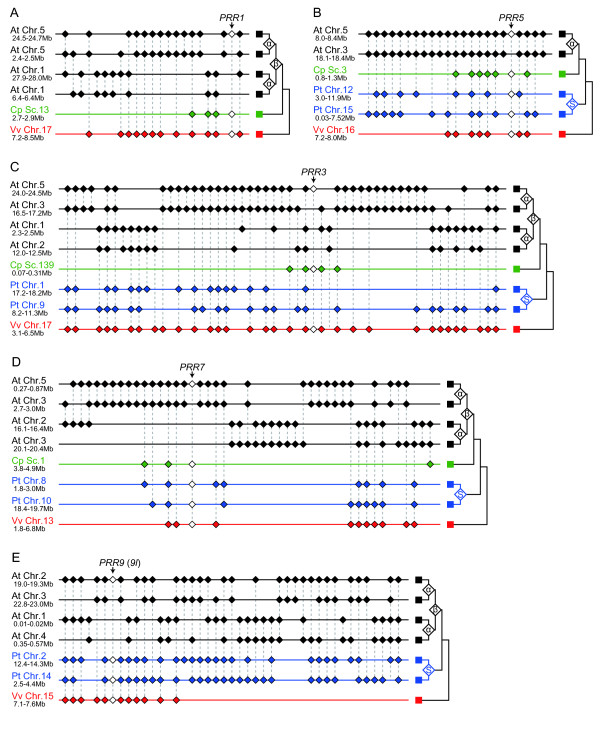
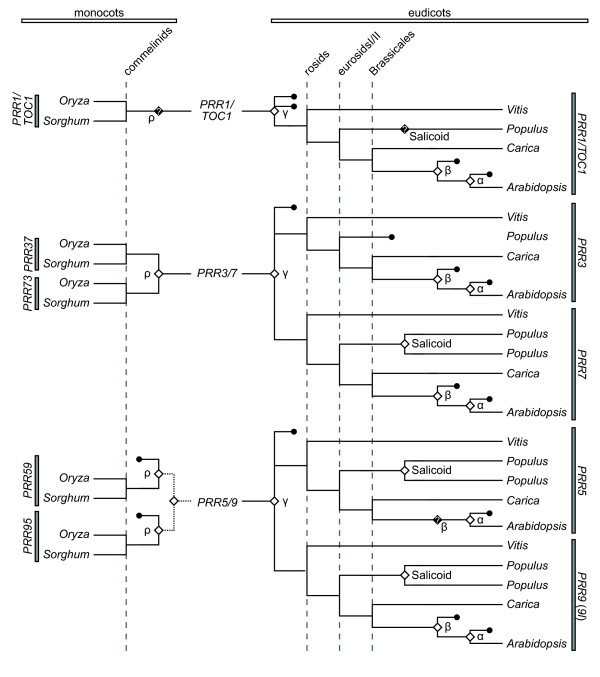
In the present study, to investigate the molecular phylogeny of PRR genes, we performed two approaches: reconstruction of phylogenetic trees and examination of syntenic relationships. Phylogenetic analyses revealed that PRR genes had diverged into three clades prior to the speciation of monocots and eudicots. Furthermore, copy numbers of PRR genes have been independently increased in monocots and eudicots as a result of ancient chromosomal duplication events.
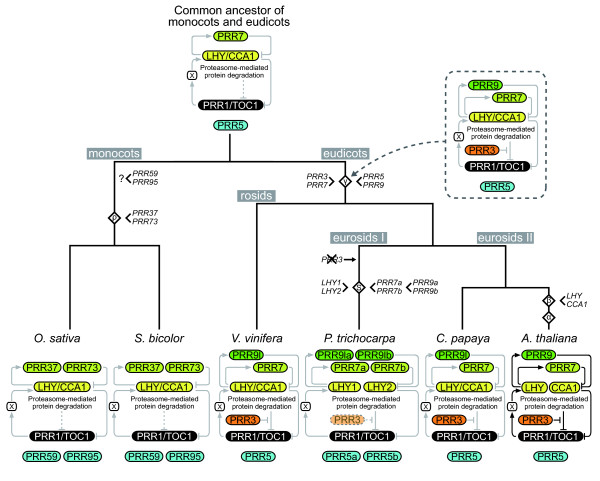
Based on the molecular phylogenies of both PRR genes and LHY/CCA1 genes, we inferred the evolutionary process of the plant clock system in angiosperms. This scenario provides evolutionary information that a common ancestor of monocots and eudicots had retained the basic components required for reconstructing a clock system and that the plant circadian clock may have become a more elaborate mechanism after the speciation of monocots and eudicots because of the gene expansion that resulted from polyploidy events.
植物生物钟调节许多光周期和昼夜节律反应,这些反应在植物物种中是保守的。通过遗传学和系统生物学方法,在模式植物拟南芥中揭示了植物生物钟系统。然而,生物钟系统在植物进化史上是如何组织的仍然不清楚。我们最近揭示了 LHY/CCA1 基因(生物钟系统的一个重要组成部分)的分子系统发育。本研究的目的是重建生物钟相关 PRR 基因的系统发育关系,LHY/CCA1 基因的伙伴,并阐明生物钟系统在被子植物谱系中的进化历史。
在本研究中,为了研究 PRR 基因的分子系统发育,我们采用了两种方法:系统发育树的重建和同线性关系的检验。系统发育分析表明,PRR 基因在单子叶植物和双子叶植物分化之前已经分化为三个分支。此外,由于古老的染色体复制事件,PRR 基因的拷贝数在单子叶植物和双子叶植物中都独立增加。
基于 PRR 基因和 LHY/CCA1 基因的分子系统发育,我们推断了被子植物生物钟系统的进化过程。这一情景提供了进化信息,即单子叶植物和双子叶植物的共同祖先保留了重建生物钟系统所需的基本组成部分,并且由于多倍体事件导致的基因扩张,生物钟可能在单子叶植物和双子叶植物分化后成为一种更精细的机制。