Animal Behaviour Research Group, Department of Zoology, University of Oxford, Oxford, UK.
PLoS One. 2010 Apr 26;5(4):e10346. doi: 10.1371/journal.pone.0010346.
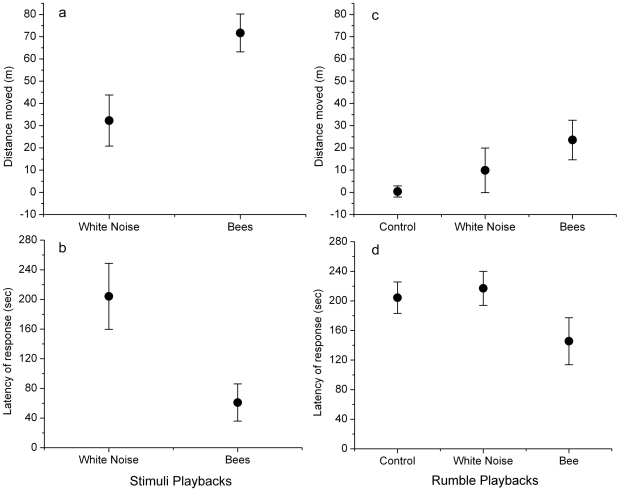
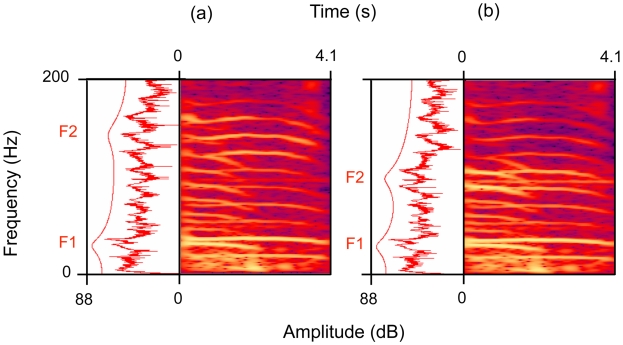
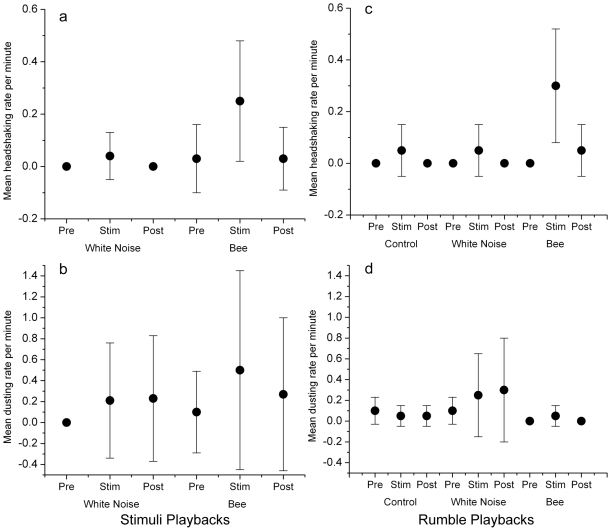
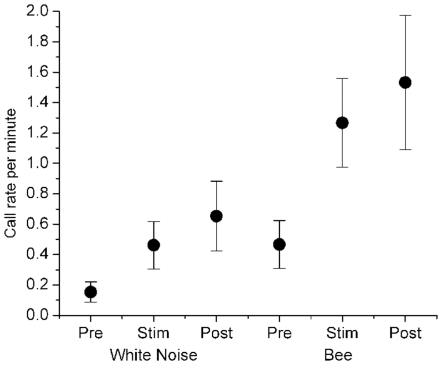
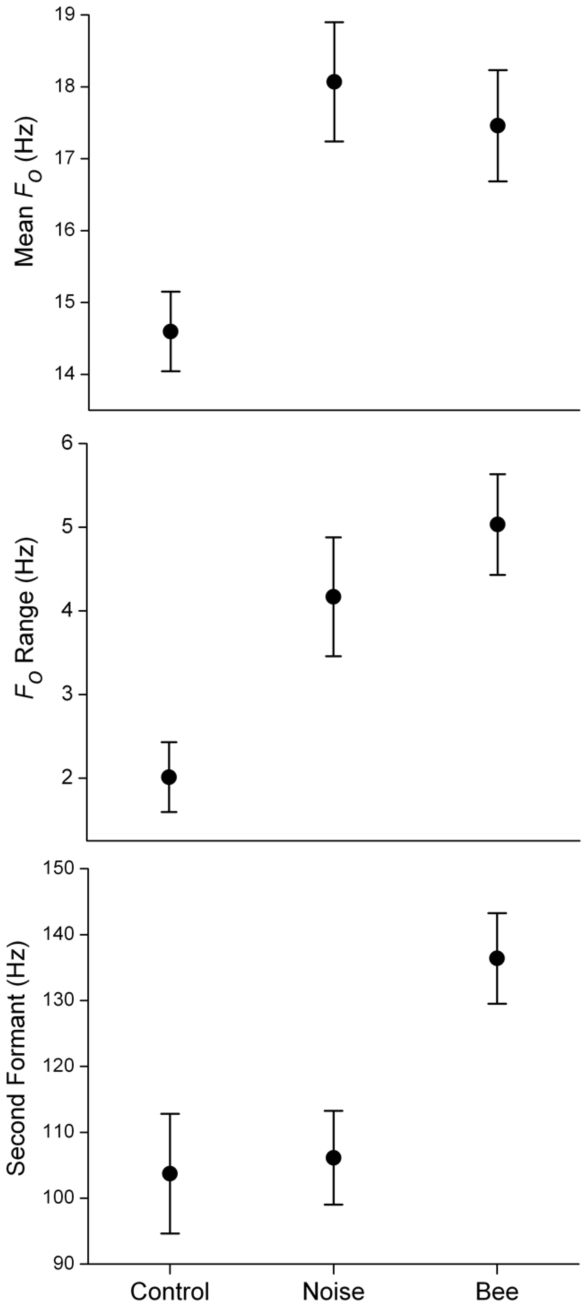
Unlike the smaller and more vulnerable mammals, African elephants have relatively few predators that threaten their survival. The sound of disturbed African honeybees Apis meliffera scutellata causes African elephants Loxodonta africana to retreat and produce warning vocalizations that lead other elephants to join the flight. In our first experiment, audio playbacks of bee sounds induced elephants to retreat and elicited more head-shaking and dusting, reactive behaviors that may prevent bee stings, compared to white noise control playbacks. Most importantly, elephants produced distinctive "rumble" vocalizations in response to bee sounds. These rumbles exhibited an upward shift in the second formant location, which implies active vocal tract modulation, compared to rumbles made in response to white noise playbacks. In a second experiment, audio playbacks of these rumbles produced in response to bees elicited increased headshaking, and further and faster retreat behavior in other elephants, compared to control rumble playbacks with lower second formant frequencies. These responses to the bee rumble stimuli occurred in the absence of any bees or bee sounds. This suggests that these elephant rumbles may function as referential signals, in which a formant frequency shift alerts nearby elephants about an external threat, in this case, the threat of bees.
与体型较小且脆弱的哺乳动物不同,非洲象的天敌相对较少,这些天敌不会对它们的生存构成威胁。受到惊扰的非洲蜜蜂(Apis meliffera scutellata)发出的声音会促使非洲象(Loxodonta africana)后退,并发出警告叫声,提醒其他大象一起逃离。在我们的第一项实验中,与白噪声控制播放相比,蜜蜂的声音播放会诱使大象后退,并引发更多的摇头和抖落等反应性行为,这些行为可能会防止被蜜蜂蜇伤。最重要的是,大象会对蜜蜂的声音发出独特的“隆隆”声。与对白噪声播放的反应相比,这些隆隆声的第二共振峰位置向上移动,这意味着它们的声道活跃地进行了调制。在第二项实验中,与播放低频第二共振峰的控制隆隆声相比,播放对蜜蜂发出的隆隆声会引起其他大象更多的摇头和更快更远的撤退行为。这些对蜜蜂隆隆声刺激的反应是在没有蜜蜂或蜜蜂声音的情况下发生的。这表明,这些大象的隆隆声可能起到了指示信号的作用,即共振峰频率的变化向附近的大象发出了外部威胁的警报,在这种情况下,威胁来自蜜蜂。