Faculdade de Ciências Médicas de Minas Gerais - Belo Horizonte/MG, Brazil.
Clinics (Sao Paulo). 2010 Apr;65(4):433-40. doi: 10.1590/S1807-59322010000400013.
The purpose of this study was to evaluate the relative importance of the different static stabilizers of the posterolateral corner of the knee in cadavers.
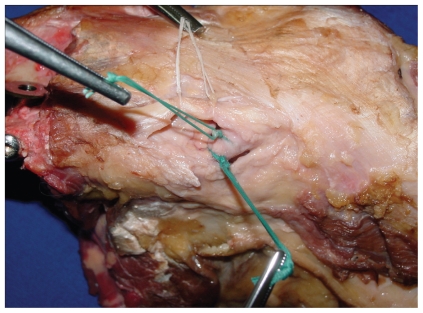
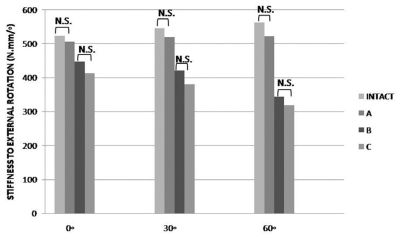
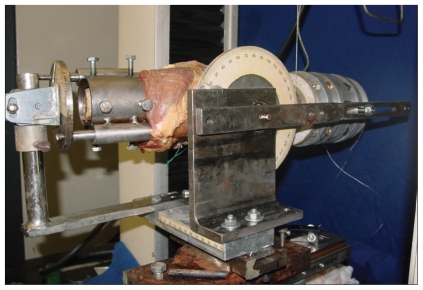
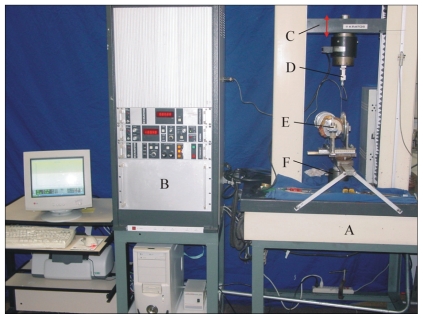
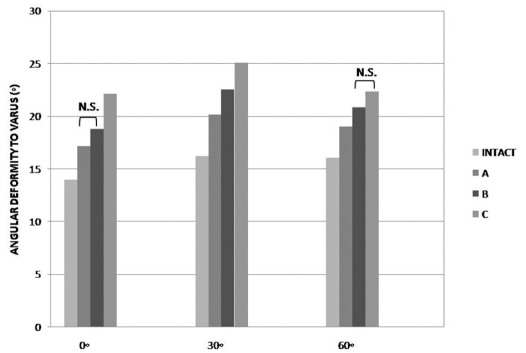
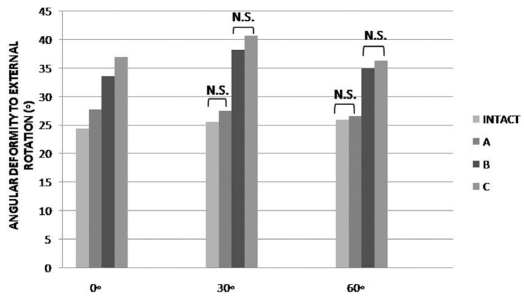
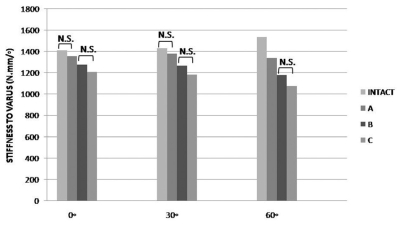
Tests were performed with the application of a varus and external rotation force to the knee in extension at 30 and 60 degrees of flexion using 10 cadaver knees. The forces were applied initially to an intact knee and then repeated after a selective sectioning of the ligaments into the following: section of the lateral collateral ligament; section of the lateral collateral ligament and the popliteofibular complex; and section of the lateral collateral ligament, the popliteofibular complex and the posterolateral capsule. The parameters studied were the angular deformity and stiffness when the knees were submitted to a 15 Newton-meter varus torque and a 6 Newton-meter external tibial torque. Statistical analysis was performed using the ANOVA (Analysis of Variance) and Tukey's tests.
Our findings showed that the lateral collateral ligament was important in varus stability at 0, 30 and 60 degrees. The popliteofibular complex was the most important structure for external rotation stability at all angles of flexion and was also important for varus stability at 30 and 60 degrees. The posterolateral capsule was important for varus stability at 0 and 30 degrees and for external rotation stability in extension.
Level IV (cadaver study).
本研究旨在评估膝关节后外侧角的不同静态稳定结构的相对重要性。
通过对 10 具尸体膝关节进行伸膝位 30°和 60°的内翻和外翻试验,评估不同的静态稳定结构。先在完整膝关节上施加力,然后分别切断以下结构后的重复试验:外侧副韧带;外侧副韧带和腓肠豆复合体;外侧副韧带、腓肠豆复合体和后外侧囊。研究参数为膝关节在 15 牛顿米的内翻扭矩和 6 牛顿米的外胫骨扭矩作用下的角度变形和刚度。采用方差分析(ANOVA)和 Tukey 检验进行统计学分析。
研究结果表明,在 0°、30°和 60°时,外侧副韧带对内翻稳定性很重要。腓肠豆复合体在所有关节屈曲角度的外旋稳定性中是最重要的结构,在 30°和 60°时也是内翻稳定性的重要结构。后外侧囊对 0°和 30°的内翻稳定性和伸直位的外旋稳定性很重要。
IV 级(尸体研究)。