Thompson Helen J, Pell Alastair Ch, Anderson Judith, Chow Clara K, Pell Jill P
Section of Public Health, University of Glasgow, Glasgow, G12 8RZ, UK.
BMC Res Notes. 2010 May 11;3:132. doi: 10.1186/1756-0500-3-132.
Primary prevention should be targeted at individuals with high global cardiovascular risk, but research is lacking on how best to identify such individuals in the general population. Family history is a good proxy measure of global risk and may provide an efficient mechanism for identifying high risk individuals. The aim was to test the feasibility of using patients with premature cardiovascular disease to recruit family members as a means of identifying and screening high-risk individuals.
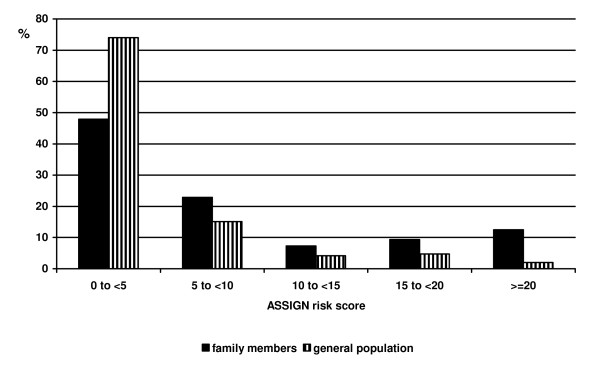
We recruited family members of 50 patients attending a cardiology clinic for premature coronary heart disease (CHD). We compared their cardiovascular risk with a general population control group, and determined their perception of their risk and current level of screening. 103 (36%) family members attended screening (27 siblings, 48 adult offspring and 28 partners). Five (5%) had prevalent CHD. A significantly higher percentage had an ASSIGN risk score >20% compared with the general population (13% versus 2%, p < 0.001). Only 37% of family members were aware they were at increased risk and only 50% had had their blood pressure and serum cholesterol level checked in the previous three years.
Patients attending hospital for premature CHD provide a mechanism to contact family members and this can identify individuals with a high global risk who are not currently screened.
一级预防应针对全球心血管风险高的个体,但对于如何在普通人群中最佳识别此类个体的研究尚缺。家族史是全球风险的良好替代指标,可能为识别高危个体提供一种有效机制。目的是测试利用患有早发性心血管疾病的患者招募家庭成员作为识别和筛查高危个体的一种手段的可行性。
我们招募了50名因早发性冠心病前往心脏病诊所就诊的患者的家庭成员。我们将他们的心血管风险与普通人群对照组进行比较,并确定他们对自身风险的认知以及当前的筛查水平。103名(36%)家庭成员参加了筛查(27名兄弟姐妹、48名成年子女和28名伴侣)。5名(5%)患有现患冠心病。与普通人群相比,ASSIGN风险评分>20%的比例显著更高(13%对2%,p<0.001)。只有37%的家庭成员意识到他们的风险增加,且在前三年中只有50%的人检查过血压和血清胆固醇水平。
因早发性冠心病住院的患者提供了一种联系家庭成员的机制,这可以识别出目前未接受筛查的全球风险高的个体。