Department of Pharmacology and Systems Therapeutics, Mount Sinai School of Medicine, New York, NY 10029, USA.
Mol Biol Cell. 2010 Jul 1;21(13):2102-16. doi: 10.1091/mbc.e10-02-0098. Epub 2010 May 12.
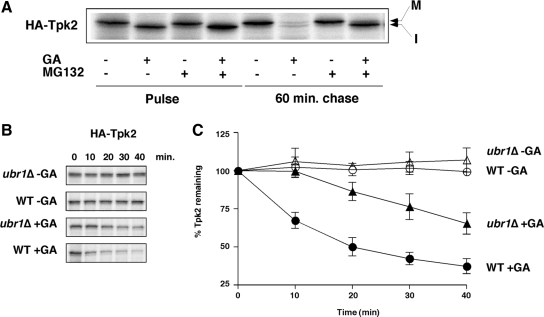
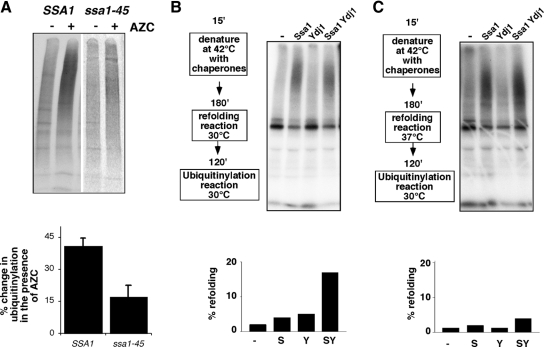
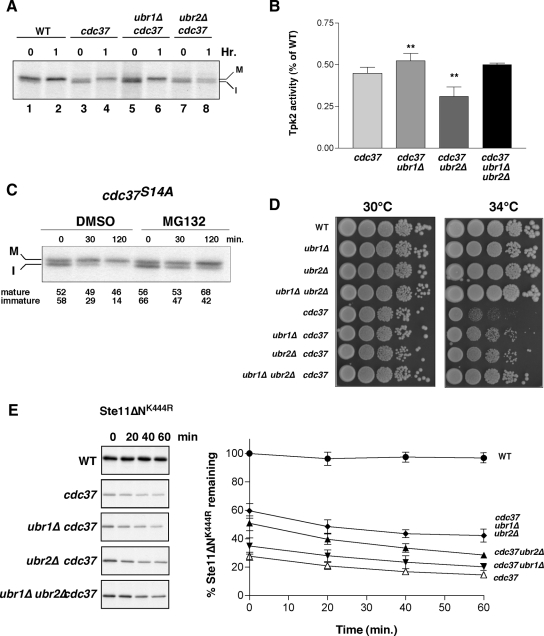
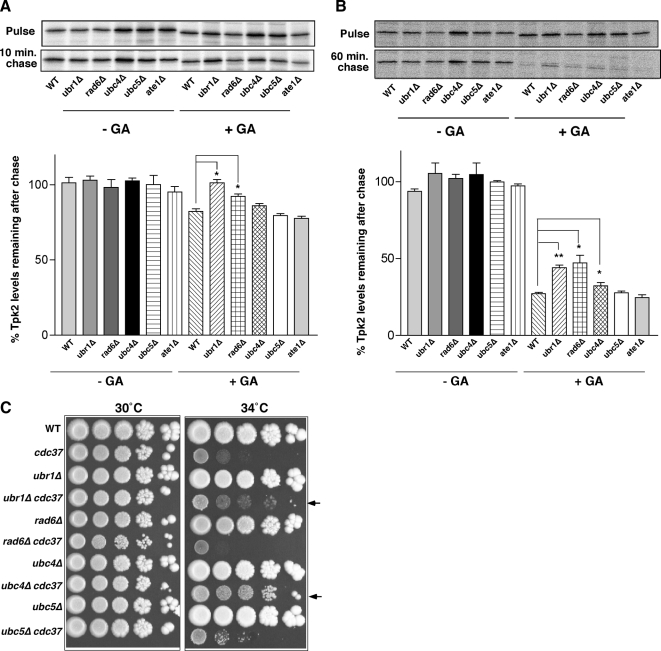
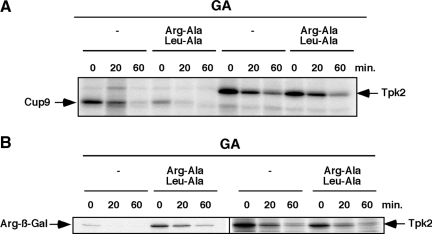
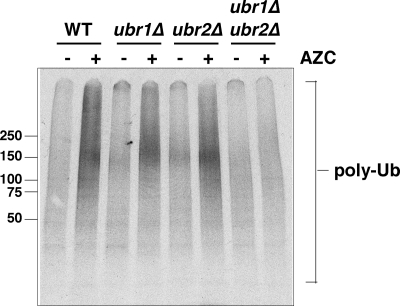
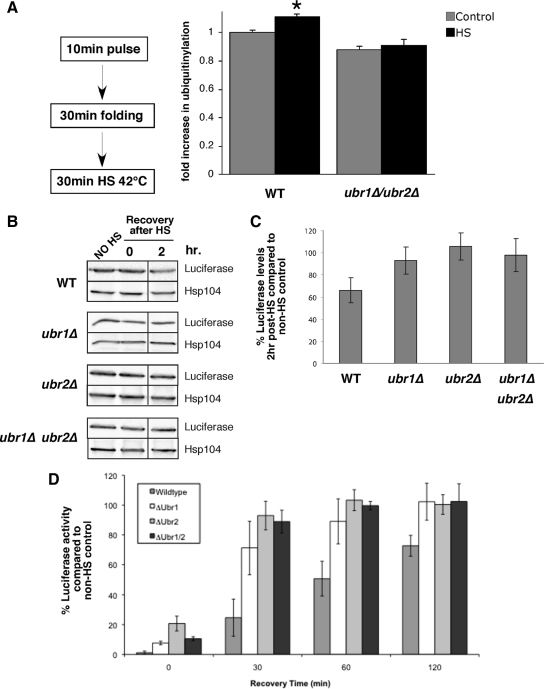
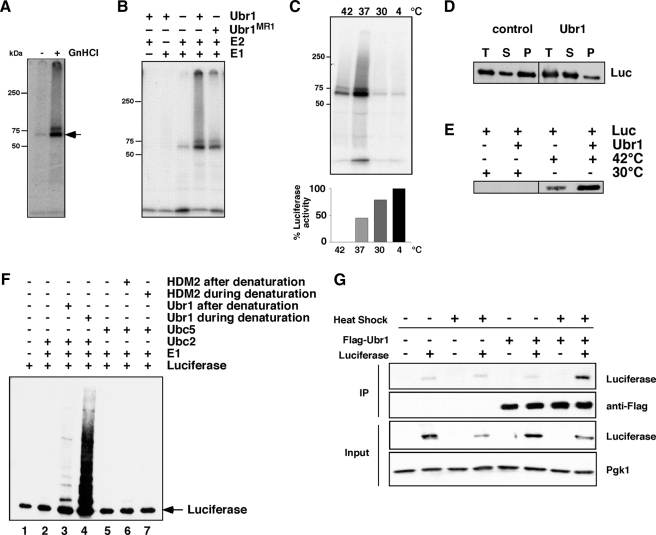
Quality control systems facilitate polypeptide folding and degradation to maintain protein homeostasis. Molecular chaperones promote folding, whereas the ubiquitin/proteasome system mediates degradation. We show here that Saccharomyces cerevisiae Ubr1 and Ubr2 ubiquitin ligases promote degradation of unfolded or misfolded cytosolic polypeptides. Ubr1 also catalyzes ubiquitinylation of denatured but not native luciferase in a purified system. This activity is based on the direct interaction of denatured luciferase with Ubr1, although Hsp70 stimulates polyubiquitinylation of the denatured substrate. We also report that loss of Ubr1 and Ubr2 function suppressed the growth arrest phenotype resulting from chaperone mutation. This correlates with increased protein kinase maturation and indicates partitioning of foldable conformers toward the proteasome. Our findings, based on the efficiency of this quality control system, suggest that the cell trades growth potential to avert the potential toxicity associated with accumulation of unfolded or misfolded proteins. Ubr1 and Ubr2 therefore represent E3 components of a novel quality control pathway for proteins synthesized on cytosolic ribosomes.
质量控制系统促进多肽折叠和降解,以维持蛋白质的内稳态。分子伴侣促进折叠,而泛素/蛋白酶体系统介导降解。我们在这里表明,酿酒酵母 Ubr1 和 Ubr2 泛素连接酶促进未折叠或错误折叠的细胞质多肽的降解。Ubr1 还在纯化系统中催化变性但非天然荧光素的泛素化。这种活性基于变性荧光素与 Ubr1 的直接相互作用,尽管 Hsp70 刺激变性底物的多泛素化。我们还报告说,Ubr1 和 Ubr2 功能的丧失抑制了伴侣突变导致的生长停滞表型。这与蛋白激酶成熟度的增加相关,并表明可折叠构象体向蛋白酶体的分配。基于该质量控制系统的效率,我们的发现表明,细胞权衡生长潜力以避免与未折叠或错误折叠蛋白质积累相关的潜在毒性。因此,Ubr1 和 Ubr2 代表细胞质核糖体上合成的蛋白质的新型质量控制途径的 E3 成分。