Department of Psychological and Brain Sciences, Dartmouth College, Hanover, New Hampshire, USA.
Biol Psychiatry. 2010 Sep 1;68(5):416-24. doi: 10.1016/j.biopsych.2010.04.002. Epub 2010 May 23.
Though a key symptom underlying many anxiety disorders is hypervigilant threat monitoring, its biological bases in humans remain poorly understood. Animal models suggest that anxious processes such as hypervigilant threat monitoring are distinct from cued fear-like responses and mediated by the bed nucleus of the stria terminalis (BNST). Here, we applied psychophysiological and neuroimaging methodologies sensitive to sustained arousal-based responses to test the role of the human BNST in mediating environmental threat monitoring, a potential experimental model for sustained anxiety symptoms.
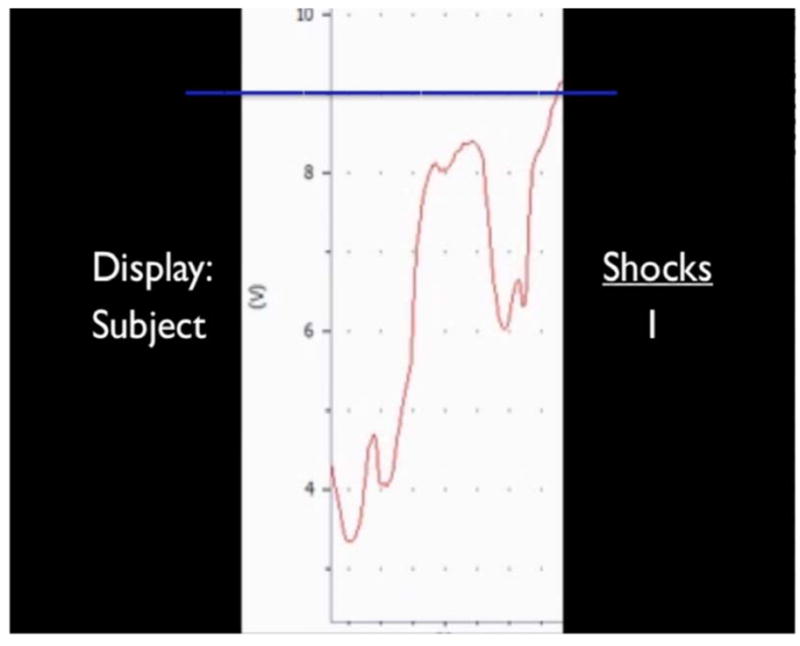
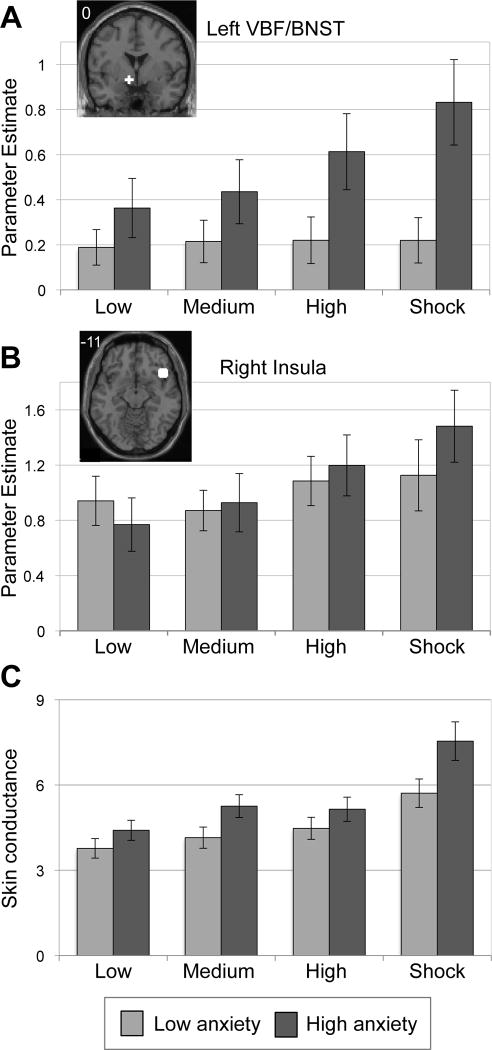
Healthy participants (n = 50) with varying trait anxiety performed an environmental threat-monitoring task during functional magnetic resonance imaging where a stimulus line continuously fluctuated in height, providing information relevant to subsequent risk for electric shocks. Skin conductance was collected in a separate cohort (n = 47) to validate task-evoked modulation of physiological arousal.
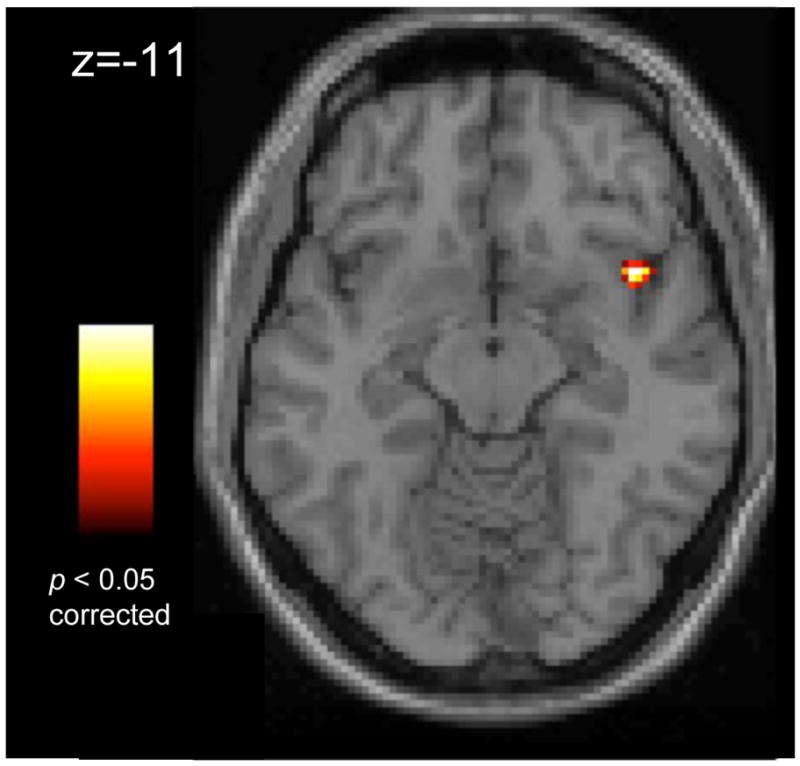
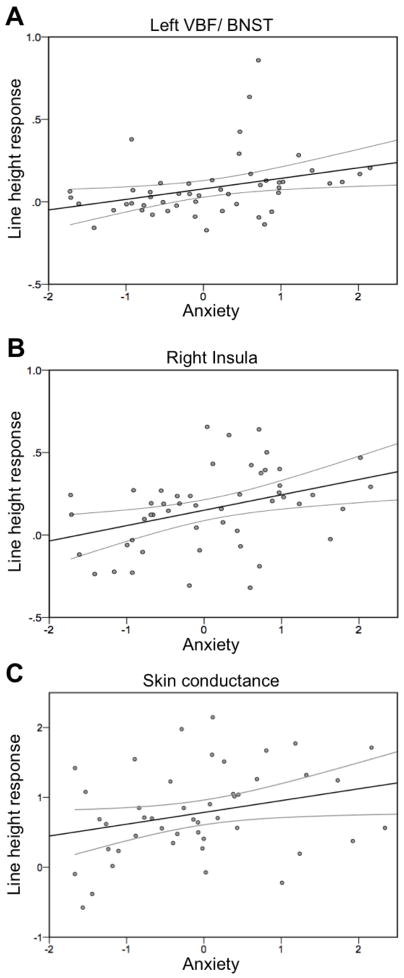
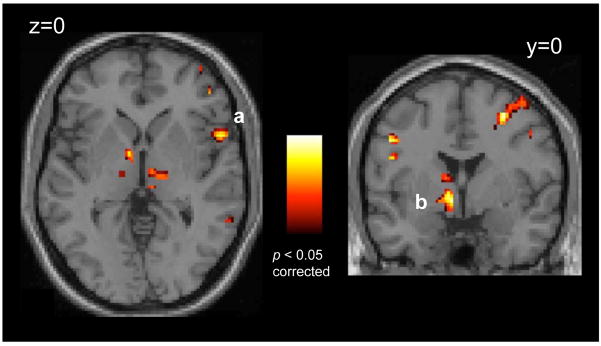
A forebrain region consistent with the BNST showed greater overall recruitment and exaggerated tracking of threat proximity in individuals with greater anxiety. The insular cortex tracked threat proximity across all participants, showed exaggerated threat proximity responding with greater anxiety, and showed enhanced recruitment when threat proximity was ostensibly controllable.
Activity in the BNST and insula continuously monitored changes in environmental threat level and also subserved hypervigilant threat-monitoring processes in more highly trait anxious individuals. These findings bridge human and animal research informing the role of the BNST in anxious-related processes. In addition, these findings suggest that continuous functional magnetic resonance imaging paradigms offer promise in further elucidating the neural circuitries supporting sustained anticipatory features of anxiety.
尽管许多焦虑障碍的一个关键症状是过度警惕的威胁监测,但人类对其生物学基础仍知之甚少。动物模型表明,过度警惕的威胁监测等焦虑过程不同于提示性的恐惧反应,而是由终纹床核(BNST)介导的。在这里,我们应用了对基于持续唤醒的反应敏感的心理生理学和神经影像学方法,以测试人类 BNST 在介导环境威胁监测中的作用,这是一种潜在的持续焦虑症状的实验模型。
具有不同特质焦虑的健康参与者(n = 50)在功能磁共振成像期间执行环境威胁监测任务,其中刺激线连续波动高度,提供与随后电击风险相关的信息。在单独的队列(n = 47)中收集皮肤电导以验证任务诱发的生理唤醒的调制。
与 BNST 一致的前脑区域显示出更大的整体募集和对焦虑个体的威胁接近度的过度跟踪。岛叶皮层在所有参与者中都跟踪威胁接近度,随着焦虑程度的增加,表现出对威胁接近度的过度反应,并且当威胁接近度表面上可控制时,显示出增强的募集。
BNST 和岛叶的活动不断监测环境威胁水平的变化,并且在更高度特质焦虑的个体中也支持过度警惕的威胁监测过程。这些发现弥合了人类和动物研究,为 BNST 在焦虑相关过程中的作用提供了信息。此外,这些发现表明,连续的功能磁共振成像范式有望进一步阐明支持焦虑的持续预期特征的神经回路。