Department of Biochemistry and Goodman Cancer Research Centre, McGill University, Montreal, Quebec H3A 1A3, Canada.
Science. 2010 May 28;328(5982):1172-6. doi: 10.1126/science.1187532.
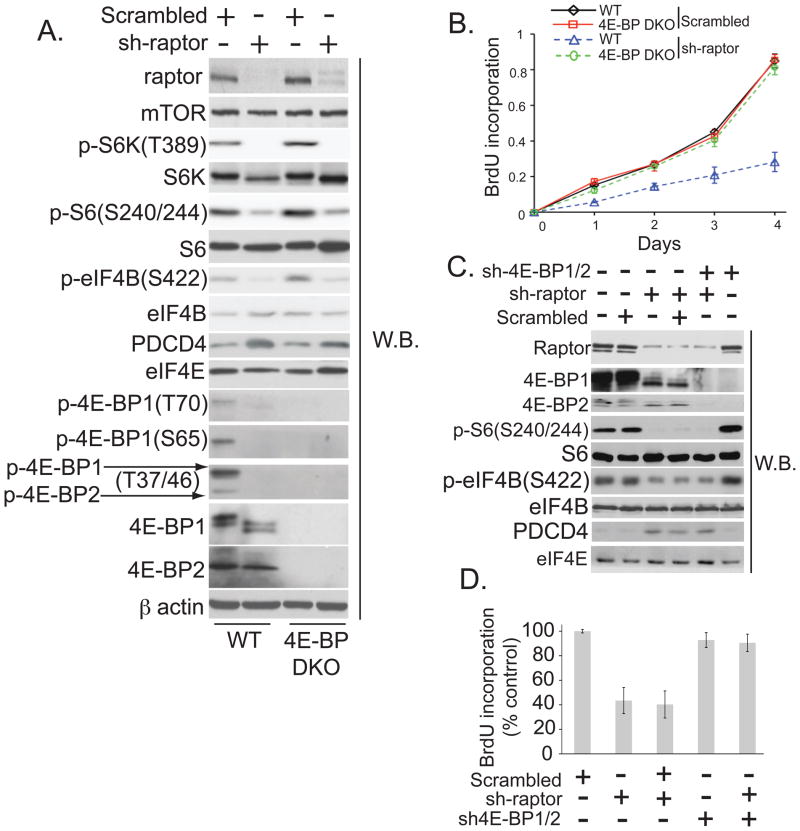
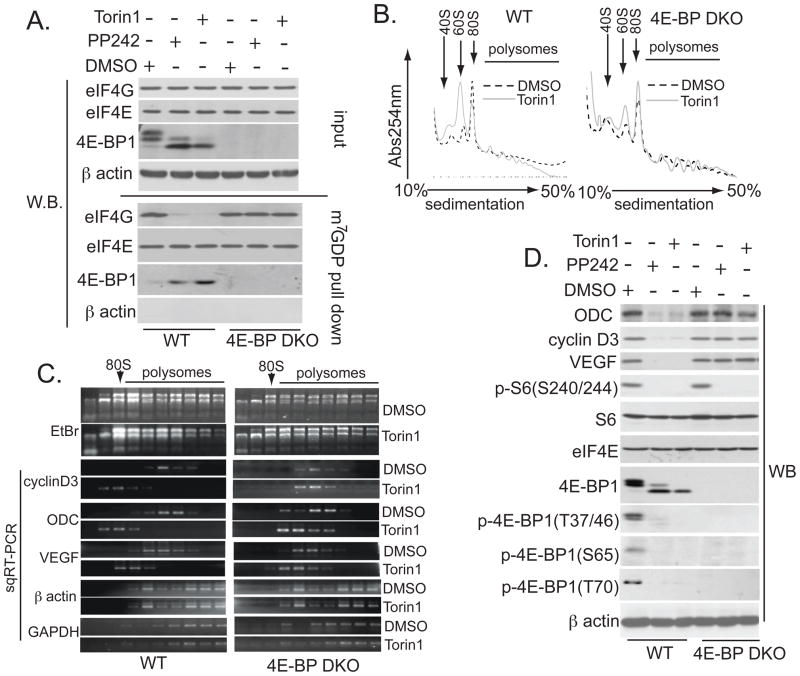
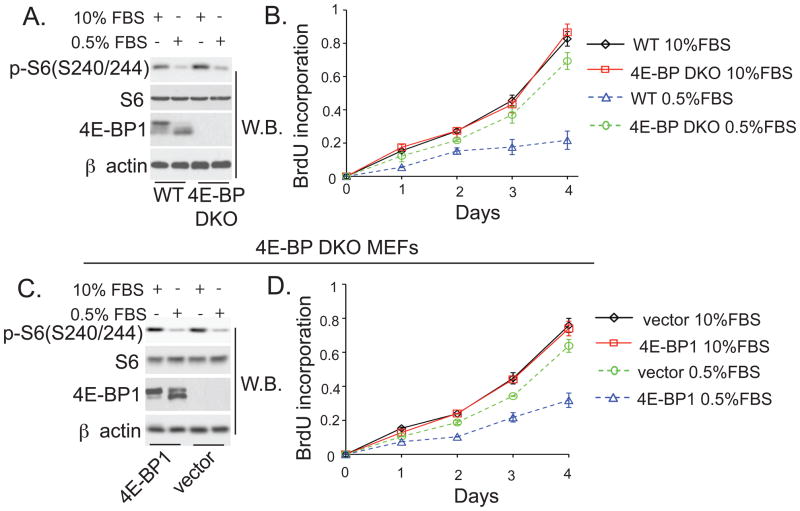
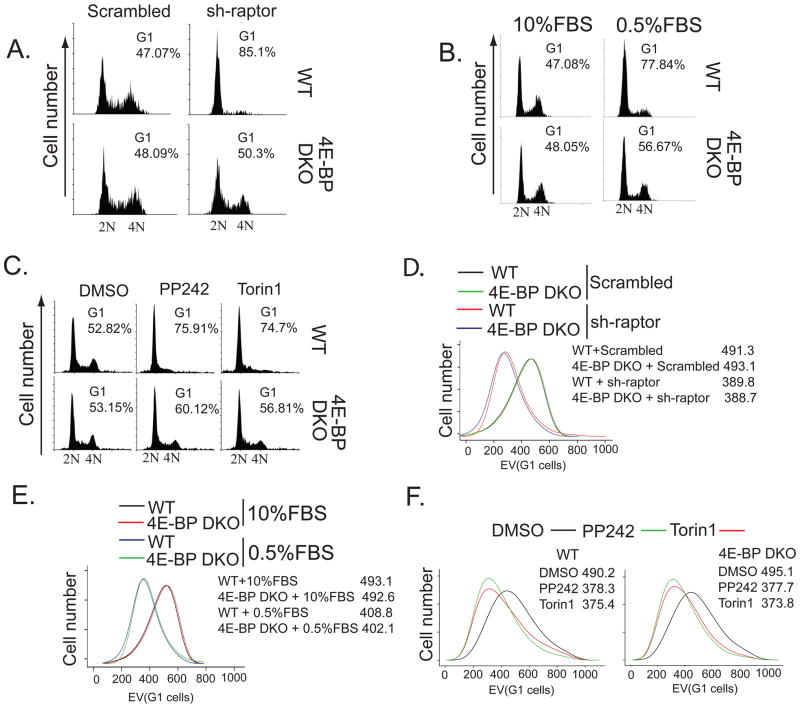
The mammalian target of rapamycin complex 1 (mTORC1) integrates mitogen and nutrient signals to control cell proliferation and cell size. Hence, mTORC1 is implicated in a large number of human diseases--including diabetes, obesity, heart disease, and cancer--that are characterized by aberrant cell growth and proliferation. Although eukaryotic translation initiation factor 4E-binding proteins (4E-BPs) are critical mediators of mTORC1 function, their precise contribution to mTORC1 signaling and the mechanisms by which they mediate mTORC1 function have remained unclear. We inhibited the mTORC1 pathway in cells lacking 4E-BPs and analyzed the effects on cell size, cell proliferation, and cell cycle progression. Although the 4E-BPs had no effect on cell size, they inhibited cell proliferation by selectively inhibiting the translation of messenger RNAs that encode proliferation-promoting proteins and proteins involved in cell cycle progression. Thus, control of cell size and cell cycle progression appear to be independent in mammalian cells, whereas in lower eukaryotes, 4E-BPs influence both cell growth and proliferation.
哺乳动物雷帕霉素靶蛋白复合物 1(mTORC1)整合有丝分裂原和营养信号,以控制细胞增殖和细胞大小。因此,mTORC1 与许多人类疾病有关,包括糖尿病、肥胖症、心脏病和癌症,这些疾病的特征是异常的细胞生长和增殖。尽管真核翻译起始因子 4E 结合蛋白(4E-BPs)是 mTORC1 功能的关键介质,但它们对 mTORC1 信号的精确贡献以及它们介导 mTORC1 功能的机制仍不清楚。我们在缺乏 4E-BPs 的细胞中抑制 mTORC1 途径,并分析对细胞大小、细胞增殖和细胞周期进程的影响。尽管 4E-BPs 对细胞大小没有影响,但它们通过选择性抑制编码促进增殖的蛋白质和参与细胞周期进程的蛋白质的信使 RNA 的翻译来抑制细胞增殖。因此,哺乳动物细胞中细胞大小和细胞周期进程的控制似乎是独立的,而在较低等真核生物中,4E-BPs 影响细胞生长和增殖。