Colton Craig K, Kong Qiongman, Lai Liching, Zhu Michael X, Seyb Kathleen I, Cuny Gregory D, Xian Jun, Glicksman Marcie A, Lin Chien-Liang Glenn
Department of Neuroscience, The Ohio State University, Columbus, OH 43210, USA.
J Biomol Screen. 2010 Jul;15(6):653-62. doi: 10.1177/1087057110370998. Epub 2010 May 27.
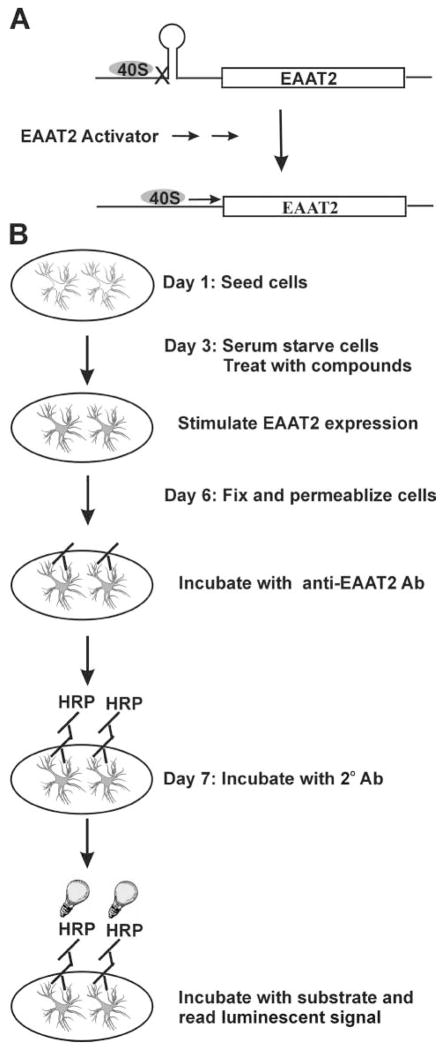
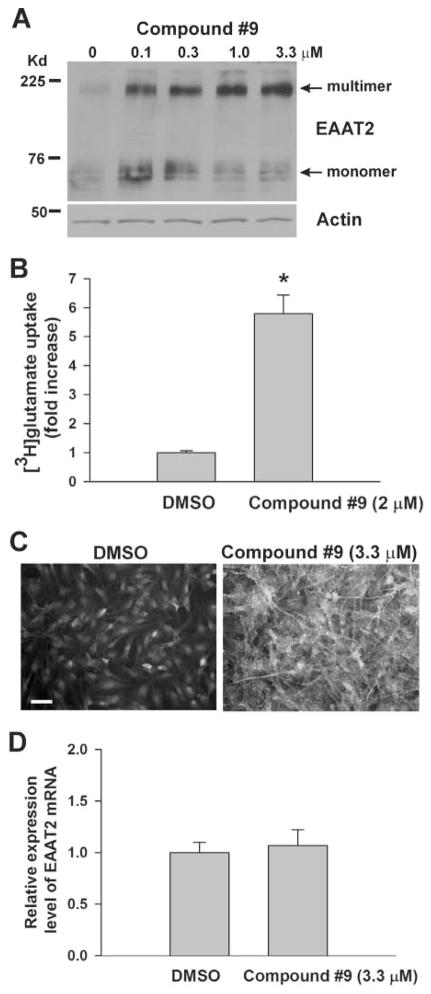
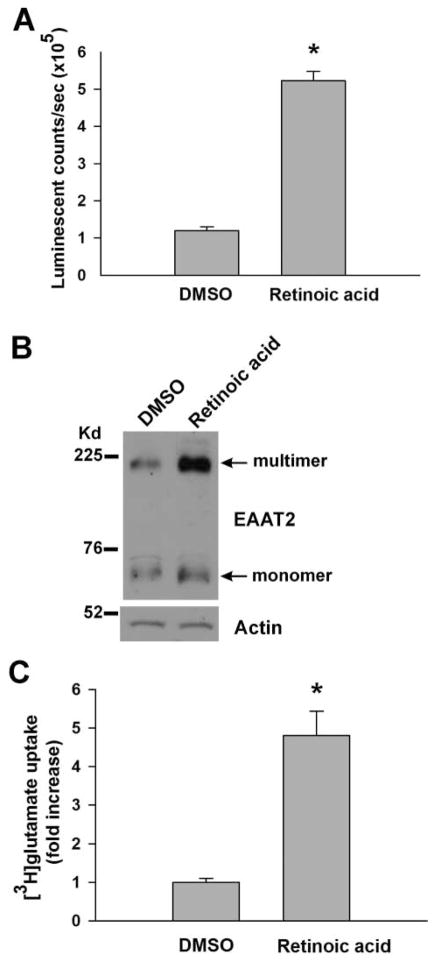
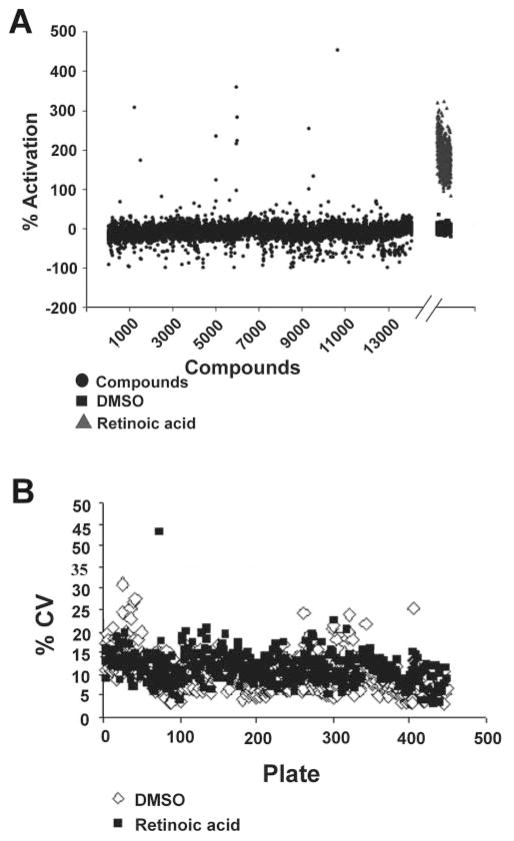
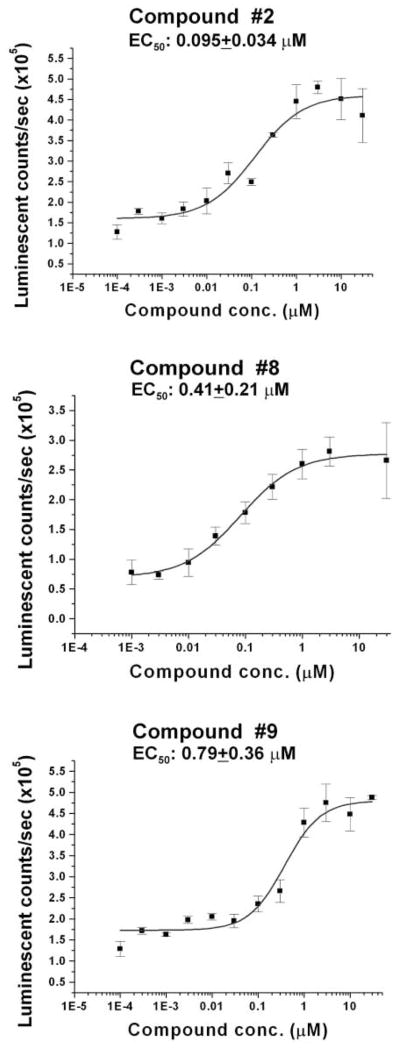
Excitotoxicity has been implicated as the mechanism of neuronal damage resulting from acute insults such as stroke, epilepsy, and trauma, as well as during the progression of adult-onset neurodegenerative disorders such as Alzheimer's disease and amyotrophic lateral sclerosis (ALS). Excitotoxicity is defined as excessive exposure to the neurotransmitter glutamate or overstimulation of its membrane receptors, leading to neuronal injury or death. One potential approach to protect against excitotoxic neuronal damage is enhanced glutamate reuptake. The glial glutamate transporter EAAT2 is the quantitatively dominant glutamate transporter and plays a major role in clearance of glutamate. Expression of EAAT2 protein is highly regulated at the translational level. In an effort to identify compounds that can induce translation of EAAT2 transcripts, a cell-based enzyme-linked immunosorbent assay was developed using a primary astrocyte line stably transfected with a vector designed to identify modulators of EAAT2 translation. This assay was optimized for high-throughput screening, and a library of approximately 140,000 compounds was tested. In the initial screen, 293 compounds were identified as hits. These 293 hits were retested at 3 concentrations, and a total of 61 compounds showed a dose-dependent increase in EAAT2 protein levels. Selected compounds were tested in full 12-point dose-response experiments in the screening assay to assess potency as well as confirmed by Western blot, immunohistochemistry, and glutamate uptake assays to evaluate the localization and function of the elevated EAAT2 protein. These hits provide excellent starting points for developing therapeutic agents to prevent excitotoxicity.
兴奋性毒性被认为是由中风、癫痫和创伤等急性损伤以及成人期神经退行性疾病(如阿尔茨海默病和肌萎缩侧索硬化症,即ALS)进展过程中导致神经元损伤的机制。兴奋性毒性被定义为过度暴露于神经递质谷氨酸或其膜受体过度刺激,导致神经元损伤或死亡。一种预防兴奋性毒性神经元损伤的潜在方法是增强谷氨酸再摄取。胶质细胞谷氨酸转运体EAAT2是数量上占主导的谷氨酸转运体,在谷氨酸清除中起主要作用。EAAT2蛋白的表达在翻译水平上受到高度调节。为了鉴定能够诱导EAAT2转录本翻译的化合物,利用稳定转染了旨在鉴定EAAT2翻译调节剂的载体的原代星形胶质细胞系开发了一种基于细胞的酶联免疫吸附测定法。该测定法针对高通量筛选进行了优化,并测试了一个约140,000种化合物的文库。在初步筛选中,鉴定出293种化合物为阳性。这293种阳性化合物在3个浓度下重新测试,共有61种化合物显示EAAT2蛋白水平呈剂量依赖性增加。在筛选测定中对选定的化合物进行完整的12点剂量反应实验以评估效力,并通过蛋白质印迹、免疫组织化学和谷氨酸摄取测定进行确认,以评估升高的EAAT2蛋白的定位和功能。这些阳性化合物为开发预防兴奋性毒性的治疗药物提供了极好的起点。