Department of Cellular and Molecular Medicine, University of California, San Diego, La Jolla, CA 92093, USA.
Mol Cell. 2010 May 28;38(4):576-89. doi: 10.1016/j.molcel.2010.05.004.
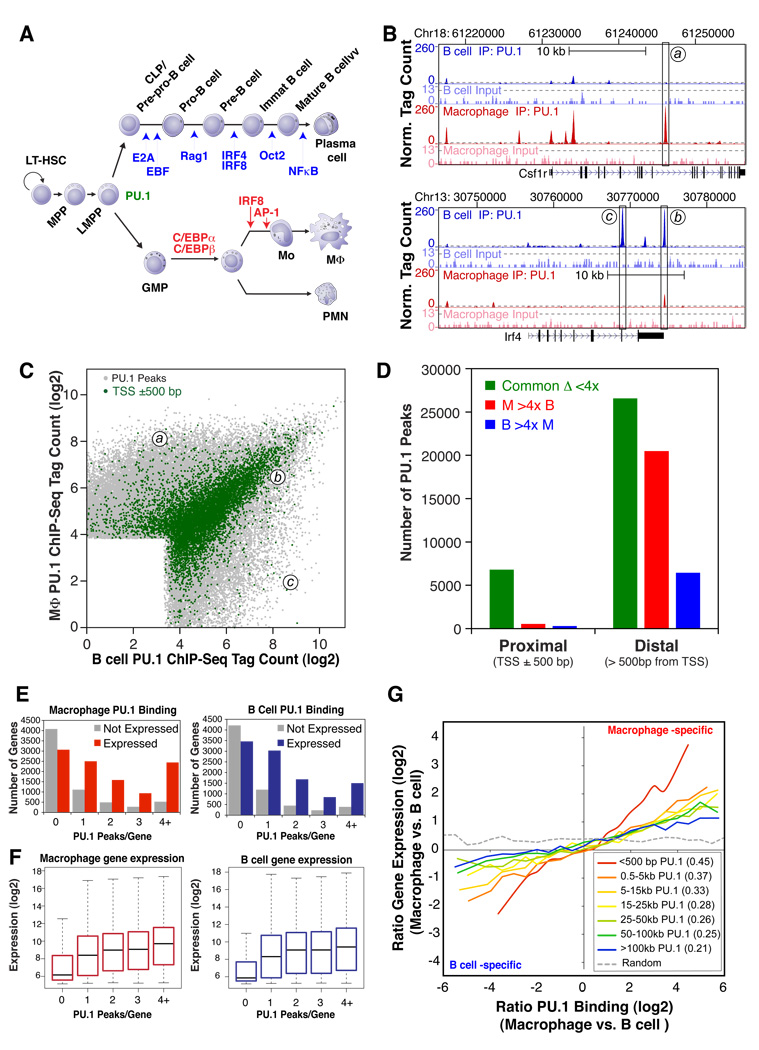
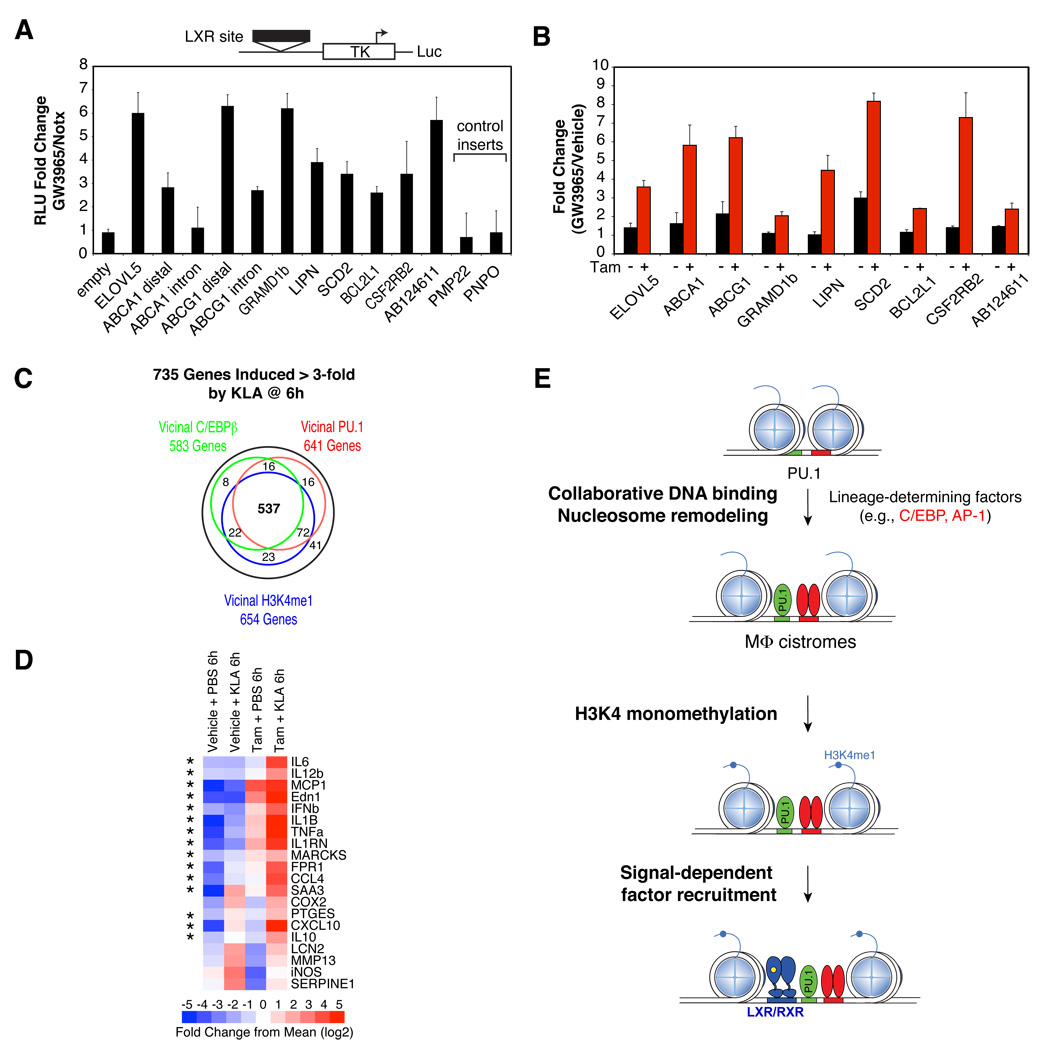
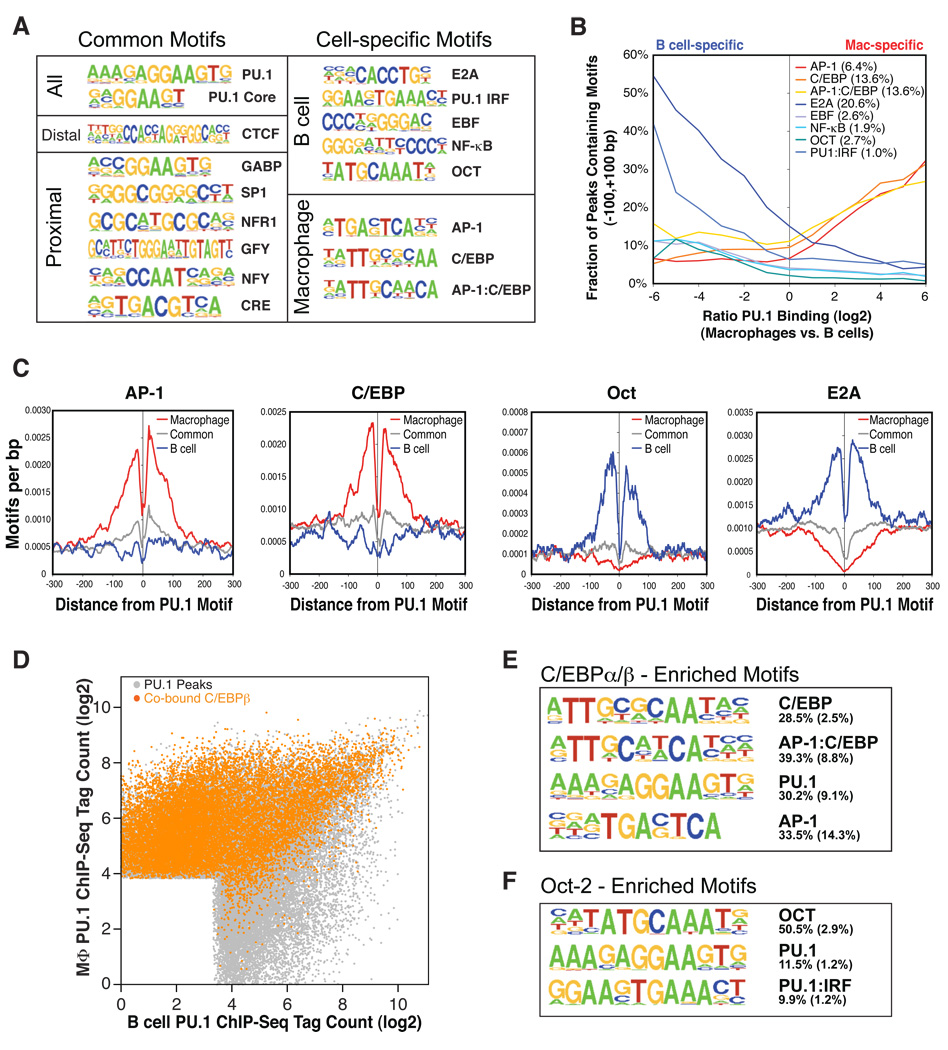
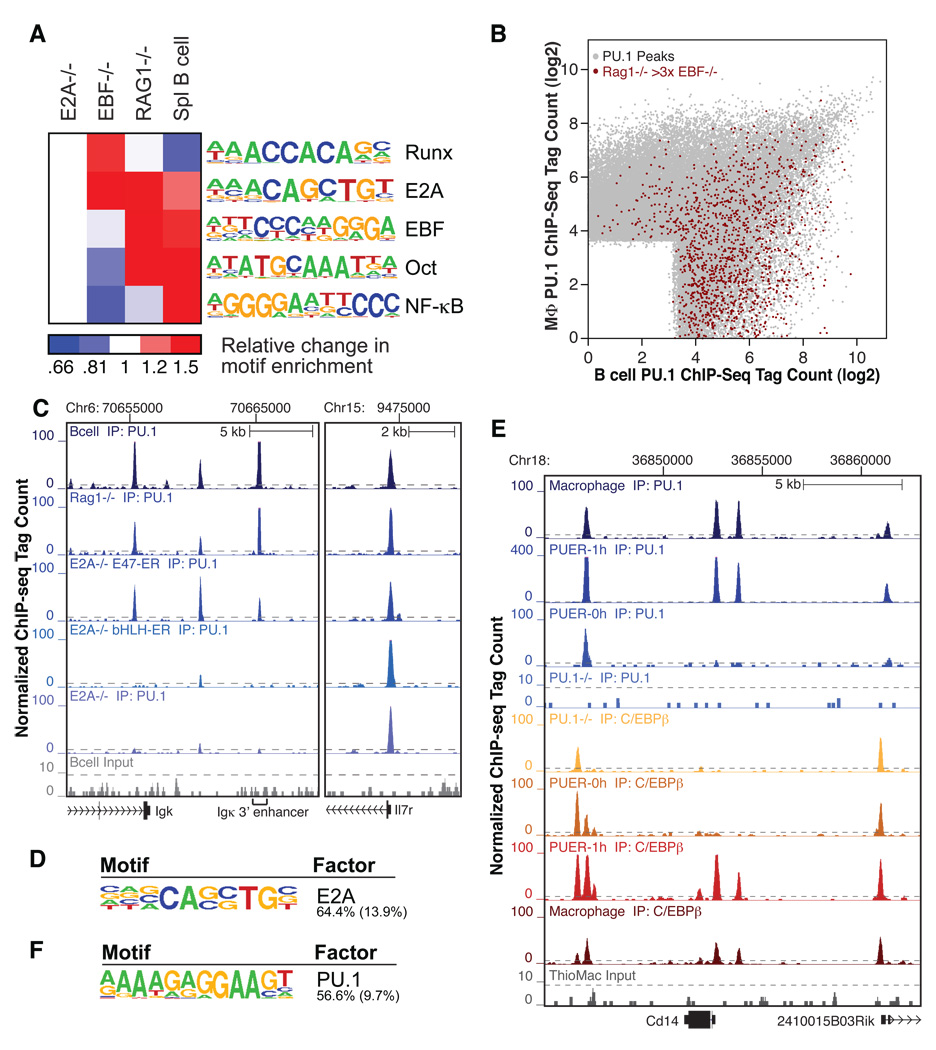
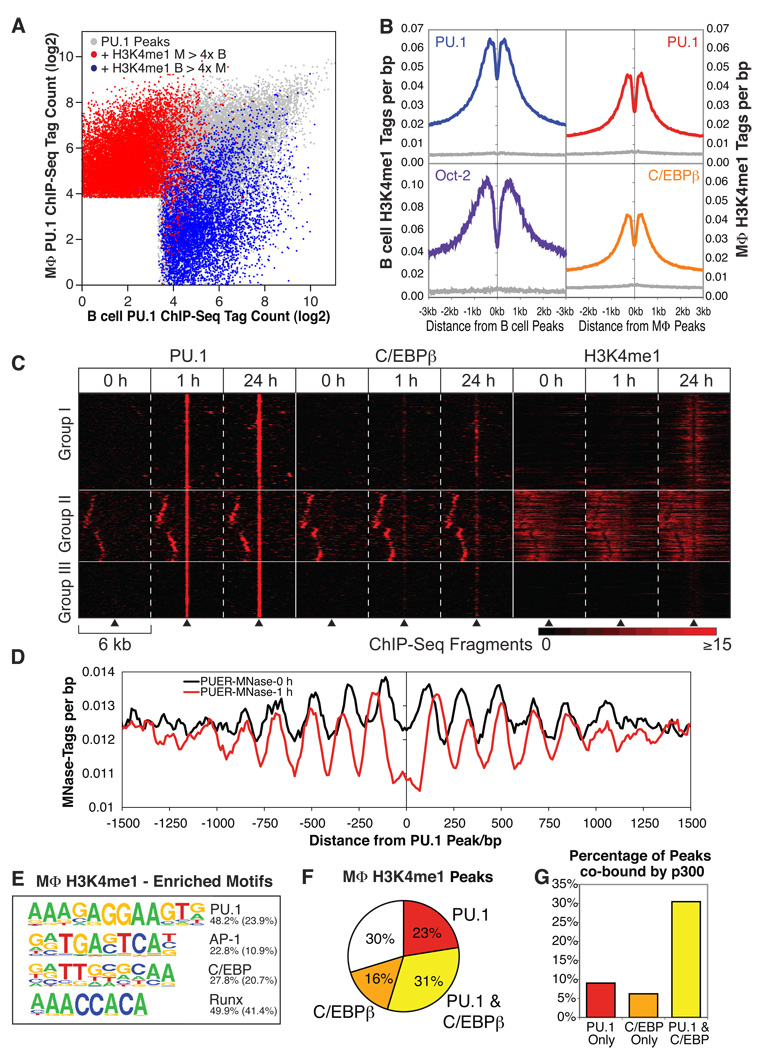
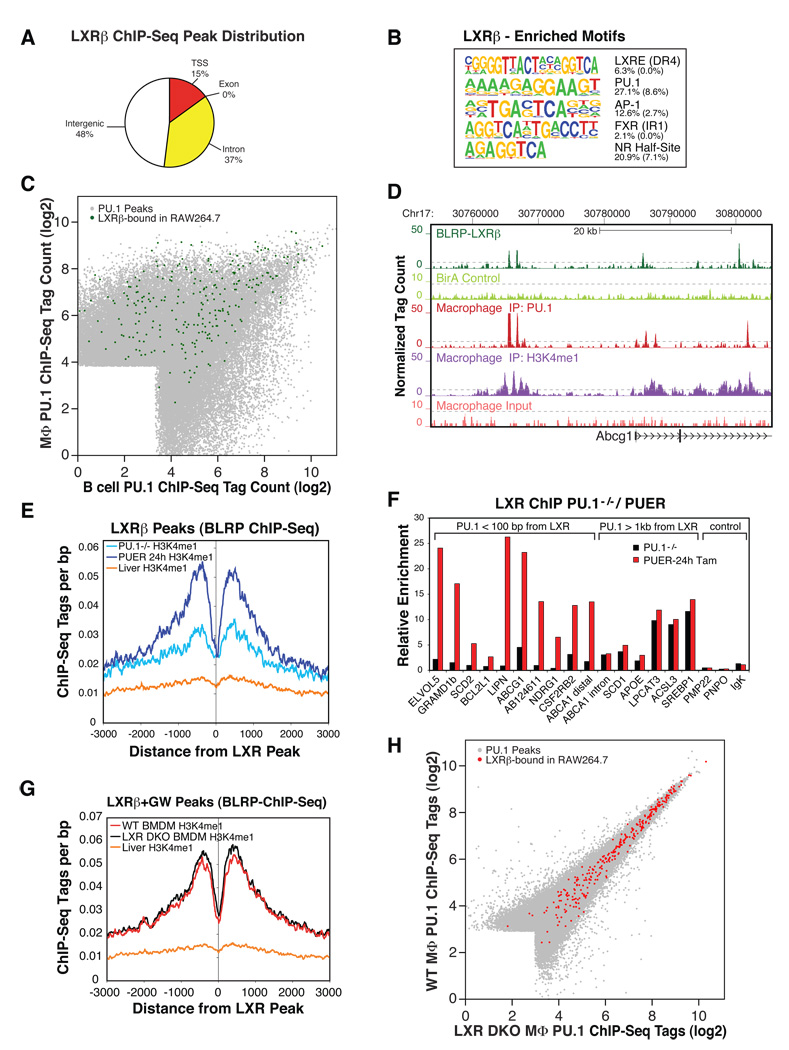
Genome-scale studies have revealed extensive, cell type-specific colocalization of transcription factors, but the mechanisms underlying this phenomenon remain poorly understood. Here, we demonstrate in macrophages and B cells that collaborative interactions of the common factor PU.1 with small sets of macrophage- or B cell lineage-determining transcription factors establish cell-specific binding sites that are associated with the majority of promoter-distal H3K4me1-marked genomic regions. PU.1 binding initiates nucleosome remodeling, followed by H3K4 monomethylation at large numbers of genomic regions associated with both broadly and specifically expressed genes. These locations serve as beacons for additional factors, exemplified by liver X receptors, which drive both cell-specific gene expression and signal-dependent responses. Together with analyses of transcription factor binding and H3K4me1 patterns in other cell types, these studies suggest that simple combinations of lineage-determining transcription factors can specify the genomic sites ultimately responsible for both cell identity and cell type-specific responses to diverse signaling inputs.
基因组规模的研究揭示了转录因子广泛的、细胞类型特异性的共定位,但这一现象的机制仍知之甚少。在这里,我们在巨噬细胞和 B 细胞中证明,常见因子 PU.1 与一小部分巨噬细胞或 B 细胞谱系决定转录因子的协作相互作用,建立了细胞特异性结合位点,这些结合位点与大多数启动子远端 H3K4me1 标记的基因组区域相关联。PU.1 结合启动核小体重塑,随后在与广泛和特异性表达基因相关的大量基因组区域上发生 H3K4 单甲基化。这些位置作为其他因子的信标,以肝 X 受体为例,它驱动细胞特异性基因表达和信号依赖性反应。结合其他细胞类型中转录因子结合和 H3K4me1 模式的分析,这些研究表明,简单的谱系决定转录因子组合可以指定最终负责细胞身份和对各种信号输入的细胞类型特异性反应的基因组位点。