Orthopedic Research Center Amsterdam, Department of Orthopedic Surgery, Academic Medical Center, University of Amsterdam, The Netherlands.
Acta Orthop. 2010 Aug;81(4):495-502. doi: 10.3109/17453674.2010.492764.
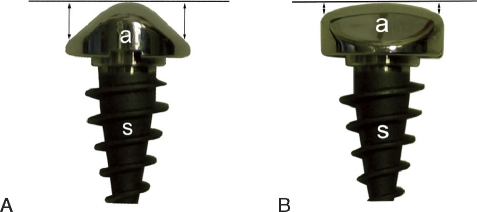
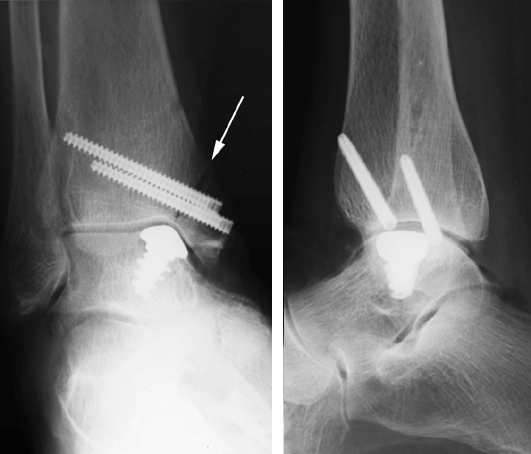
A metallic inlay implant (HemiCAP) with 15 offset sizes has been developed for the treatment of localized osteochondral defects of the medial talar dome. The aim of this study was to test the following hypotheses: (1) a matching offset size is available for each talus, (2) the prosthetic device can be reproducibly implanted slightly recessed in relation to the talar cartilage level, and (3) with this implantation level, excessive contact pressures on the opposite tibial cartilage are avoided.
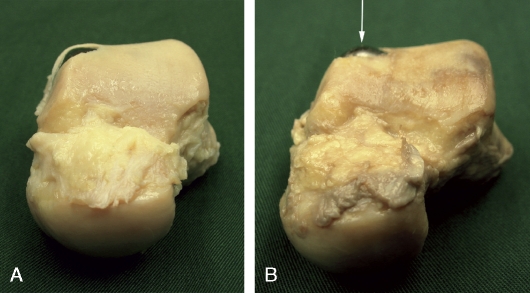
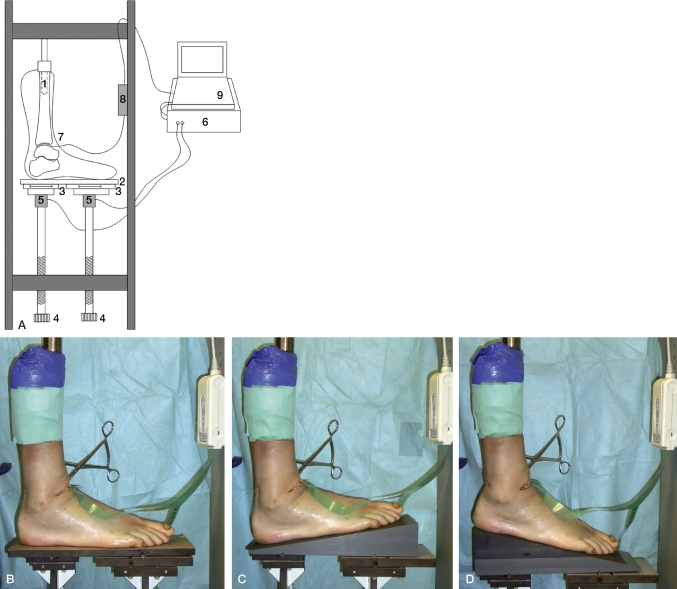
The prosthetic device was implanted in 11 intact fresh-frozen human cadaver ankles, aiming its surface 0.5 mm below cartilage level. The implantation level was measured at 4 margins of each implant. Intraarticular contact pressures were measured before and after implantation, with compressive forces of 1,000-2,000 N and the ankle joint in plantigrade position, 10 dorsiflexion, and 14 plantar flexion.
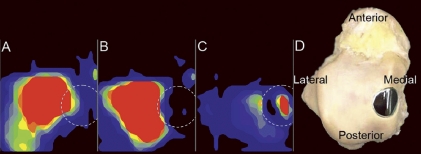
There was a matching offset size available for each specimen. The mean implantation level was 0.45 (SD 0.18) mm below the cartilage surface. The defect area accounted for a median of 3% (0.02-18) of the total ankle contact pressure before implantation. This was reduced to 0.1% (0.02-13) after prosthetic implantation.
These results suggest that the implant can be applied clinically in a safe way, with appropriate offset sizes for various talar domes and without excessive pressure on the opposite cartilage.
为了治疗内侧距骨穹隆局灶性骨软骨缺损,开发了一种带有 15 个偏移量的金属镶嵌植入物(HemiCAP)。本研究旨在验证以下假设:(1)每个距骨都有匹配的偏移量;(2)可以将假体设备可重复地稍微凹陷植入距骨软骨平面以下;(3)在这种植入水平下,避免对相反的胫骨软骨产生过大的接触压力。
将假体设备植入 11 个完整的新鲜冷冻人尸体踝关节中,目标是使其表面低于软骨平面 0.5 毫米。在每个植入物的 4 个边缘测量植入水平。在植入前和植入后,在 1,000-2,000 N 的压缩力下,踝关节处于跖屈位、10 度背屈和 14 度跖屈,测量关节内接触压力。
每个标本都有匹配的偏移量。平均植入水平比软骨表面低 0.45(SD 0.18)毫米。在植入前,缺陷区域占总踝关节接触压力的中位数为 3%(0.02-18)。植入后,这一比例降至 0.1%(0.02-13)。
这些结果表明,该植入物可以以安全的方式应用于临床,对于各种距骨穹隆有适当的偏移量,并且不会对相反的软骨产生过大的压力。