Karlberg Helen, Lindegren Gunnel, Mirazimi Ali
KCB/Swedish Institute for Infectious Disease Control, SE-172 82 Solna, Sweden.
Open Virol J. 2010 Apr 22;4:38-41. doi: 10.2174/1874357901004020038.
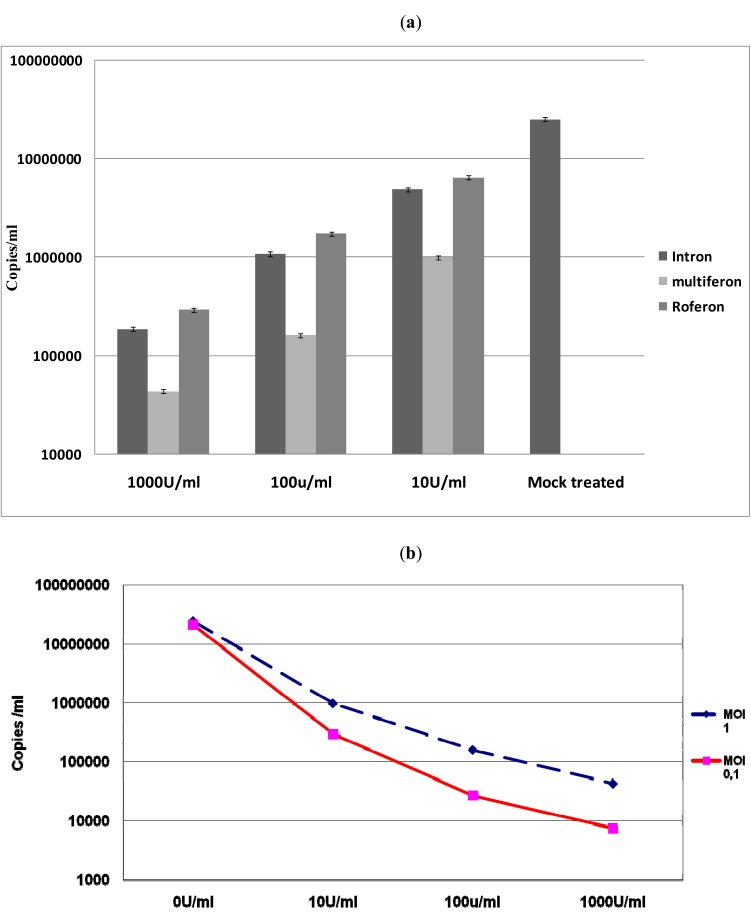
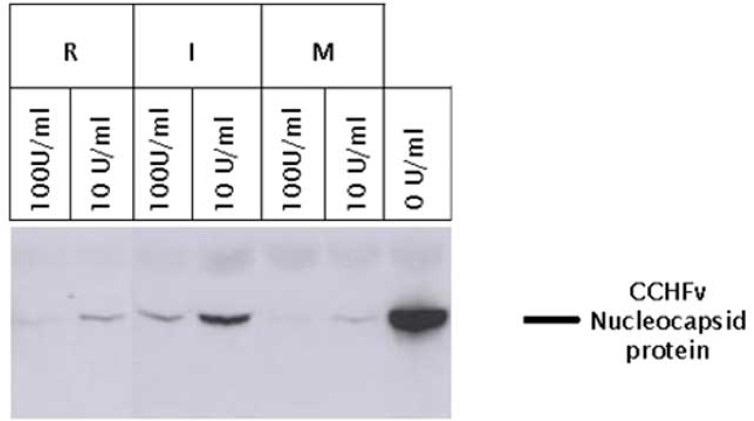
As a first line of defence against a virus infection, mammalian cells elicit an innate immune response, characterized by secretion of type I interferons (IFN) and up-regulation of interferon stimulated genes (ISGs). We have previously included Crimean Congo Hemorrhagic Fever Virus (CCHFV) in the list of type I IFN-sensitive viruses. In this in vitro study, we have compared the antiviral activity of two recombinant IFN-alpha preparations (Roferon A and Intron A) with a natural IFN-alpha produced in human leukocytes (Multiferon). Our results clearly demonstrate that these commercially available IFNs have significant antiviral activities against CCHFV. However, we could show that Multiferon inhibits viral replication more efficiently than the two recombinant IFN alpha preparations.
作为抵御病毒感染的第一道防线,哺乳动物细胞会引发先天性免疫反应,其特征是分泌I型干扰素(IFN)并上调干扰素刺激基因(ISG)。我们之前已将克里米亚-刚果出血热病毒(CCHFV)列入I型IFN敏感病毒名单。在这项体外研究中,我们比较了两种重组IFN-α制剂(罗扰素A和干扰能)与人白细胞中产生的天然IFN-α(多抗干扰素)的抗病毒活性。我们的结果清楚地表明,这些市售IFN对CCHFV具有显著的抗病毒活性。然而,我们能够证明多抗干扰素比两种重组IFN-α制剂更有效地抑制病毒复制。